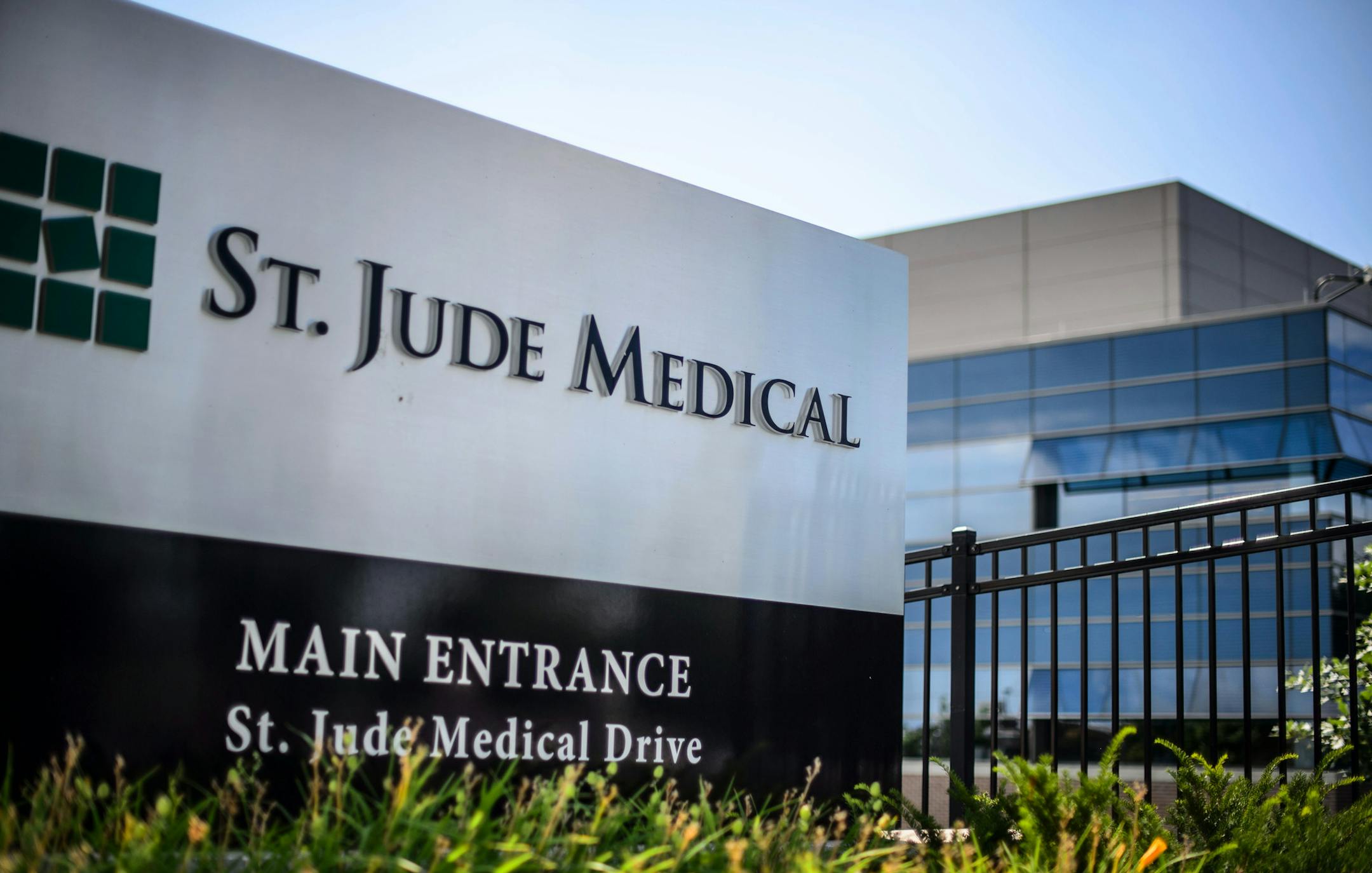
Investors could have bought St. Jude Medical stock in the 1977 initial public offering at a split-adjusted price that works out to be about 2 cents a share.
The big deal announced last week by Abbott, acquiring St. Jude Medical for cash and stock, put a value on St. Jude shares of $85.
It's not easy to top that kind of capital gain, so why doesn't this feel like a moment to celebrate? Could it be that it's disappointing to see another of Minnesota's homegrown Fortune 500 companies owned by somebody else?
"That was my first word, too. Disappointing," said veteran Wayzata money manager Richard W. Perkins, a few hours after Little Canada-based St. Jude said it would be bought. "I guess I'm happy I own it."
As disappointing as it is, there's nothing unique about big companies in Minnesota getting gobbled up. It's difficult to think of a company here of any size that isn't in a consolidating industry. It's the same, of course, for companies based in Chicago or anywhere else.
What made the St. Jude sale a little unsettling is that it followed, by barely a month, news that Minneapolis-based Valspar would be acquired by the Sherwin-Williams Co., knocking another Minnesota-based company off the list of corporate giants.
Valspar has been a solid corporate citizen, yet few companies seem as uniquely Minnesotan as St. Jude Medical.
Founder Manny Villafana is a member of the Minnesota Business Hall of Fame. The thinking behind the first product, a leapfrog design for a mechanical human heart valve replacement, came from the University of Minnesota. The university's hospital is where the first St. Jude valve was implanted in the fall of 1977.