

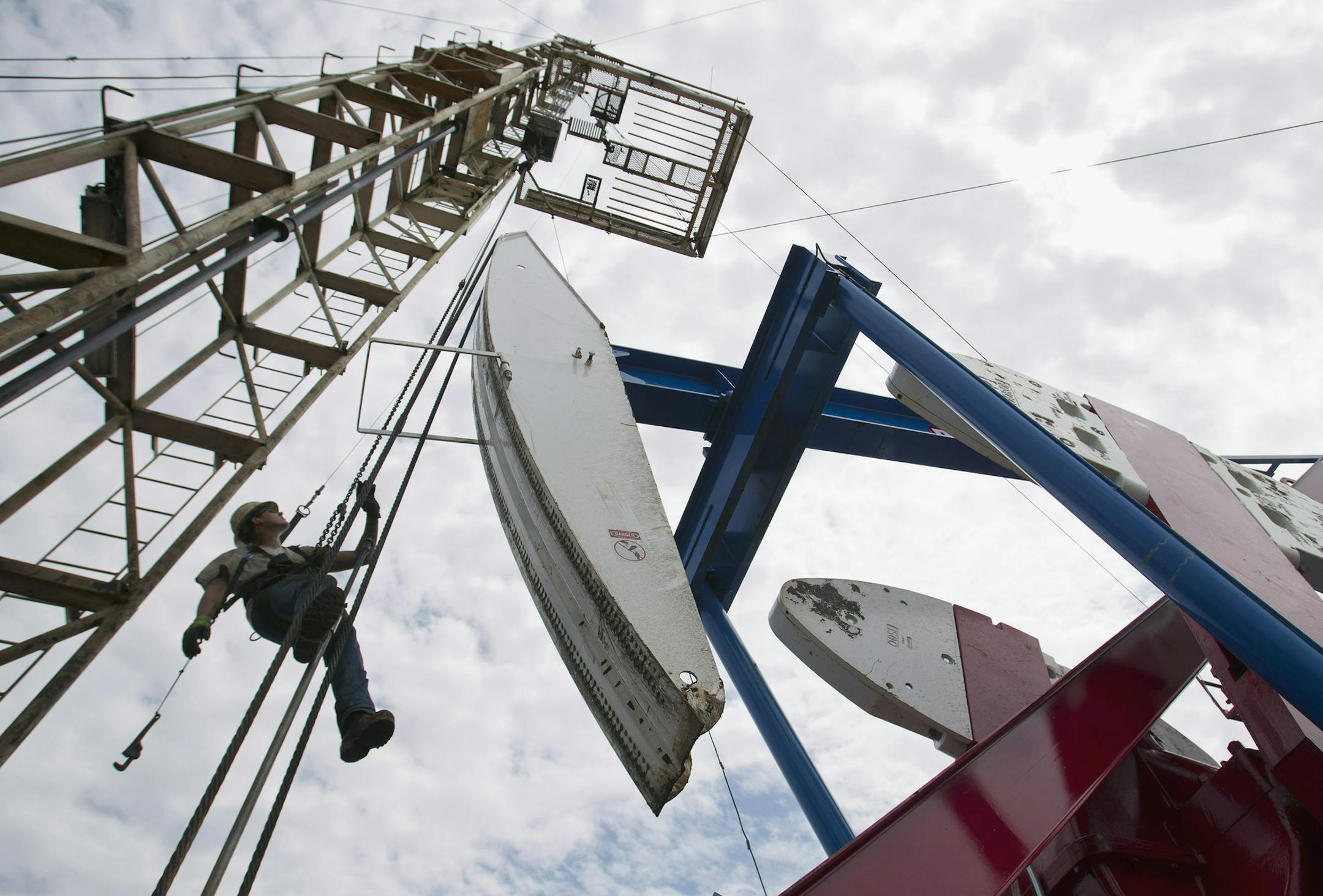
The state of North Dakota publishes a daily update on active oil drilling rigs. At last check, the number was down to 159, from 189 last year at this time and well off the May 2012 peak of 218.
The question is how low the count will fall this year. It's clearly headed to fewer than 100. Closer to zero than 100?
That kind of pessimism might seem excessive, as industries just don't get cut in half in a matter of months. But in talking with folks in the oil business last week, a 50 percent contraction in drilling activity is the view through rose-colored glasses. It's perhaps more realistic to think it's could be down 75 percent.
I didn't reach any self-described pessimists. Perhaps they have already started looking for another line of work.
What's happened in the global oil market is exactly what it appears to be — major oil producing countries are trying to put the Bakken out of business. They really have no shot at succeeding long term, but while they are trying, it's going to be very painful for producers.
Prices have been sliding since last summer. Around Thanksgiving, representatives of the still powerful oil cartel, the Organization of Petroleum Exporting Countries, emerged from a meeting and said they weren't going to cut production.
It's not their job to keep the price stable, they said, and they don't want to surrender market share to the upstart producers in North America.
That's when the price of a barrel of oil slipped under $70. More recently it's traded near $45 per barrel.


