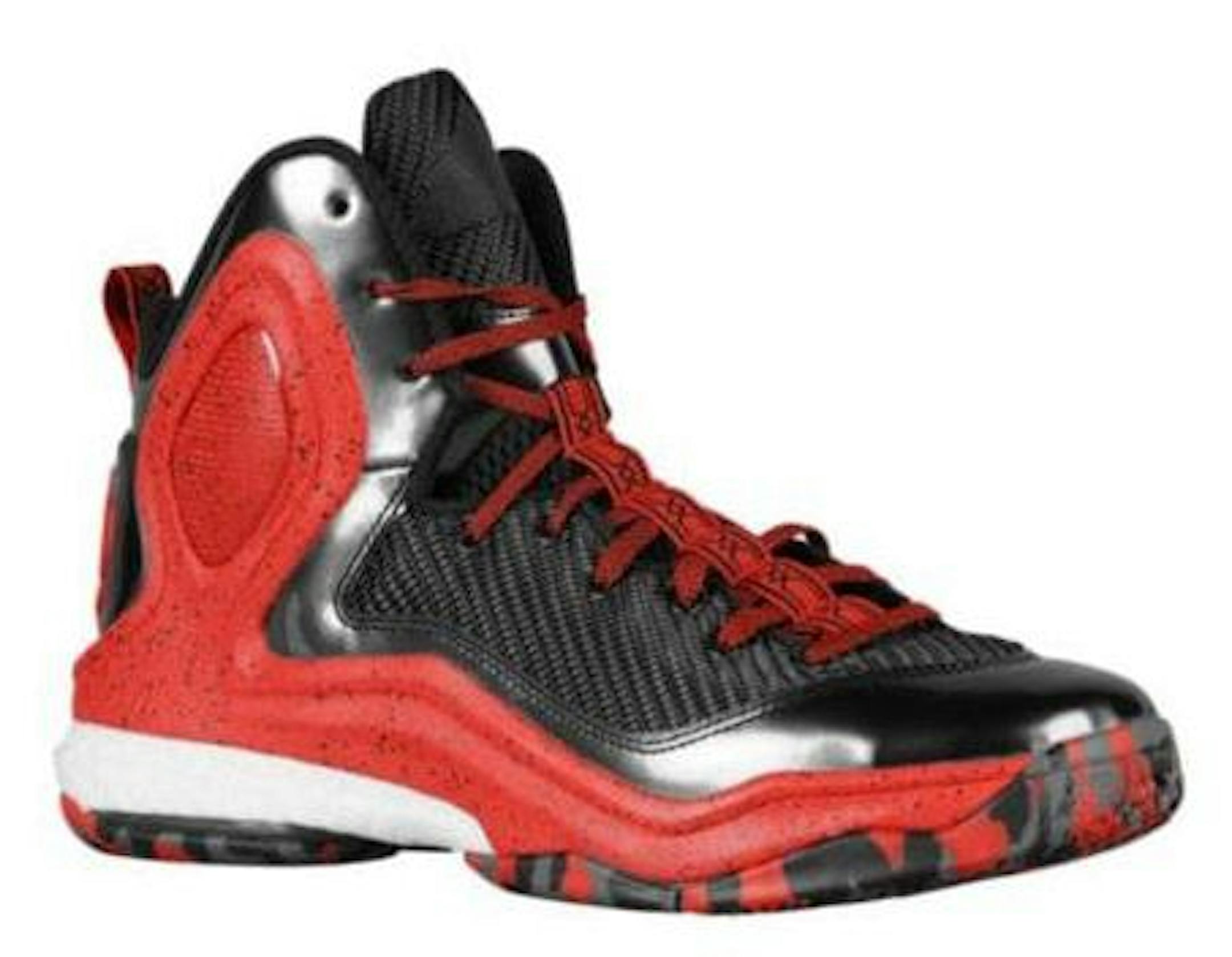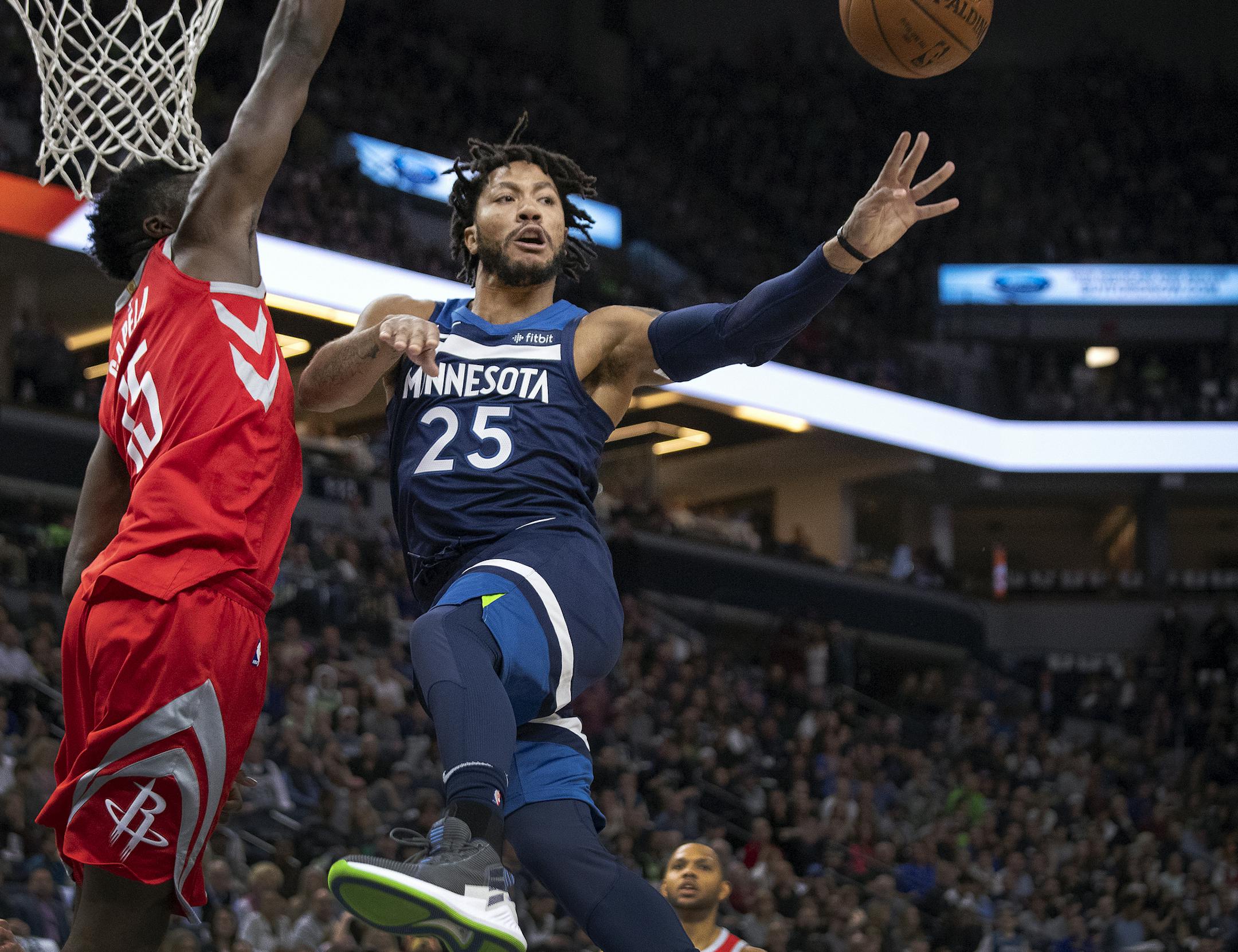
Maybe it's just a coincidence that the week after basketball player Derrick Rose agreed to re-sign with the Timberwolves, all the D Rose products by Adidas seemed to be marked down at Foot Locker's e-commerce site.
Co-branding with a bench player in an NBA backwater obviously isn't what anyone at Adidas had in mind when locking up the endorsement rights to Rose back in 2012 — a contract that has been regularly reported as worth about $190 million.
That deal now looks just plain foolish.
It still works for Rose, though. To keep millions of dollars in Adidas payments coming for one more year, it seems all he had to do was sign on with an NBA team at the league's minimum salary.
Rose's confidential endorsement deal with Adidas leaked to Sports Illustrated a while ago, so we know Adidas will pay Rose a retainer of $8.5 million this season plus his minimum annual royalty of an additional $6 million. Together that's about six times what the Wolves will be paying him.
Establishing what an athlete's endorsement is worth seems like an art, and in looking back at that contract to see how it went so wrong for Adidas, it could be that the company got it right. The company just had bad luck.
The Adidas 2017 annual report discussed some of the athletes and teams it has signed as part of its global-marketing strategy, including Wolves player Andrew Wiggins. It's an everyday occurrence in Adidas' industry to hire athletes to promote sports shoes and apparel. And the strategy works, at least according to a study some years ago co-authored by a Harvard Business School professor.
Interestingly, both the company and the athlete seemed to enhance their brands by being associated with each other, as winning a championship seems to have a far bigger positive impact on sales of a top-ranked consumer brand than it would on sales of a second-tier brand. And while sales gains decline with each successive championship or All-Star appearance, the endorsement can remain valuable over a long period of time.