

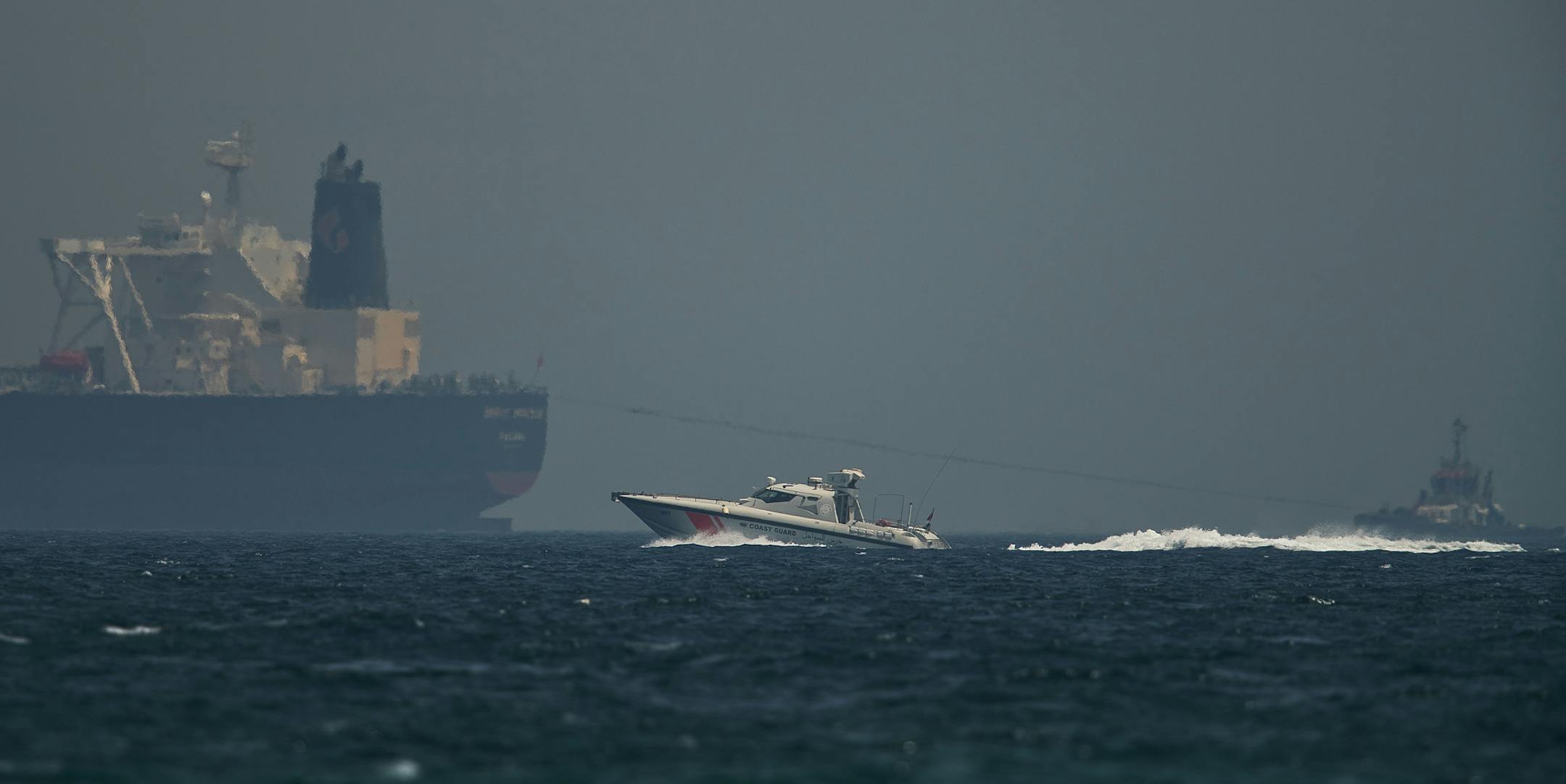
Saudi Arabia said two of its oil tankers were attacked while sailing toward the Persian Gulf, adding to regional tensions as the U.S. increases pressure on Iran.
The Saudi tankers were damaged in "a sabotage attack" off the United Arab Emirates coast on Sunday, state-run Saudi Press Agency reported. The vessels were approaching the Strait of Hormuz, the world's most important chokepoint for oil shipments. The UAE foreign ministry on Sunday reported an attack on four commercial ships near its territorial waters. No one has claimed responsibility.
The precise nature of the incident remained unclear — neither Saudi Arabia nor the UAE said exactly what happened — but the report comes at a time of heightened tensions in the Gulf. The U.S. has deployed an aircraft carrier, bomber planes and defense missiles to the region amid worsening friction with Iran, Saudi Arabia's regional rival.
Saudi Energy Minister Khalid Al-Falih said the incident aims "to undermine the freedom of maritime navigation, and the security of oil supplies to consumers all over the world," the Saudi Press Agency said. He urged countries to ensure the security of oil tankers "to mitigate against the adverse consequences of such incidents on energy markets, and the danger they pose to the global economy."
Antagonism between the U.S. and Iran intensified this month after President Donald Trump ended exceptions to U.S. sanctions on Iranian oil sales. Iran has threatened to block oil shipments through the Strait of Hormuz and has said it would scale back its obligations under the 2015 nuclear deal.
Iran's Foreign Ministry spokesman Abbas Mousavi described the incident as "concerning and regrettable" and called for efforts to shed light on what exactly happened, the semiofficial Tasnim News reported. He warned against "foreign seditious plots."
Global crude benchmark Brent for July settlement rose as much as 2.8% on Monday following the incident, but it tumbled lower as pessimism about the U.S.-China trade war set in later in the trading day.
The Strait of Hormuz connects the Gulf to the Indian Ocean. Iran lies to the north and the UAE and Oman to the south. It is the single most important waterway for global oil shipments, with tankers hauling about 40% of all the crude traded internationally every day. All oil exports from Kuwait, Iran, Qatar and Bahrain, more than 90% of those from Saudi Arabia and Iraq, and 75% of shipments from the U.A.E. pass through the strait.




