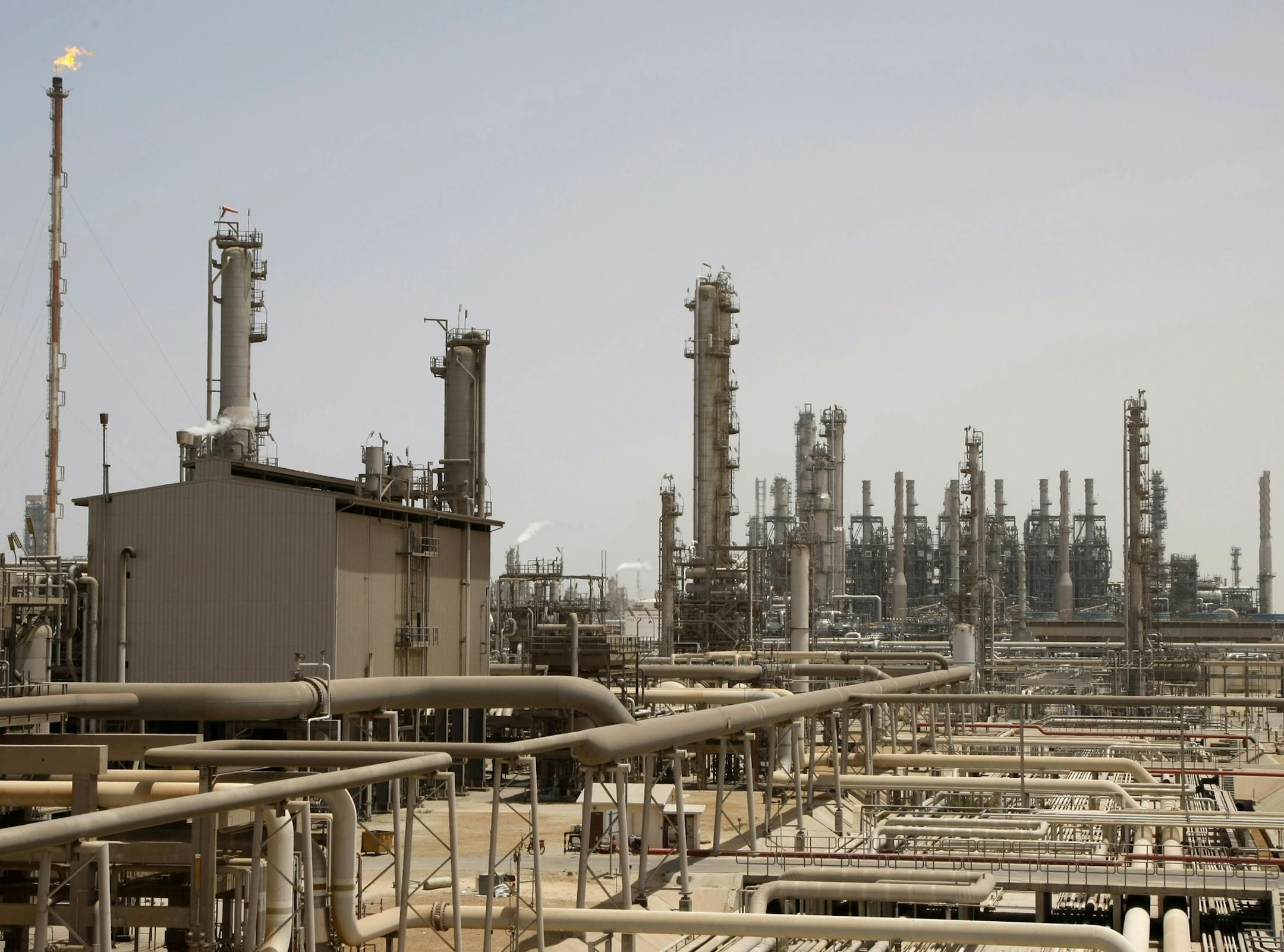
The drilling of the first modern well in Pennsylvania in 1859 set oil on a path that led to the heart of economics and geopolitics. Oil fueled the rise of the West's consumer culture; it helped determine who won World War II and prompted a global economic crisis in the 1970s. Over the past 20 years China has become the second-biggest consumer of crude, while the U.S. fracking revolution has meant it is close to being a net energy exporter for the first time since the 1950s.
Now a new chapter in oil's story is unfolding: the prospect of stagnating or falling demand as the world shifts to cleaner energy. As in the past, this era promises economic and geopolitical change.
Consider the stock offering announced Sunday of Saudi Aramco, which produces 10 million barrels of oil a day, 11% of the global total. As well as Arabian super-light, Aramco pumps out superlatives and controversy. Worth more than $1 trillion, it could, once listed, be the world's most valuable public firm, squeezing past Apple.
The initial public offering has been delayed several times; a big Aramco processing plant was hit by a missile strike in September and the firm is ultimately controlled by Muhammad bin Salman, an autocratic royal with blood on his hands.
But take a moment to look beyond this. Aramco's underlying strategy is to be the last oilman standing if the industry shrinks, pointing to the upheavals to come.
Pressure to shift to cleaner energy
The term "peak oil" was coined in 1956 by M. King Hubbert, a geologist worried about the stuff running out. Today the phrase is back but for the opposite reason: the prospect of dwindling demand.
That may seem odd given that this has grown by 1.4% a year since 2008. But the people running energy companies have long horizons, and on that time scale the picture for oil is darkened by urban pollution and climate change. Oil is responsible for a third of global energy use and a similar share of carbon emissions.
Many oil firms still say that production will creep up over the next decade, to slightly above today's level of 95 million barrels per day, and then plateau. But output will need to drop to 45 million to 70 million barrels a day by 2050 if the world is to stop temperatures rising more than 1.5° to 2°C above their preindustrial level.