

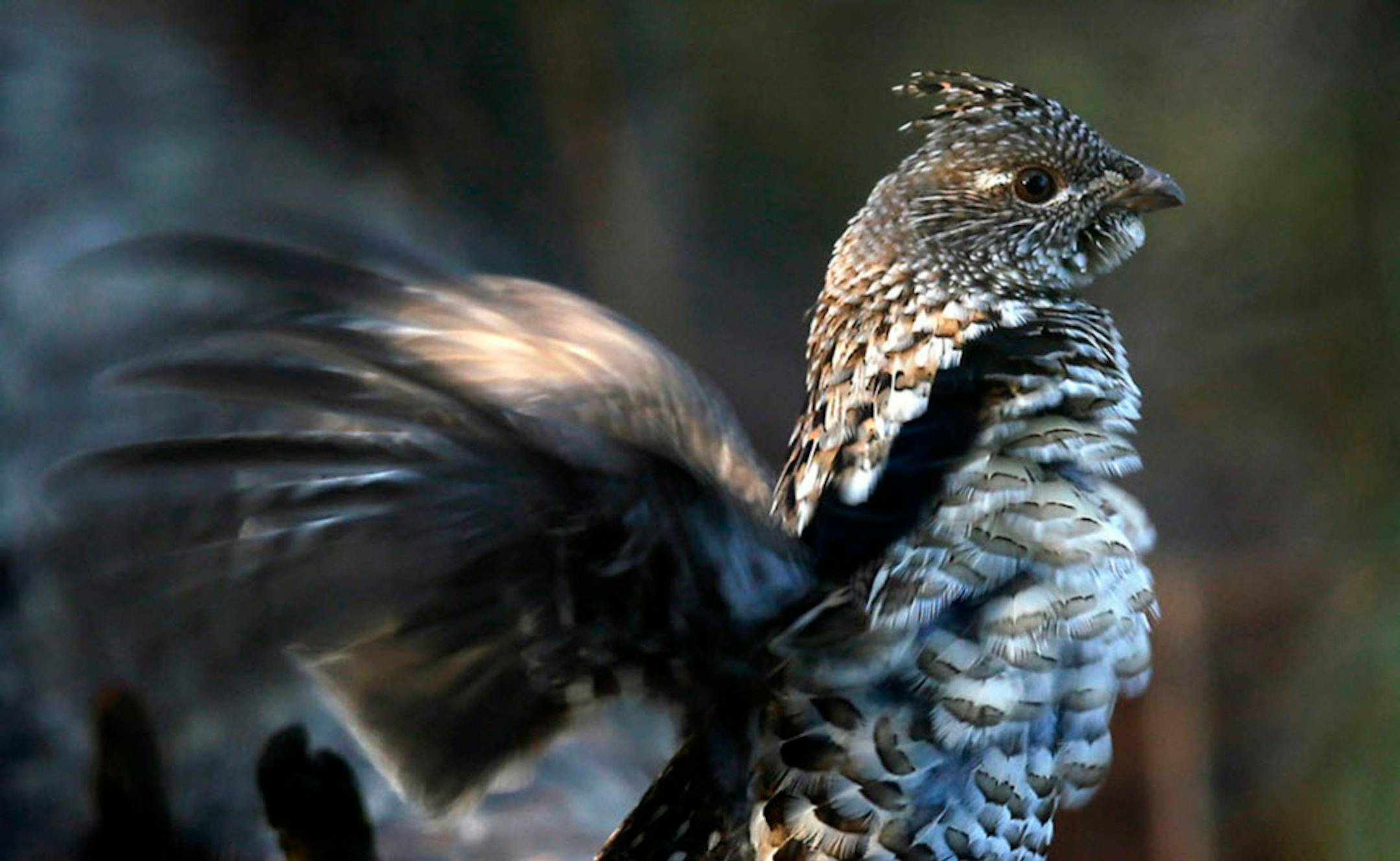
Minnesota and Wisconsin ruffed grouse are in trouble, with significant population falloffs because of West Nile disease. Or they're not — and something else seemingly is affecting these birds, which are among the most commonly hunted fowl in each state.
Recall that spring 2017 drumming counts indicated major upswings were occurring in both states' grouse populations as they edged toward cyclical population highs.
"The grouse population is nearing its 10-year peak.'' Minnesota Department of Natural Resources (DNR) grouse project leader Charlotte Roy said after the agency's drumming counts a year ago recorded a 57 percent increase from 2016 to 2017.
But either the survey — which essentially is an index intended only to detect long-term trends — was mistaken or something happened to ruffed grouse between spring and fall, when hunters took to the woods. Multiple reports from the field indicated grouse not only weren't up 57 percent but perhaps were down significantly.
"I would call it my worst season ever,'' said Ted Dick, an avid grouse and woodcock hunter who is the Minnesota DNR forest game bird coordinator and acting forest habitat team leader, stationed in Grand Rapids. "And I've been here 40 years.''
Even more compelling indications of a possible ruffed grouse die-off were harvest results last October from the annual Ruffed Grouse Society (RGS) fundraising hunt near Grand Rapids.
The 124 grouse killed during the two-day event represented a 30 percent decline from 2016. Worrisome also was that the hunt's 2017 kill was 50 percent below its more-than-40-year average.
"In previous years,'' said Dick, "harvest results from the hunt went up and down generally in concert with spring drumming counts.''


