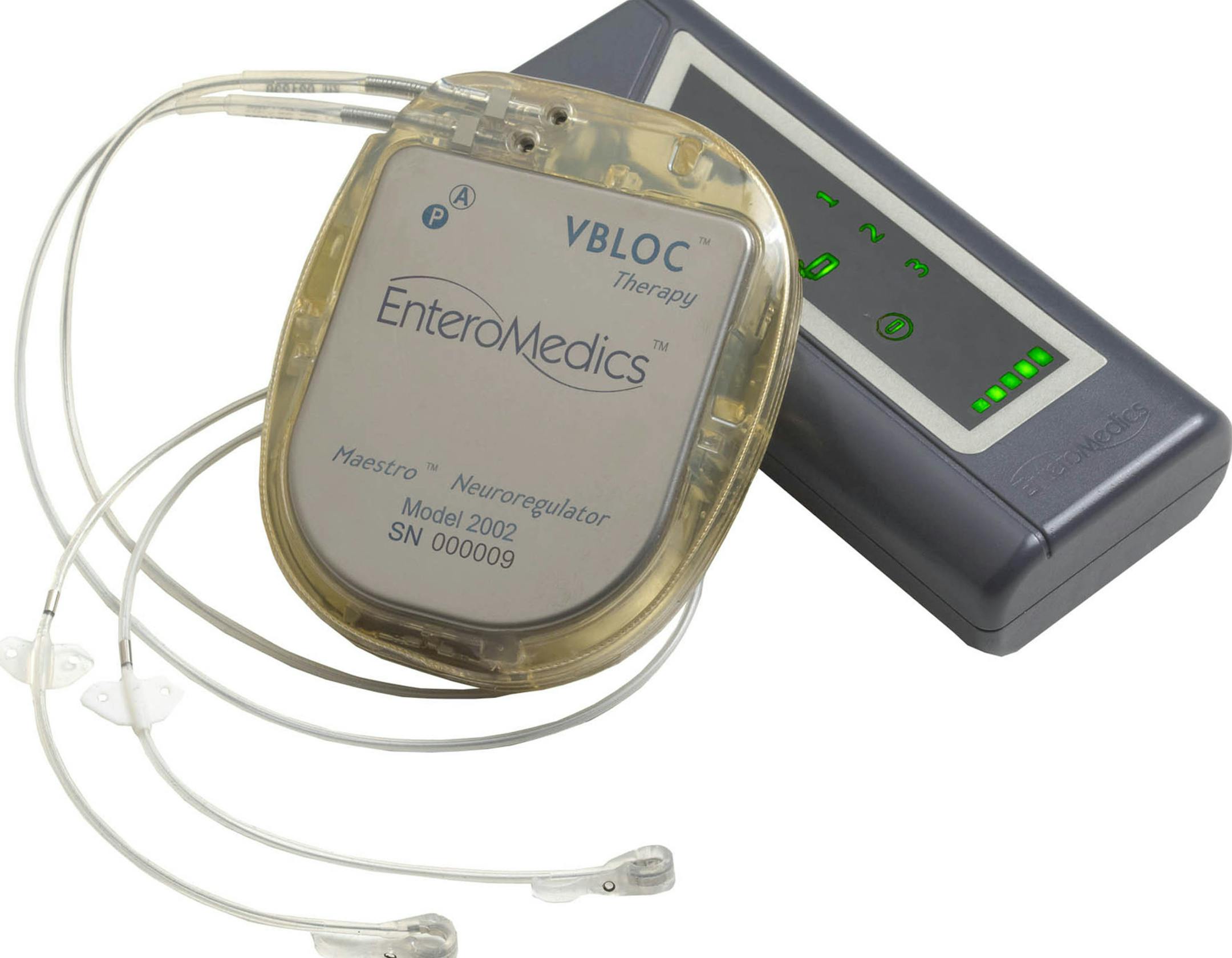
A small Roseville company has gotten approval to sell an implantable device that helps people lose weight by using electric signals to convince the brain that the body isn't hungry.
EnteroMedics Inc.'s Maestro Rechargeable System works by sending 5,000 pulses per second to the vagus nerve, blocking signals between the stomach and the brain. The result is that the stomach feels fuller by taking longer to digest food and the brain doesn't cause it to expand in anticipation of a meal.
The Food and Drug Administration (FDA) on Wednesday approved the device, which is expected to be available later this year for adult patients who have struggled with other weight-loss alternatives. The obesity-care community cheered the news as a signal that the FDA was starting to put a strong focus on a widespread condition with limited treatment options.
"This therapy is novel, and that is encouraging because when one is proven to be safe and effective … that encourages other innovators to explore other treatment avenues," said Martin Binks, a nutrition science professor and spokesman for the Obesity Society in Silver Spring, Md. "We are looking at a glimpse of a better future to provide a breadth of options to patients who are struggling to manage their obesity."
About one in three adults in the U.S. had obesity in 2012, compared with about one in five just 20 years earlier, according to the latest data published by the Centers for Disease Control and Prevention. The American Medical Association recently voted to classify obesity as a disease.
"This is a market that really needs more technology or more procedures to help battle the obesity epidemic. All the physicians we deal with say they need more tools in their tool bag," EnteroMedics chief operating officer Greg Lea said.
"We believe we are very well-positioned in an underserved marketplace for a commercial launch."
The FDA has approved weight-loss drugs in recent years, including an injectable drug called Saxenda from Novo Nordisk. While the Maestro is the first medical device for obesity in seven years, and the first that targets a neural pathway, several companies are developing other neurostimulation devices for obesity.