

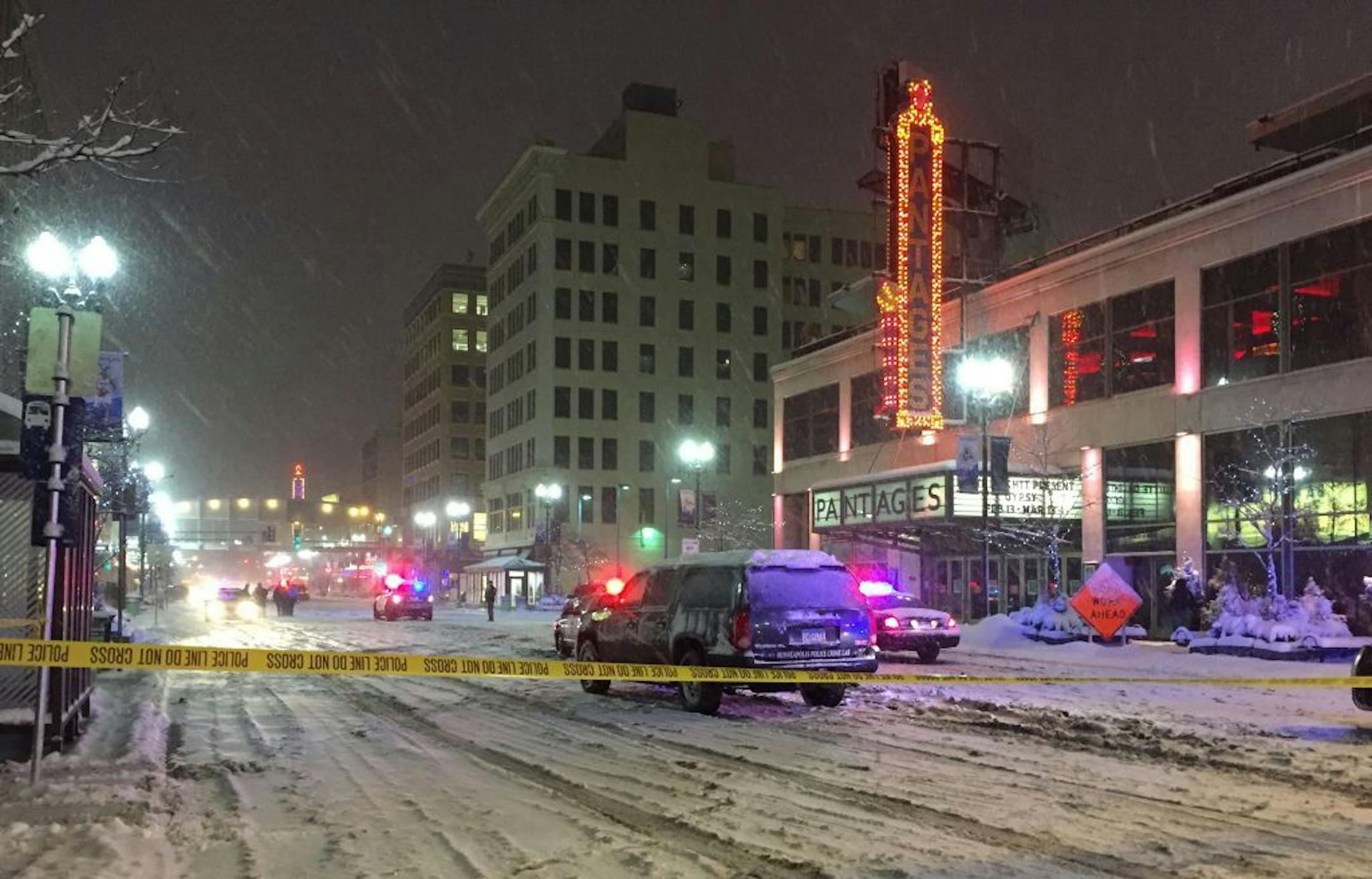
A Rosemount man is facing gross misdemeanor charges for allegedly running over and killing a pedestrian on Hennepin Avenue earlier this year in what is likely the first application of a new state law raising penalties for reckless driving.
Jake Mattern, 23, made his first court appearance Friday morning in the Feb. 2 crash that killed Rachel David. She was crossing Hennepin Avenue in a crosswalk at 8th Street, with a green light, when Mattern's truck turned left and hit her. The crash occurred during a snowstorm, but a State Patrol sergeant investigating the incident concluded that "weather conditions likely were not a contributing factor," according to the criminal complaint.
Minneapolis prosecutors filed five charges against Mattern, including gross misdemeanor reckless driving. Reckless driving was a misdemeanor until 2015, when the Legislature made it a gross misdemeanor in circumstances that result in great bodily harm. The other charges Mattern faces are failing to yield to a pedestrian, failing to use due care to avoid hitting a pedestrian, careless driving — all misdemeanors — and criminal vehicular operation resulting in bodily harm — a gross misdemeanor. If convicted, the gross misdemeanor charges could carry sentences of up to a year.
"The charging decision in this case was based on a thorough review of all the evidence, which included several different videos," said Minneapolis City Attorney Susan Segal. "And based on that review, we thought these counts were warranted and that we have probable cause."
Robert Paule, who is representing Mattern, said, "My client obviously feels very badly about this, and it's a tragedy that this woman died."
Paule declined to comment further until he could review evidence in the case.
Law got tougher
A Star Tribune investigation of pedestrian deaths in the metro area found that drivers who kill pedestrians, but are sober and stay at the scene, are typically not charged with a crime or face misdemeanor charges that carry light sentences.
But the state law change making reckless driving that results in great bodily harm a gross misdemeanor gives prosecutors a middle ground between a misdemeanor and the higher-threshhold felony charges that typically follow a fatal drunken driving crash.


