

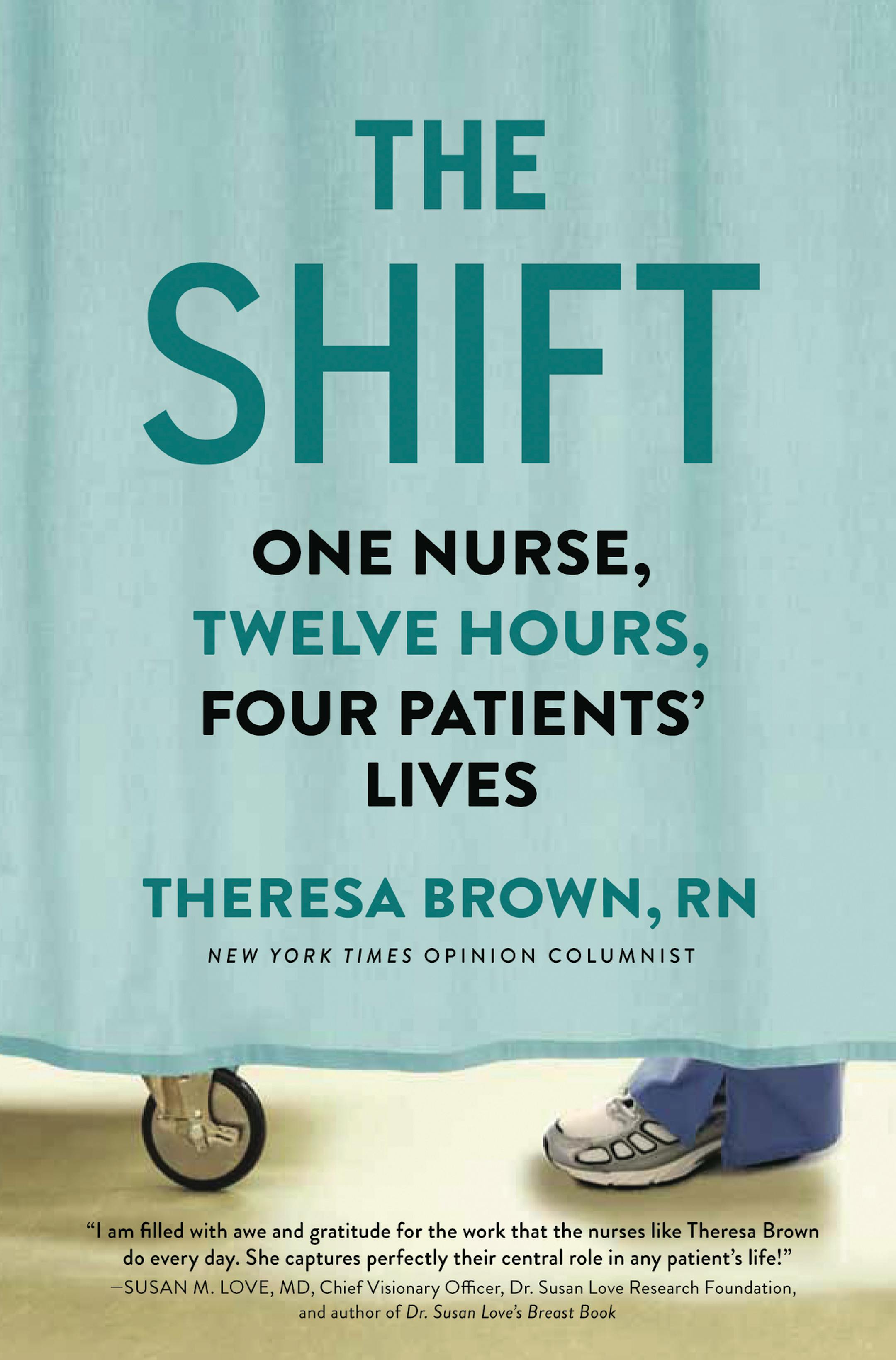
THE SHIFT
By Theresa Brown. (Algonquin Books of Chapel Hill, 256 pages, $24.95.)
Four patients to one nurse might not sound like a huge workload — it didn't to me, anyway, when I started this book. But as you read "The Shift," Theresa Brown's account of one 12-hour day in the cancer ward of a Pennsylvania hospital, you'll start to wonder how any nurse ever gets anything done, what with all the demands and interruptions, blood draws, transfers, paperwork, drug orders, pain maintenance and flashing call buttons. And this was a relatively quiet day, one with no dire emergencies.
Brown does an excellent job of taking us moment by moment through her day — meeting the patients (one difficult, one frail, one possibly dying, one about to go home); the paperwork (endless); the fail-safe procedures (also endless, but clearly important); the workarounds (not always kosher, but sometimes the only way to get things done).
Brown, who has a doctorate in English but left her university teaching job to become an R.N., is skillful at keeping the narrative flowing. The reader feels her affection and deep sense of responsibility for her patients, even the aggravating ones, and her frustration over not being able to give them each the attention she believes they need.
"I used to love a comic book series called the 'Legion of Super Heroes,' " she writes. "One of the super heroes … could divide into two fully intact versions of herself just by concentrating. Maybe I could do that, too, if I tried really hard."
Two, you think as you close this book, might not be nearly enough.
LAURIE HERTZEL
Senior editor/books
CHILLED: HOW REFRIGERATION CHANGED THE WORLD AND MIGHT DO IT AGAIN
By Tom Jackson. (Bloomsbury Sigma, 272 pages, $27.)
Without refrigerators, most of us wouldn't be here. It's a strange assertion to ponder, but one that becomes obviously true after you chew on it a bit, perhaps while nursing a warm beer. Without the preservation of food made possible by modern refrigerators and freezers, food sources would have to be close by and constantly renewed, as they were in the days of thinly populated agrarian societies.


