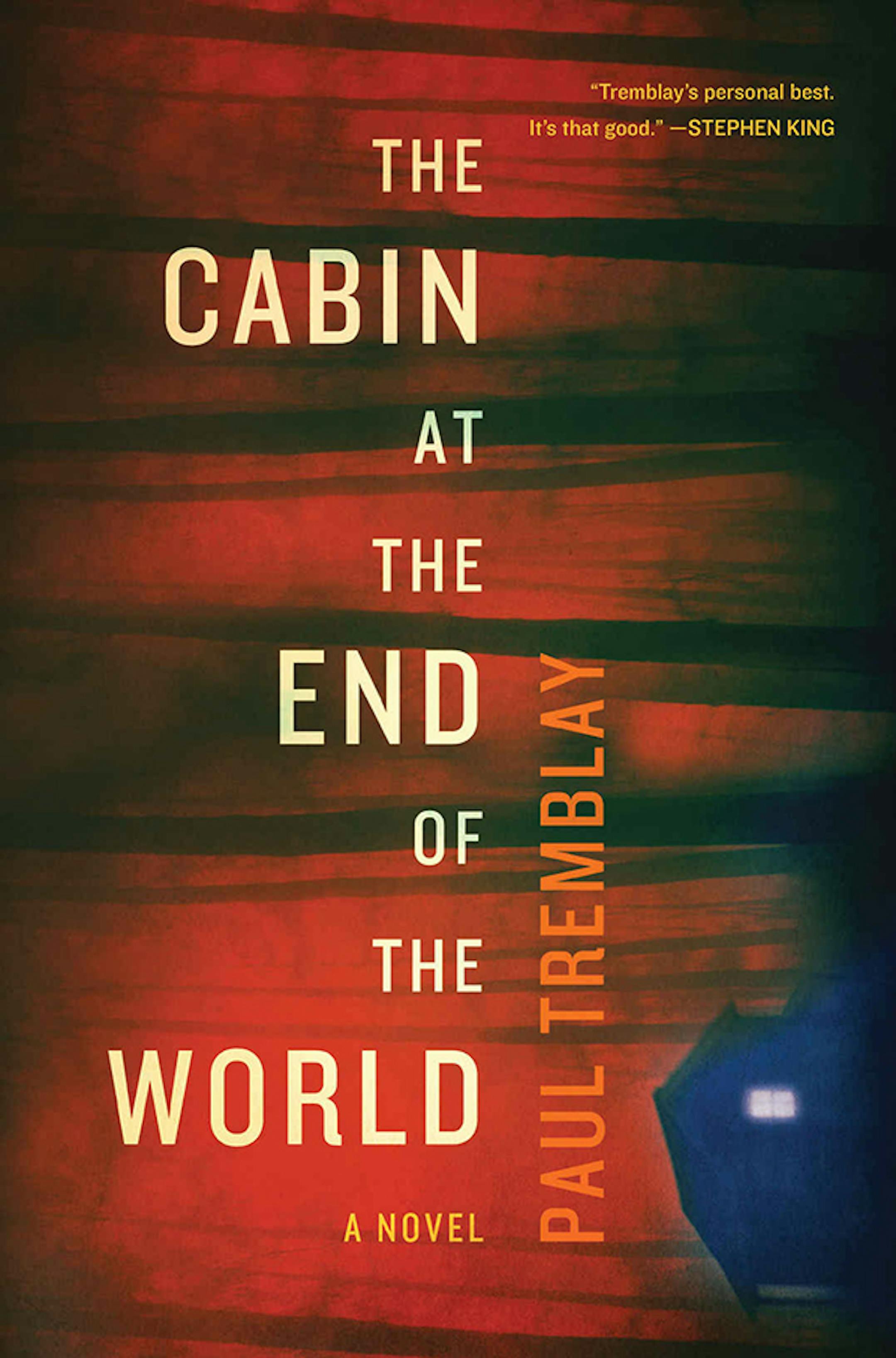
The Cabin at the End of the World
By Paul Tremblay. (HarperCollins, 272 pages, $26.99.)
Is the apocalypse a rapture or a reckoning? How much does human influence spur — or stop — its arrival?
In Paul Tremblay’s “The Cabin at the End of the World,” the apocalypse is determined by human choice, or so it seems. While on vacation in rural New Hampshire, Andrew, Eric and their daughter Wen are held hostage by a ragtag bunch — Adrianne, Leonard, Redmond and Sabrina — who prophesied the apocalypse. The group of four give the family an ultimatum: sacrifice one of the members or the world will end.
Naturally, the outlandishness of the proclamation isn’t taken seriously. That is, until the group starts to sacrifice themselves one-by-one to slow the impending end. After each sacrifice, there is news of earthquakes, tsunamis, planes crashing, people dying. Madness descends like cabin fever as the family tries to escape.
The story alternates viewpoints without order, or, in some cases, purpose. The shifts reconceptualize and confuse some of the most important scenes, at times making the plot feel as slow as the impending apocalypse.
The novel convolutes the rational and irrational, questioning faith, truth and judgment. The group begins to unravel as they face their fate and the couple begin to form separate opinions about their role in the world’s future. The choice pits two worlds against each other, one of family bonds against the fate of humanity.
Perhaps what is most terrifying is the reader’s ability to see the reasoning in both Eric’s and Andrew’s thinking. Andrew is the more rational: He argues, “Turn [the TV] on and within minutes you’re bombarded with breaking news of wars, suicide bombings, mass shootings, train-planes-and-automobile crashes.”
Eric is the tentative believer. He references a “figure of light” he equates to a spiritual, godly being. He sees the news as proof of the prophecy. As time runs out, he leans into the belief that “God was watching, listening, keeping track of what [he] said and did.” His spirituality calls into question the influence of an omnipresent higher being in the fate of humanity.
The family, injured and broken, decides to continue on regardless; they’ve “been through countless other storms. Maybe this one is different. Maybe it isn’t.”