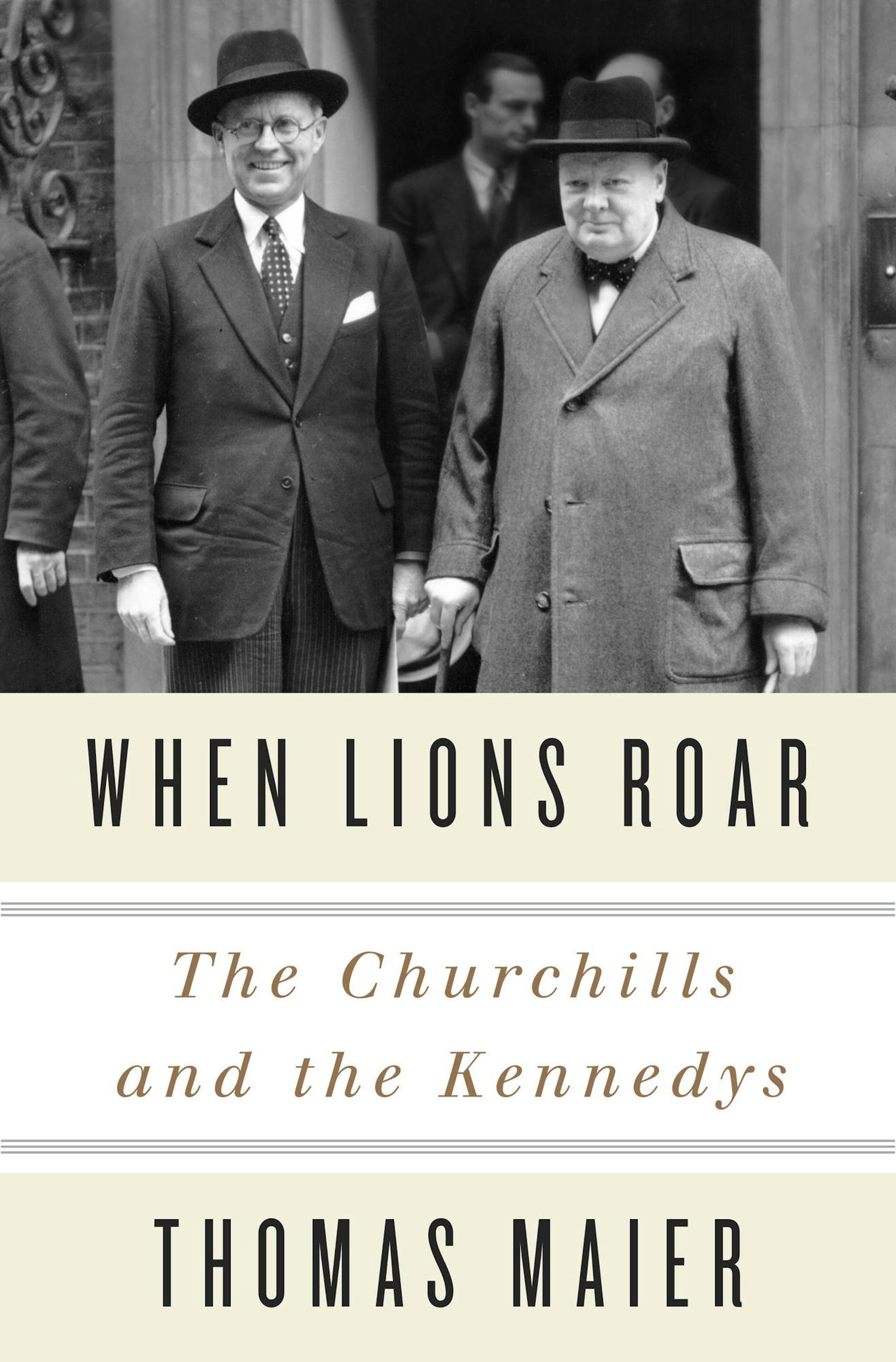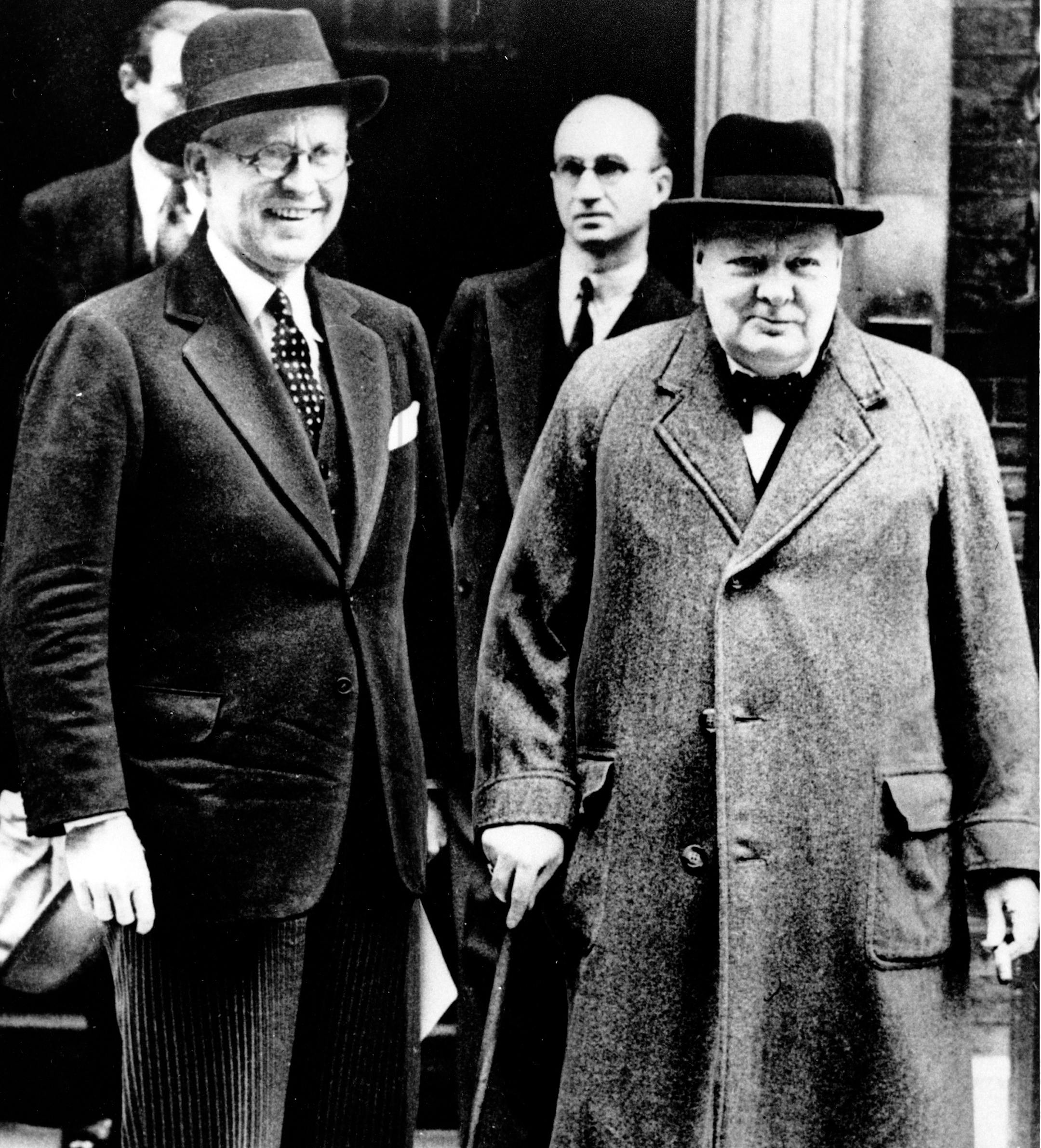
“The measure of a man’s success in life is not the money he’s made, it’s the kind of family he has raised,” Joseph Kennedy proclaimed in 1943. A failed diplomat, Kennedy sensed that his sons, Joe Jr., John and Edward, were destined to attain high political office. At the same time, writer Thomas Maier tells us, Winston Churchill was beginning to conclude that his son, Randolph, though more talented than the Kennedy boys, might not amount to much.
In “When Lions Roar,” Maier, a journalist and the author of several biographies, including “The Kennedys: America’s Emerald Kings,” provides an abundantly detailed narrative of the personal and professional interactions between two generations of Churchills and Kennedys, and the intrafamily relationships between the fathers and their sons. Winston Churchill, he argues, did not want Randolph to outshine him. By contrast, although Joe Kennedy “prepared, steered, and often dictated” the course of his sons’ lives, he also subordinated his own goals and views to their political advancement.
Maier’s archival research provides some new information. He suggests that Winston’s stock transactions in the 1920s were based on insider information provided by Joe Kennedy and Bernard Baruch. He documents the extent of British concerns about Kennedy’s support of appeasement while he was U.S. ambassador to England in the 1930s. And he uses letters, cables and cards to examine “the emotions, yearnings and private lives” of his subjects.
Maier does not succeed, however, in demonstrating that the relationships between members of the two families were all that intimate or important. And he exaggerates their intellectual debts to one another. His claim, for example, that the ambassador’s belief that England “was done for” constituted a great favor to Churchill, “provoking the furious response that awakened the world to just what was at stake” is, to put it charitably, a stretch. As Maier acknowledges, John F. Kennedy moved away from Churchill’s militaristic anti-communism and his assumptions about the British Empire by the time he became president. And Kennedy’s tax cuts were certainly not motivated by Churchill-like doubts about the modern welfare state.
Other assertions in the book are questionable as well. It’s not at all clear that Winston would have dropped the bomb on the Soviet Union “if he could,” that the Eisenhower era was “somnambulistic,” that Joe Kennedy was responsible for the decision to add Lyndon Johnson to the ticket in 1960 or that JFK surrounded himself with learned men “who knew the limits and consequences of power.”
More certain, of course, and justly celebrated in “When Lions Roar,” is the enormous impact on 20th-century public life of two families that were as fascinating as they were flawed.
Glenn C. Altschuler is the Thomas and Dorothy Litwin professor of American studies at Cornell University.