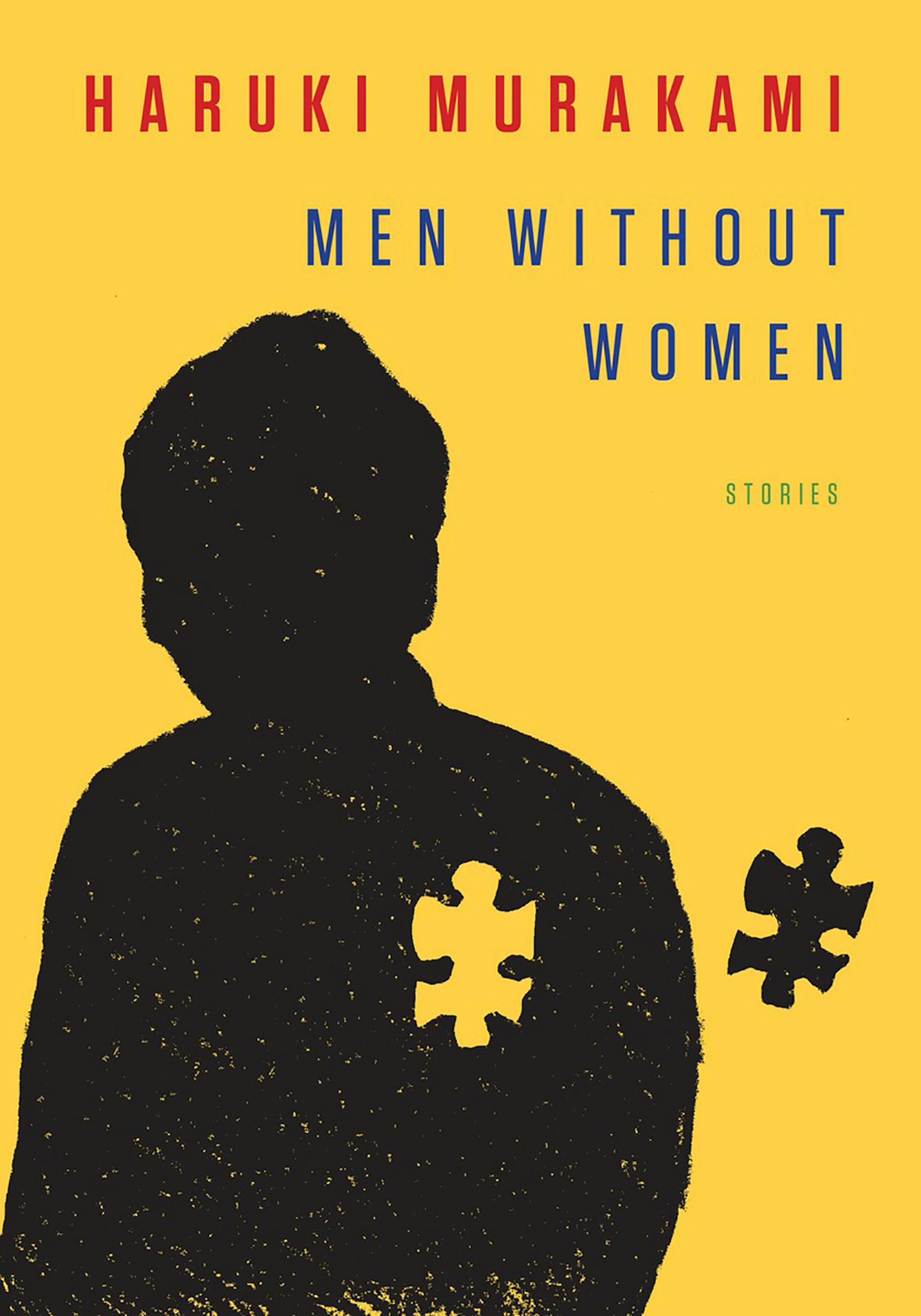
In the seven bleak stories that make up "Men Without Women," Haruki Murakami introduces us to men whose lives appear to be an emotional desert.
We meet numbed-out widowers and serial womanizers and robotic bachelors. Only their jobs and their casual affairs connect them to the world.
The stories mostly take place in Tokyo's noodle shops and cheap bars. Yet despite the forlorn situations and the dreary settings, the best of these stories hold the excitement of a quest: These odd episodes of awakening desire show men startled into an awareness of how they have shorted themselves on life.
Experienced Murakami readers will not be surprised to find here some of the trademark features of his earlier works of fiction: 1) nothing much happens; 2) two people are often discussing a third who is not present; 3) Murakami loves Franz Kafka. The Czech writer's statement that "a book should serve as the ax for the frozen sea within us" could easily be the epigraph of "Men Without Women."
We find a grieving actor hacking at these pieces of psychic ice in "Drive My Car," the story that opens the collection. Kafuku desperately misses his dead wife, who was a beautiful stage actress; he is further pained by memories of her frequent infidelities. To attempt to understand her betrayal, he invites his wife's last lover, also an actor, to a bar to share memories of her — never revealing what he knows about the affair.
The two actors meet for months afterward, as Kafuku tells his young female chauffeur, to find solace and to cautiously interrogate each other. This quietly gripping tale explores the bonds that hold a relationship together and the invisibility of what can break them.
Elsewhere ("An Independent Organ") we read of an "open and honest and self-reflective" man (a plastic surgeon) who employs a personal secretary to keep track of the many women he is seeing. Murakami's ambivalent narrator tells us that "as a veteran bachelor, [the doctor] was well acquainted with the essential techniques" of ending affairs without creating pain. Yet life has other plans for this careful and self-satisfied man, and when his awakening comes, it devastates him.
My favorite story ("Kino") centers once again on love's aftermath. After discovering his wife cheating on him with his supervisor, Kino quits his low-level sales job and opens a back-street bar.