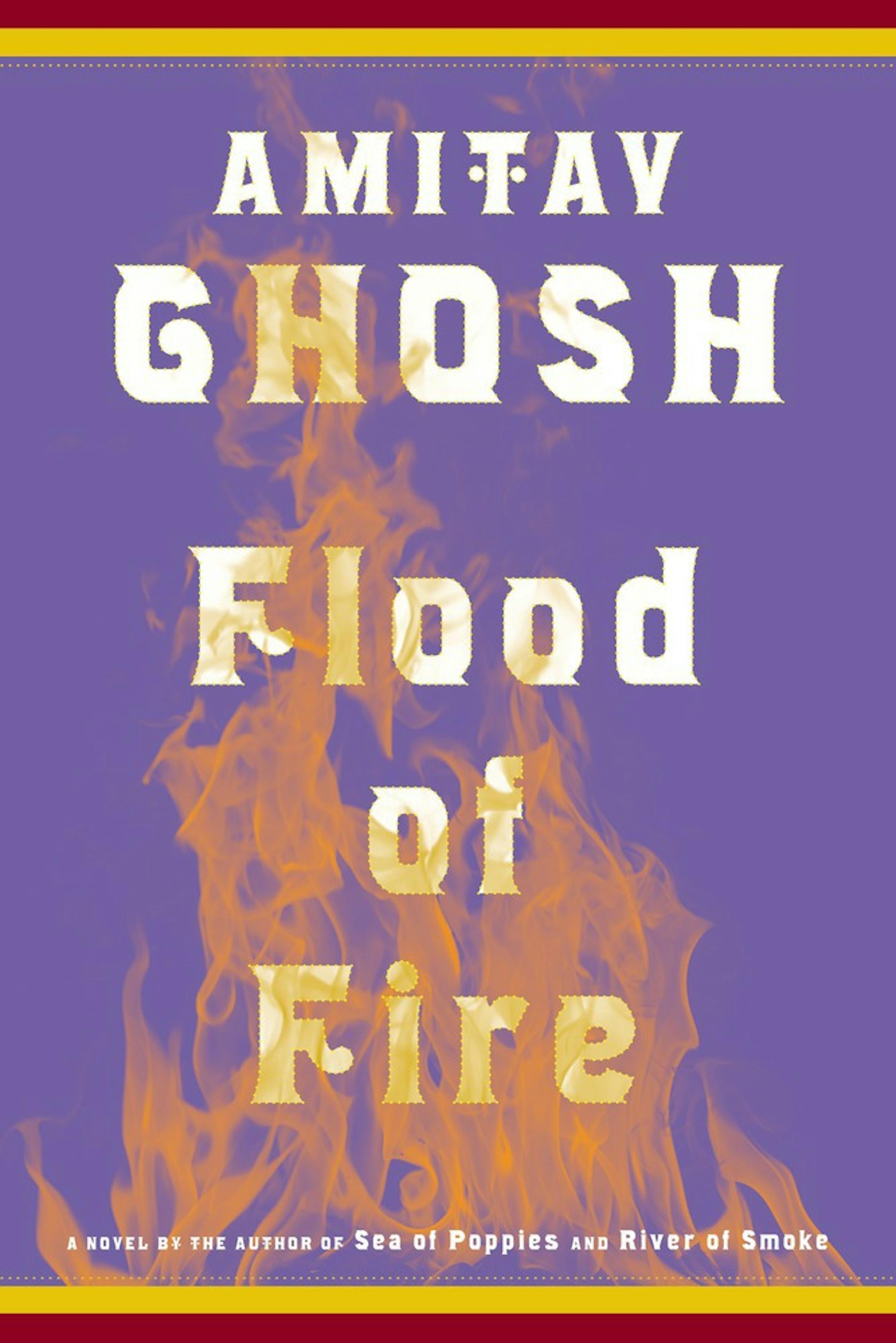
"Flood of Fire" concludes Amitav Ghosh's opium-and-world-politics trilogy in dashing, tragicomic style.
For 10 years, Ghosh's massive novels ("Sea of Poppies," "River of Smoke" and now "Flood of Fire") have chronicled the years 1839-42: the era in which the British East India Co. developed the military might and alliances, the opium market and the "religion" of free trade that powered colonialism in Asia for generations to come — and definitively shaped the 20th century as well.
The trilogy addresses the intimate relationship between the unleashing of individual desire, figured in addiction, and the viral power of colonialism, which became multinational capitalism.
"Sea of Poppies," shortlisted for the Man Booker Prize, began the story with Deeti, a poppy grower. When she is widowed, she is expected to burn with her husband; instead, she escapes with an outcaste on the former slave ship, now opium vessel, the Ibis.
"River of Smoke" takes the ever-growing cast of characters to China, the vast market for East India Co. opium. There, an incorruptible Chinese official destroys the opium destined for China — causing the ruin and death of one of the main characters, the charming Parsi merchant Bahram Modi.
"Flood of Fire" recounts how these events induce the Opium Wars and China's defeat.
While this far-flung tale develops, each character is interwoven into the unfolding of a new world order: that of commerce above all, greed become a juggernaut crushing custom and tradition.
We encounter more people, linked to characters we already know, swept up into this roiling force: Kesri Singh, a Hindu officer in the East India Co. troops, brother of Deeti and unlikely comrade of the English officer Capt. Mee, the rejected suitor of Cathy Burnham, who becomes the wife of a wealthy opium merchant. Zachary Reid, the Baltimore sailor and shipwright, escapes his grim fate as an American black man by passing as white in Asia and, through his hilarious affair with Cathy Burnham, accumulating capital in the opium trade.