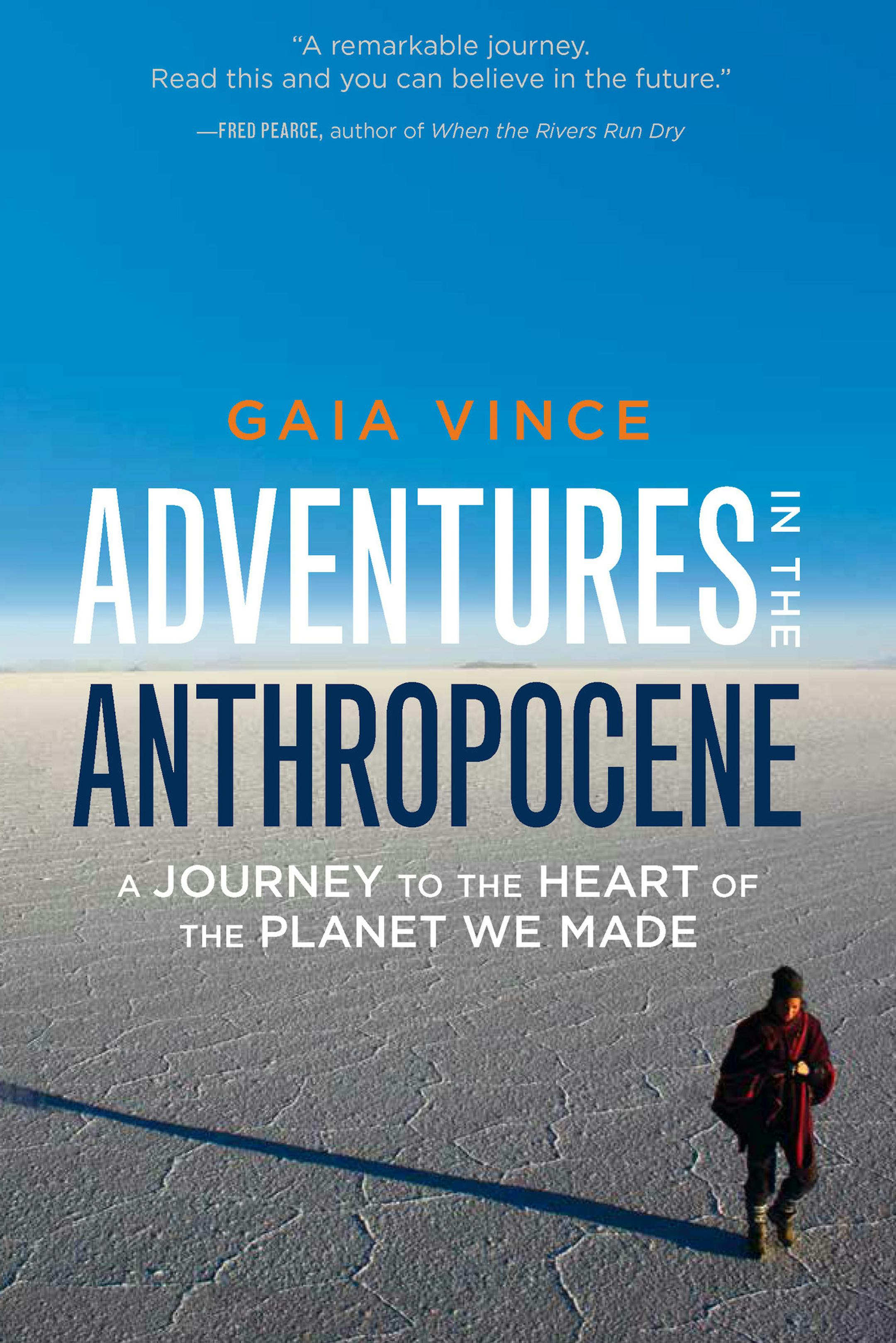
In her new book, "Adventures in the Anthropocene," science writer Gaia Vince lays out for inspection the damage that human beings have wrought on the Earth: polluted oceans, depleted stocks of wildlife, burned-out forests. The list goes on. And with global warming comes a host of new problems, some we've been reluctant to admit, even as climatologists announced last month that 2014 was the warmest year on record.
It's enough to ask: Is it possible to fix the Earth?
That's where Vince begins her real work, framing the question as a series of engineering problems: How will we find the water necessary to quench our thirst, the food, the energy? And how will that be done without destroying what we haven't already degraded?
She begins with a quick summation of human history. Consider that just 74,000 years ago, a super-volcano wiped out all but a few thousand human beings. From there, with the power of our brains and the ability to control fire, we set out on a planet-conquering course. In just the past 150 years, particularly since World War II, we have grown at a tremendous pace: A 45-year-old person today has witnessed a doubling of the Earth's population.
"The same ingenuity that allows us to live longer and more comfortably than ever before is transforming Earth beyond anything our species has experienced before," writes Vince. "It's a thrilling but uncertain time to be alive. Welcome to the Anthropocene: the Age of Man."
Time and again, Vince returns to the idea that in the Anthropocene, human beings have influenced the natural world to such a degree that it can no longer self-regulate. The only way to correct the incursions we've made is with more of them.
Skipping across the globe, from the Amazon to the Himalayas to the African plains, she documents the ways we've changed the Earth, and how new geoengineering projects might save us.
It's an age in which we genetically modify foods to make them more nutritious, seed clouds for rain, build electric fences 400 kilometers long and paint mountainsides white to create glaciers.