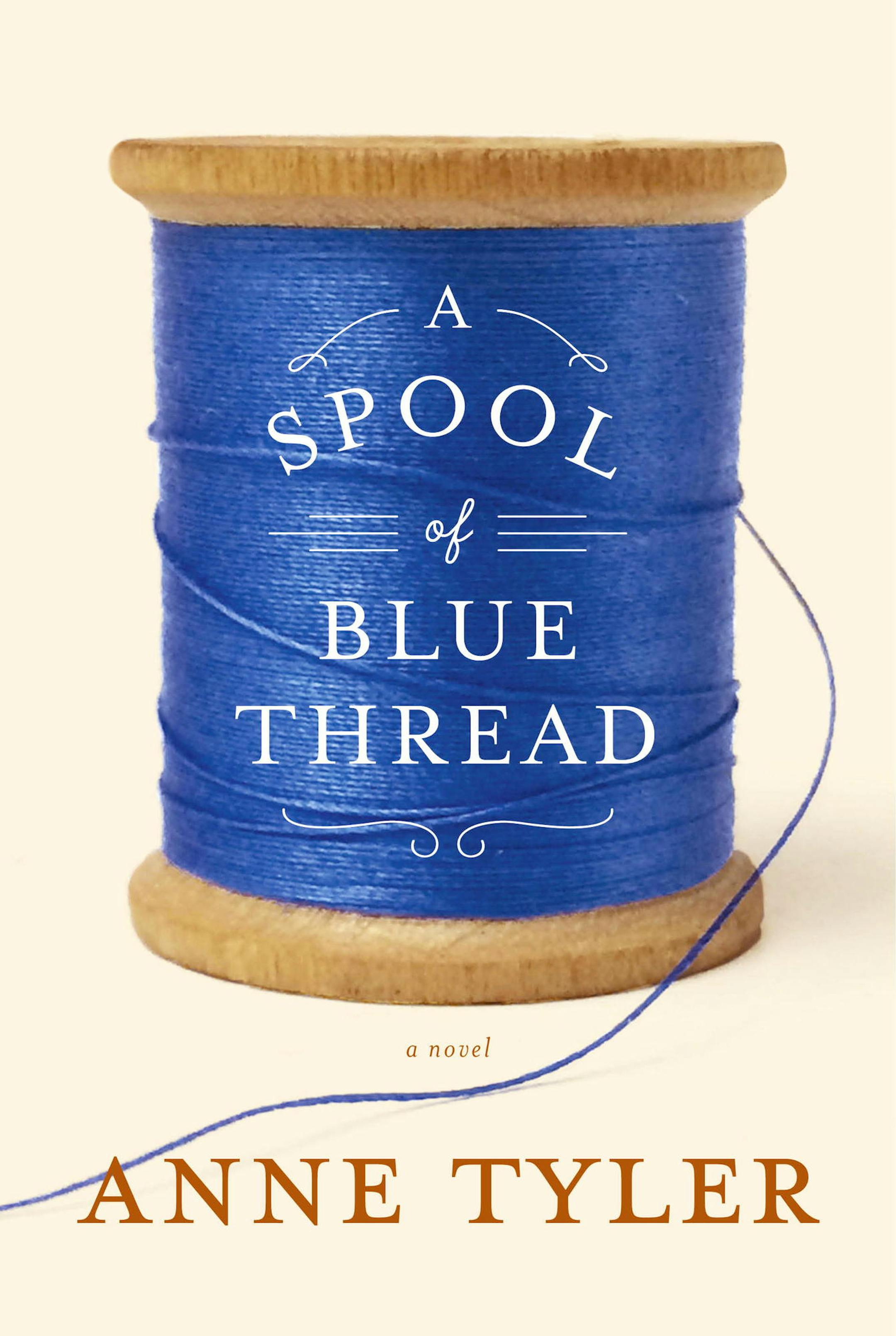
You legion of lovers of Anne Tyler are going to get this new novel of hers and love it, too. So this review is aimed at the uninitiated, the holdouts and the skeptics. For these, I'd say that Anne Tyler's "problem" is that she's too readable. Grad students, for the most part, are not going to huddle in coffee shops talking Tyler hermeneutics (although a person could spend some time on the surname in this particular novel, "Whitshank"). Her work is short on pyrotechnics (although the most sophisticated of our post-post-moderns would be hard pressed to match her wit, so perfectly timed and subtly tuned as to seem self-effacing). The breadth and depth of the knowledge deployed in her books don't extend beyond what's available to her characters, a mostly homey sort.
And yet, however modest they are or circumscribed their lives, the people in Tyler's books are engaged with the critical question — how to live? — and somehow manage to be entertaining while they're at it. While they're wondering how to do it, they're muddling through: accidental tourists, amateur marriages, breathing lessons, beginner's goodbyes. This is no less true of "A Spool of Blue Thread," which begins in what looks like something of a muddle. The Whitshanks' college-age son Denny phones in the night to say he's gay, and hangs up, leaving us no wiser than his parents about what to make of his call — which, like his mother, we didn't get to hear his end of, although his father, who answered, seems no clearer. The storytelling is with these two, Red and Abby, but not entirely with either one. Who knows what often remains uncertain. In this way Tyler precisely conveys the character of a family, the confluence of any number of personal histories in an ever-changing but clearly defined culture all its own.
How such an entity comes to be is the story this book tells. We come into it trailing Denny, who resists the family's pull, his difference and distance throwing their closeness into sharp relief — even when his aging mother's alarming lapses call him and his siblings home. Then, just as these lapses threatened to swallow the family, we seem simply to fall into one of them and emerge on the other side with Abby in her youth, falling in love with Red, observing the foibles of Junior Whitshank, the man who will become her father-in-law ("Oh, let Abby not ever get old!"). With Abby, we are surprised to learn of the wild and romantic beginnings of the marriage that produced Red. But then, by way of Junior, we're back at that beginning, which from Junior's perspective looks like something else again.
The scholar and critic Elaine Showalter, trying to account for women's absence from a literary landscape mapped by men, includes Tyler among the unjustly uncounted. With this novel, as with her others, it's easy to see why, easy to underestimate or simply miss, the art that looks and feels so much like life — which is, after all, the essence of Anne Tyler's art and, like life, never easy at its best.
Ellen Akins is a writer in Wisconsin. She teaches in the MFA program at Fairleigh Dickinson University. On Twitter: @EllenAkinsw