
Reusse: Visit by Seattle U. basketball brings back early Baylor years

The biggest name in the school's basketball history became an instant NBA star in Minneapolis.

December 18, 2014 at 12:31PM
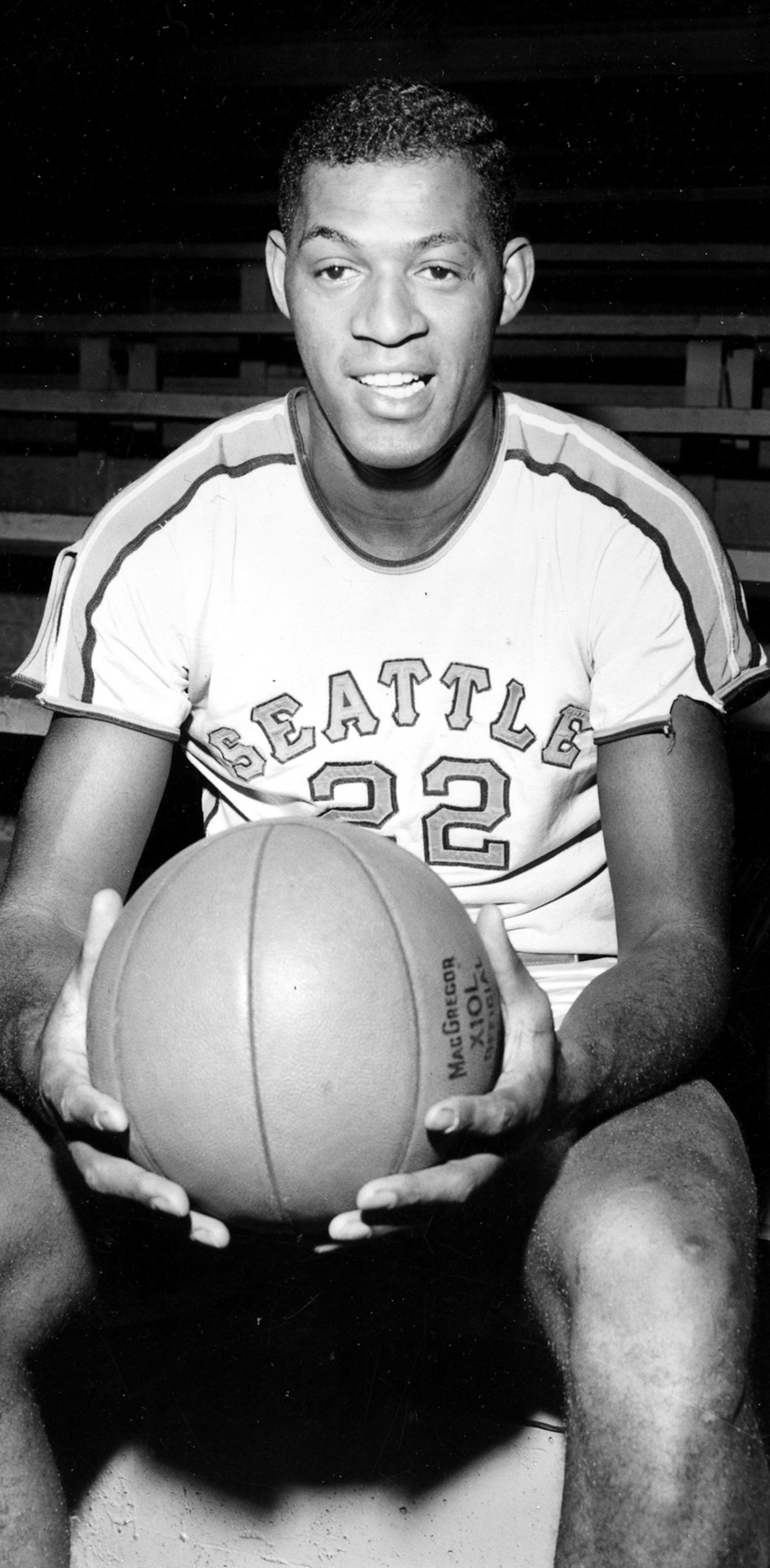
Elgin Baylor, 6-foot-five center for Seattle University, with an average of 34.4 scoring points per game, is seen in this February 14, 1958 photo, in Seattle, Wash. (AP Photo)
Elgin Baylor, 6-foot-five center for Seattle University, with an average of 34.4 scoring points per game, is seen in this February 14, 1958 photo, in Seattle, Wash. (AP Photo) (The Minnesota Star Tribune)

The basketball Gophers' annual December march through a half-dozen minor opponents inside Williams Arena continues on Friday night against Seattle University.

This is a sad reality for the season-ticket holders paying full price for minimal entertainment, and a sad reminder for Minnesota basketball followers with a long memory.

Seattle calls its athletic teams the Redhawks now and is only in its seventh season since returning to Division I basketball. While absent, Seattle lost its place in the West Coast Conference, a basketball league of solid tradition, and is stuck in the mishmash of teams that makes up today's Western Athletic Conference.

The Seattle angle for those of us with a long memory goes back to its first turn as a top-division program (1946-80), when the Jesuit school referred to its teams as the Chieftains.

Seattle played for the national championship — an 84-72 loss to Kentucky in Louisville — in March 1958. The Chieftains did so because of the presence of Elgin Baylor, a 6-foot-5 junior forward.

The Minneapolis Lakers had finished with the worst record in the eight-team NBA at 19-53 in 1958. This gave them the first draft choice, and they selected Baylor. He was eligible to sign because he had started college in 1954 at Idaho.

Bob Short was the head of the Lakers ownership and went to visit Baylor's family — particularly his influential uncle, Curtis Jackson — in Washington, D.C. There were two decisive factors in Baylor's signing:

One, Seattle was placed on two years of NCAA probation a month after playing in the title game for having provided airfare for two recruits; and two, Short came up with $20,000 for Baylor's first season.
ADVERTISEMENT

"People told me how cold it was in Minneapolis," Baylor said in a recent phone conversation. "I first got there in September and thought, 'What are they talking about? This weather is beautiful.' I soon found out those people were right."

Baylor played here only two seasons. Then Short, with full control of the franchise, moved the team to Los Angeles, where he would sell to Jack Kent Cooke in 1965 for the kingly sum of $5 million.

Losing an NBA franchise that had a 26-year-old Elgin Baylor was a greater crime against the Twin Cities sports scene than losing an NHL franchise that had a 23-year-old Mike Modano.

"I lived over in St. Paul, because it was close to where we practiced," Baylor said. "I enjoyed the local people in Minnesota. I had no idea it would be for only two years."

Short had predicted when signing Baylor that he could be the player to save the franchise for Minneapolis. That appeared to be the case in the 1959 playoffs. The Lakers, 33-39 in the regular season, defeated Detroit 2-1 in a first-round miniseries before facing the defending NBA champion St. Louis Hawks in the Western Division finals.

The Lakers were down 2-1, and then Baylor scored 32 points in a 108-98 victory at the St. Paul Auditorium. They went to St. Louis and won 98-97 in overtime, with Baylor's 36 points including a winning free throw.

Tom Briere, writing for the Minneapolis Tribune, was inspired to describe Baylor as the NBA's "Rookie of the Century."

Game 6 was played in the Minneapolis Armory. The crowd was announced at 10,179. If you've parked a car in the Armory lately, that number doesn't seem feasible.

The Lakers won 106-104. Baylor again led with 33 points. Briere termed this victory in the Hawks series the "sports upset story of 1959," and nationally, not locally.

Elgin and the Lakers lost in four straight to the Boston Celtics in the NBA Finals. He would lose six more times in L.A. to the Celtics in the Finals, and Baylor never would get a title as a player.

On Nov. 8, 1959, early in his second Minneapolis season, Baylor would set an NBA scoring record with 64 points in a 136-113 victory over Boston. Clearly, the hysteria of the previous playoff run was gone. The crowd was announced at 2,001 in the Minneapolis Auditorium.

John Kundla had left as coach of the Lakers after the 1958-59 season to replace Ozzie Cowles with the Gophers. Short hired Johnny Castellani, Baylor's former coach at Seattle, but he lasted for half of a chaotic 1959-60 season that included a forced landing in an Iowa cornfield of a DC3 carrying the team. Even with Baylor averaging 29.6 points, the Lakers finished 25-50. They won another mini-series vs. Detroit and then were eliminated by St. Louis.

Short had scheduled three home games in Los Angeles in February, and at season's end, it was official: The Lakers and their young superstar, Baylor, were moving to California.

"We played out in L.A. that winter, with all that sun and nice weather," Baylor said. "I have to admit, I was thinking, 'It wouldn't be bad playing out here all the time.' "

Patrick Reusse can be heard 3-6 p.m. weekdays on AM-1500. • preusse@startribune.com

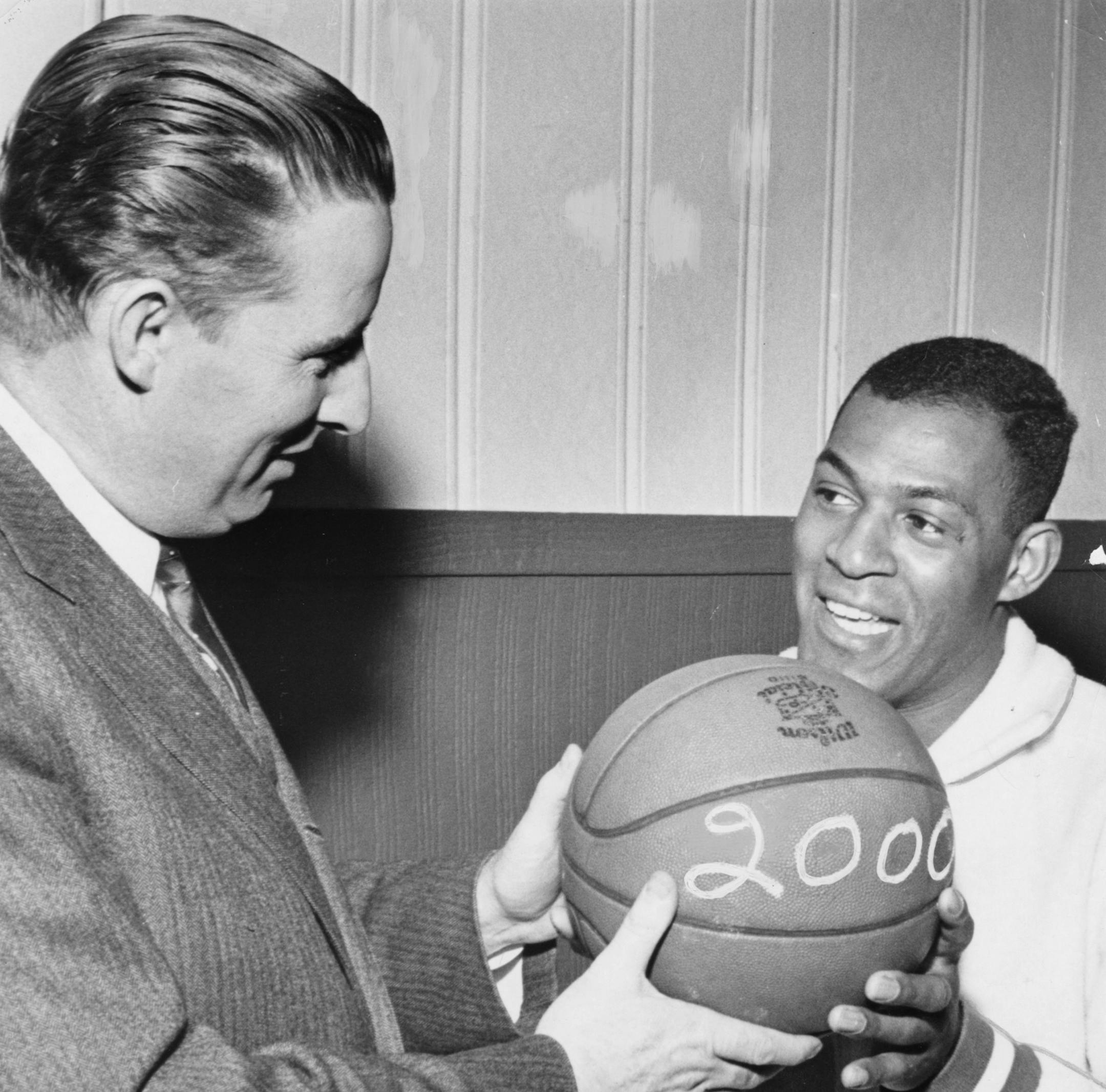
Minneapolis Lakers, 1960. Caption on back of photo: ELGIN BAYLOR FLASHES 2,000-POINT SMILE Laker President Bob Short extends congratulations. Photo by Minneapolis Star photographer Don Black, Mar. 6, 1960.
Minneapolis Lakers President Bob Short congratulated Elgin Baylor after Baylor went over 2,000 points for the 1959-60 season. (The Minnesota Star Tribune)
about the writer

about the writer

Patrick Reusse

Columnist

Patrick Reusse is a sports columnist who writes three columns per week.

See Moreicon

More from Gophers

See More
card image
Alex Kormann/The Minnesota Star Tribune

The redshirt freshman from Pennsylvania ranks second on the team in rushing this season. He carried the load when Darius Taylor was sidelined with injuries.

card image
Minnesota running back Ky Thomas (8) runs away from West Virginia safety Alonzo Addae and safety Sean Mahone (29) during the first half of the Guaranteed Rate Bowl NCAA college football game Tuesday, Dec. 28, 2021, in Phoenix. (AP Photo/Rick Scuteri)