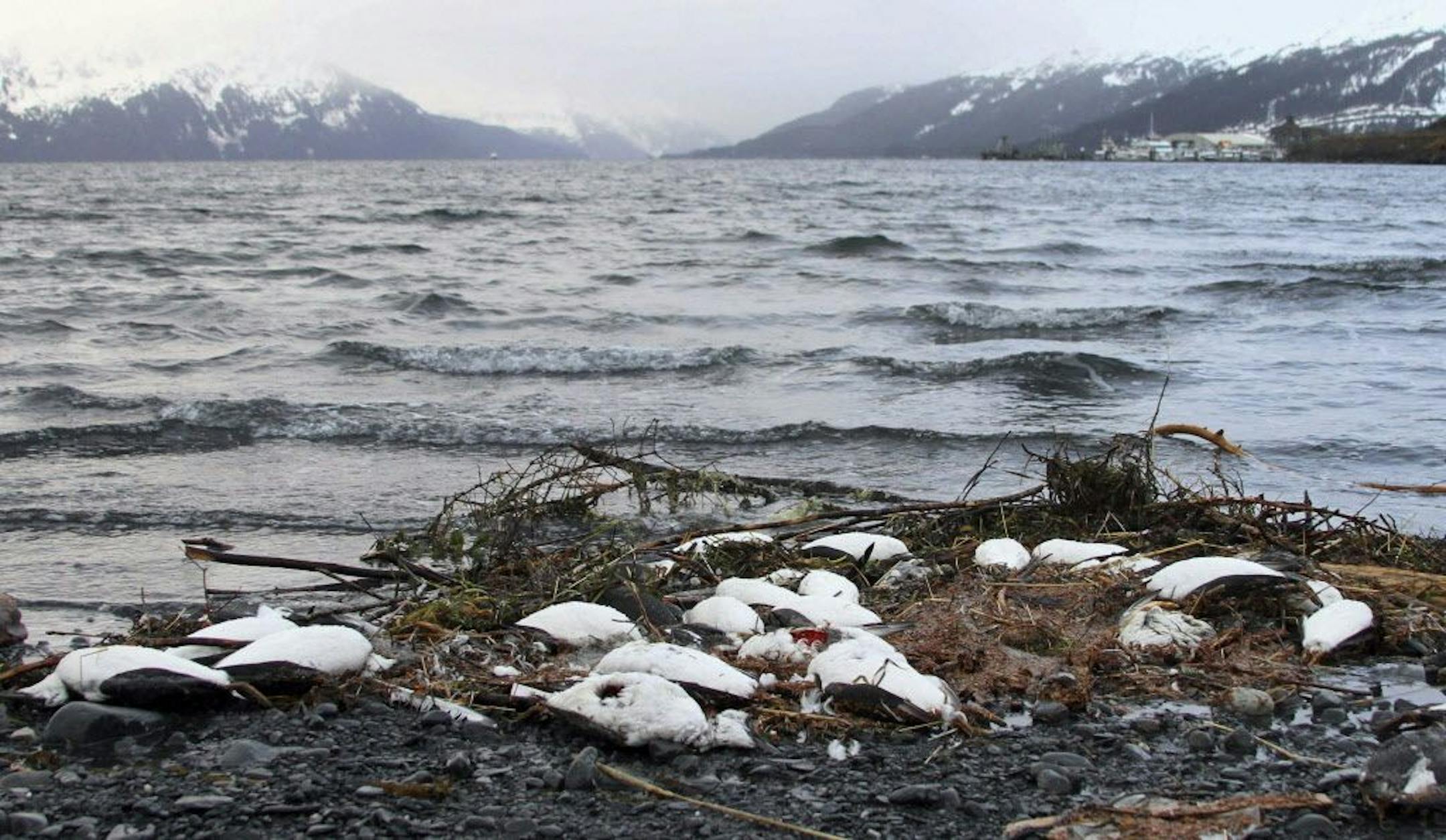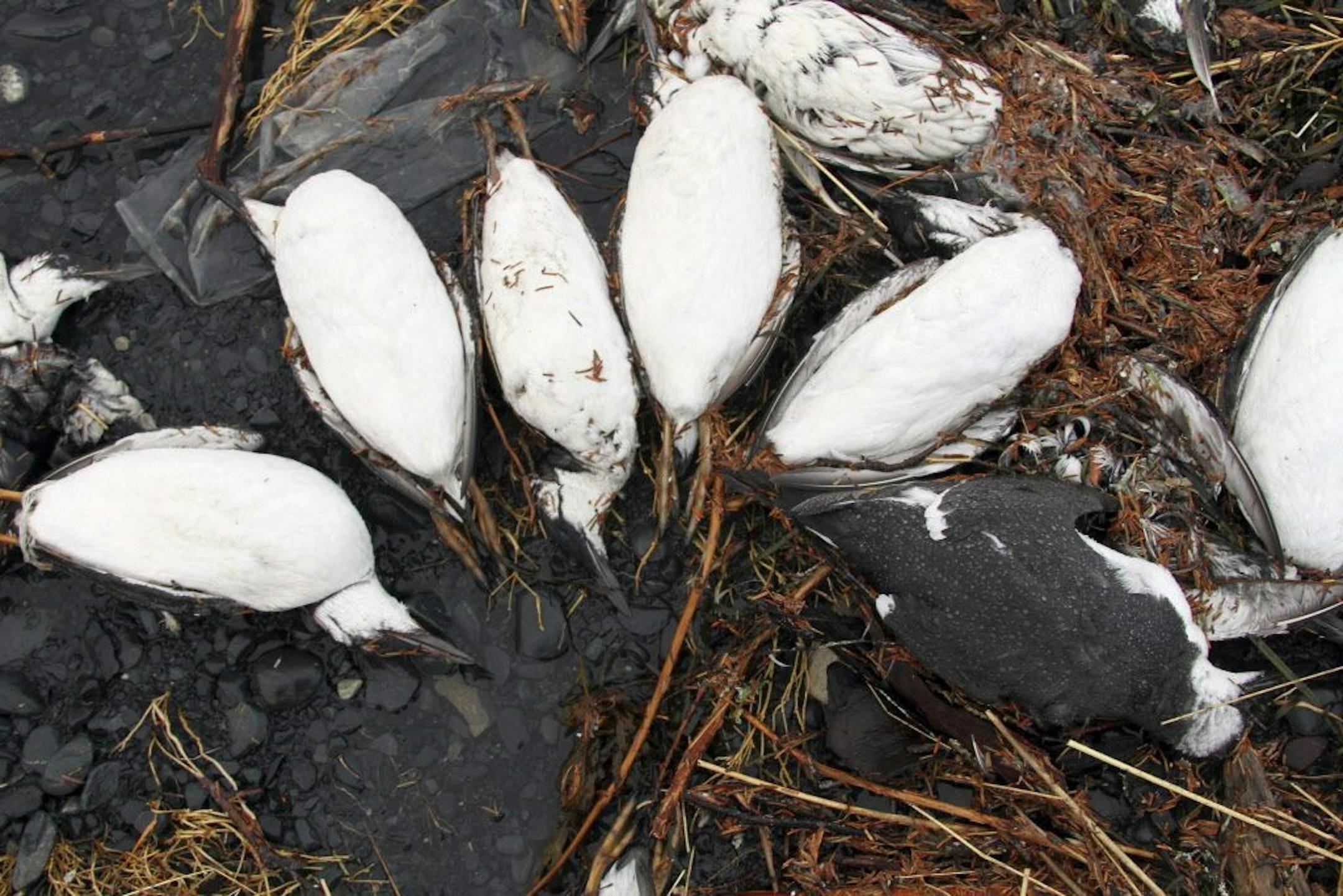
ANCHORAGE, Alaska — A year after tens of thousands of common murres, an abundant North Pacific seabird, starved and washed ashore on beaches from California to Alaska, researchers have pinned the cause to unusually warm ocean temperatures that affected the tiny fish they eat.
Elevated temperatures in seawater affected wildlife in a pair of major marine ecosystems along the West Coast and Canada, said John Piatt, a research wildlife biologist for the U.S. Geological Survey. Common murres are an indicator of the regions' health.
"If tens of thousands of them are dying, it's because there's no fish out there, anywhere, over a very large area," Piatt said.
To see such effect over two sizeable marine ecosystems is extraordinary, he said.
Deaths of common murres in Alaska likely were multiplied when starving birds in December 2015 were hit by vicious Gulf of Alaska winter storms, Piatt said.
Common murres look like thin penguins. They can fly miles in search of schools of finger-length fish and can dive and swim nearly 600 feet deep to capture them. However, the birds' high metabolism means they have to eat a lot. If they don't eat prey matching 10 to 30 percent of their body mass daily, they can use up fat reserves and drop to a critical threshold for starvation within three days.
Common murres eat small forage fish: capelin, from the smelt family, and juvenile pollock, which as adults are caught for fast-food fish sandwiches. Both fish were largely absent when the National Marine Fisheries Service conducted surveys in summer 2015.
Common murres paid the price. Volunteers and federal researchers last year counted the carcasses of 46,000 dead murres in Alaska and another 6,000 in California, Oregon and Washington.