

NEW YORK — A Republican redistricting expert advocated for adding a citizenship question to the 2020 census to give an electoral edge to white people and Republicans, opponents of the move alleged in a court filing Thursday.
The filing in Manhattan federal court said a trove of newly discovered documents revealed that Thomas Hofeller, a longtime Republican gerrymandering guru, played a key role in pushing the Trump administration to include a citizenship question on the census for the first time since 1950.
Lawyers for opponents of adding the question said the files, found on Hofeller's computer drives after he died last year, also showed that he contributed vital language to a Justice Department letter used to justify the question on the grounds that it was needed to protect minority voting rights.
In reality, the lawyers argued, the documents show the census change is part of a wider Republican effort to restrict the political power of Democrats and Latino communities.
"The new evidence reveals that Dr. Thomas Hofeller, the longtime Republican redistricting specialist, played a significant role in orchestrating the addition of the citizenship question to the 2020 Decennial Census in order to create a structural electoral advantage for, in his own words, 'Republicans and Non-Hispanic Whites,' and that defendants obscured his role through affirmative misrepresentations," the filing said.
The Justice Department denied those allegations in a statement released late Thursday, calling them an "an unfortunate last-ditch effort" to derail a U.S. Supreme Court decision on the legality of adding the citizenship question.
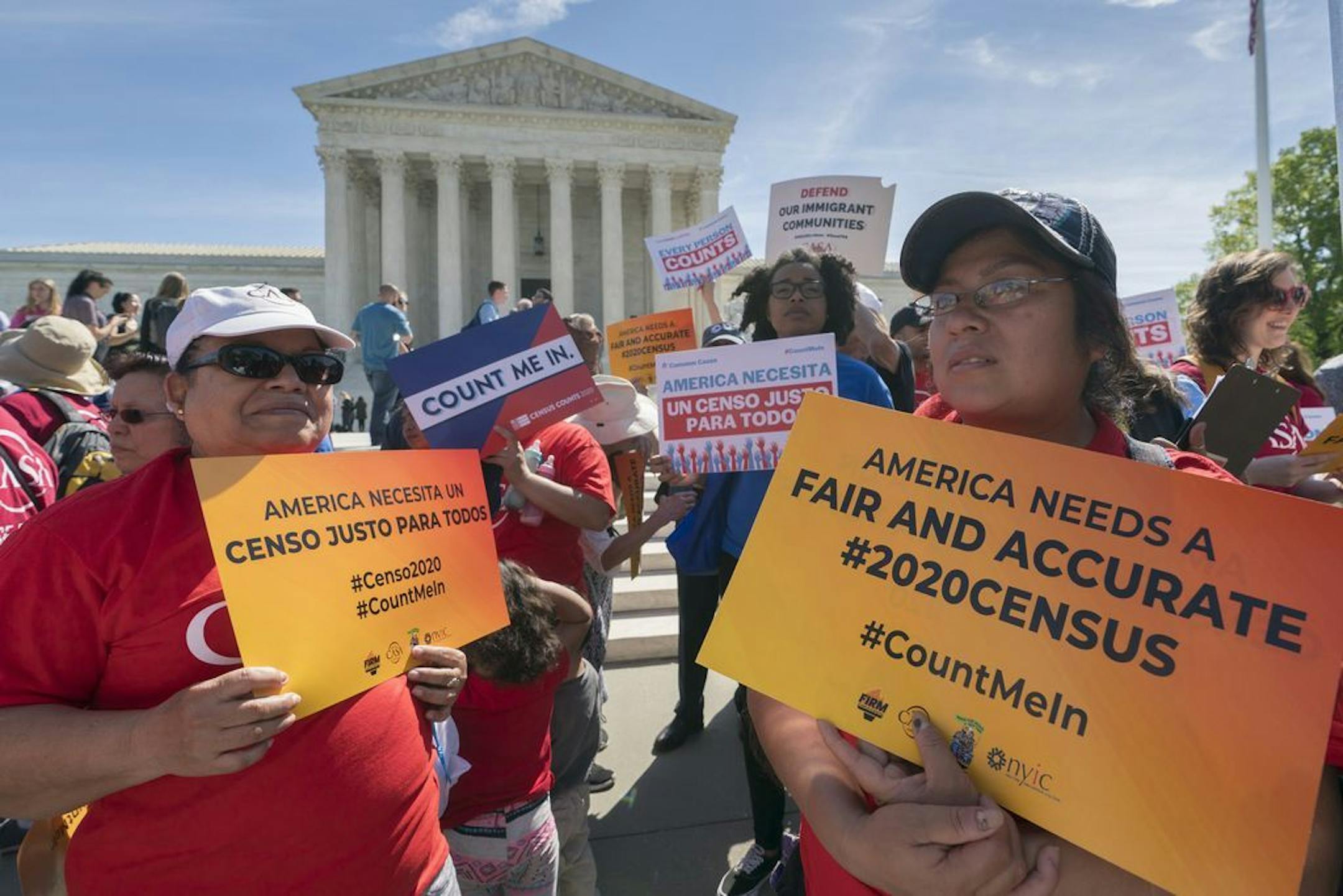
The change, announced in spring 2018, seems poised for approval by the court, which heard arguments in April and is likely to rule by July.
It's not yet clear if the Hofeller documents might affect the case, though the American Civil Liberties Union apprised the high court of the latest developments Thursday in a letter signed by Dale Ho, director of the group's voting rights project and a lawyer who argued against adding the question before the top court.


