

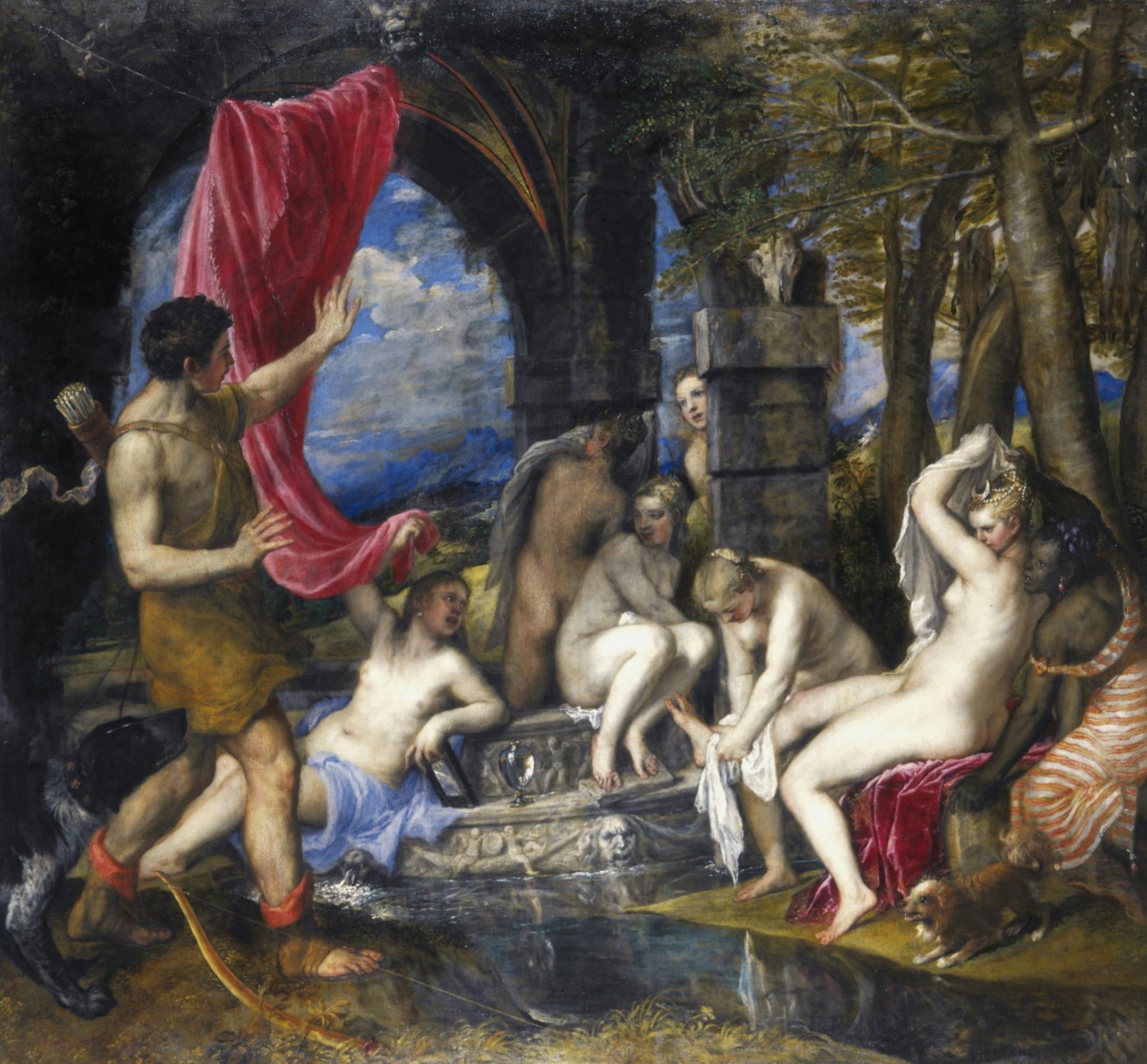
Lustrous flesh, exquisite drawing, expressive gestures, brilliant color -- no wonder the art in "Titian and the Golden Age of Venetian Painting" has been coveted by royalty and celebrated for centuries. There are just 13 paintings and a dozen drawings in the exhibit, which opens Sunday at the Minneapolis Institute of Arts, but they're big, pricey and glamorous enough to tantalize the most demanding viewers.
The star attractions are two pictures that hadn't left the British Isles in more than 200 years before this show, and are unlikely to visit again. Roughly 8 feet square, they depict bevies of nymphs cavorting nude with the goddess Diana in woodland glades where humans get into big trouble.
When they were painted by Titian about 450 years ago for King Philip II of Spain, it was the artist who called the shots. Titian was at the height of his fame, an international superstar. As the premier painter in Venice -- then the richest city in Italy (if not all of Europe) -- he rivaled the aged Michelangelo, who had recently finished his "Last Judgment" in the Sistine Chapel, and he overshadowed even the legacies of his near-contemporaries Raphael, Dürer and Leonardo da Vinci.
The young king, eager to decorate the palaces and monastery he was building, paid Titian an extraordinary compliment: He would provide an annual stipend in exchange for whatever pictures the master chose to send him. Letting an artist pick his own subjects was unheard of then, especially for royalty. Between 1548 and his death in 1576, Titian painted nearly 30 pictures for Philip.
The national galleries of Scotland and England paid $75 million for one of the Diana paintings two years ago and promised to raise another $75 million for its partner. Estimated to be worth up to $400 million if they'd gone to auction, the pair were considered a bargain.
"Pictures of this quality are not abundant in this country and these are extraordinary, so for us to have them here is a rare opportunity," said Patrick Noon, the institute's painting curator.
The exhibition features works by an A-list of Venetian talents from the 1500s, when the city was revolutionizing painting. By combining ripe colors with refined compositions and a warm, fleshy opulence, the Venetian school both humanized and ennobled its subjects. Highlights include four paintings by Titian, two each by Paolo Veronese and Paris Bordone, plus scenes by Tintoretto, Lorenzo Lotto, Jacopo Bassano and others. Biblical events and tales from classical mythology are featured along with incisive portraits and related drawings.
From Venice to Scotland


