

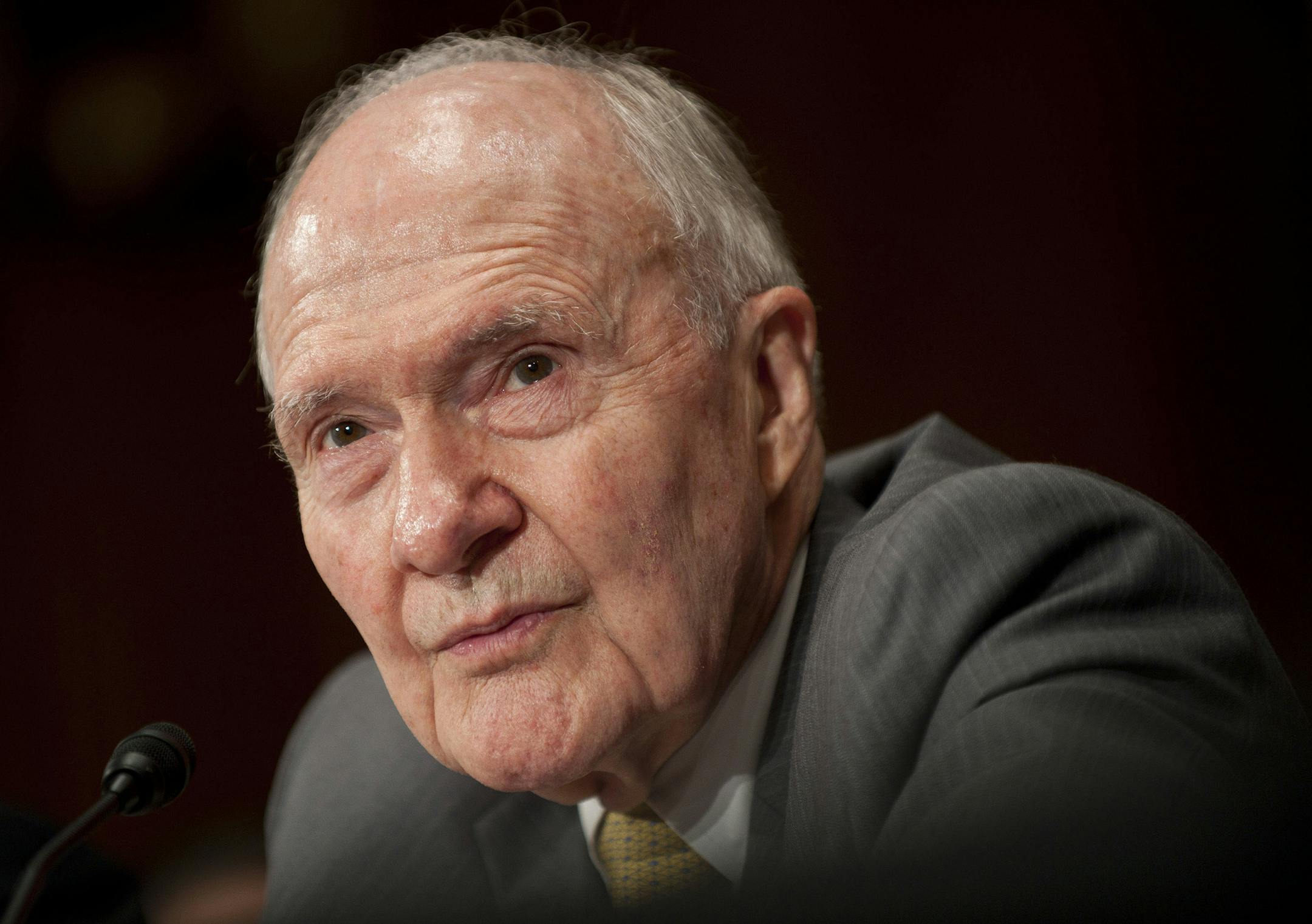
Few people have had a greater impact on U.S. national security affairs over the last 40 years than Brent Scowcroft, who died last week at age 95. Presidents from Richard Nixon through Barack Obama consulted Scowcroft on many critical foreign policy issues, and he served two of them (Gerald Ford and George H.W. Bush) as their national security adviser.
Scowcroft's influence ranged across many issues, from arms control and nuclear weapons policy to America's relations with China and the Soviet Union. He played a pivotal role in helping to wind down the Cold War and managing the run-up to the Gulf War.
But his lasting influence was perhaps less on policy than on process. As national security adviser, Scowcroft set the standard for how to balance the dual roles of honest broker among different policy perspectives and presidential adviser on major policy matters. Every one of the 11 women and men who followed in his footsteps have sought to make the "Scowcroft model" their own — with mixed success at best.
Scowcroft perfected the model during his four years as Bush's national security adviser. But it was based on the wealth of experience he had gained working in and closely observing the White House in the previous two decades.
As Henry Kissinger's deputy under Nixon, he learned that elevating the national security adviser to a large public and operational role came with significant costs, not least in undermining the secretary of state and others who are normally in charge of executing foreign policy. The adviser, he found, would be more effective if he operated behind the scenes. He "should be seen occasionally, heard even less," Scowcroft often remarked.
But operating in the shadows didn't mean that the adviser should do so in secret, without involving other key players in the government. This lesson Scowcroft learned as a member of the Tower Commission, which examined how Ronald Reagan's National Security Council staff had gone badly off track when it covertly sold arms for hostages to Iran and used the proceeds to secretly fund the Nicaraguan Contras. The adviser, Scowcroft concluded, could succeed only if he operated inclusively and openly, as part of a clearly defined process, rather than secretly and on his own.
Though Scowcroft had hoped to serve as his secretary of defense, Bush asked him to reprise the role of national security adviser he had so effectively performed under Ford when Bush headed the CIA. Scowcroft agreed and set out to build the model that now bears his name.
At the core of that model is a commitment to an organized process for bringing all the various national security actors together on a regular basis for deliberating and deciding policy. This "interagency process" brings together cabinet secretaries in a Principals Committee chaired by the NSC adviser, their deputies in a Deputies Committee chaired by the deputy NSC adviser, and a series of functional and regional assistant-secretary level committees chaired by senior NSC directors. Every adviser since Scowcroft, including all four of Donald Trump's advisers, have used this organizational design as the basis for policy deliberation.


