

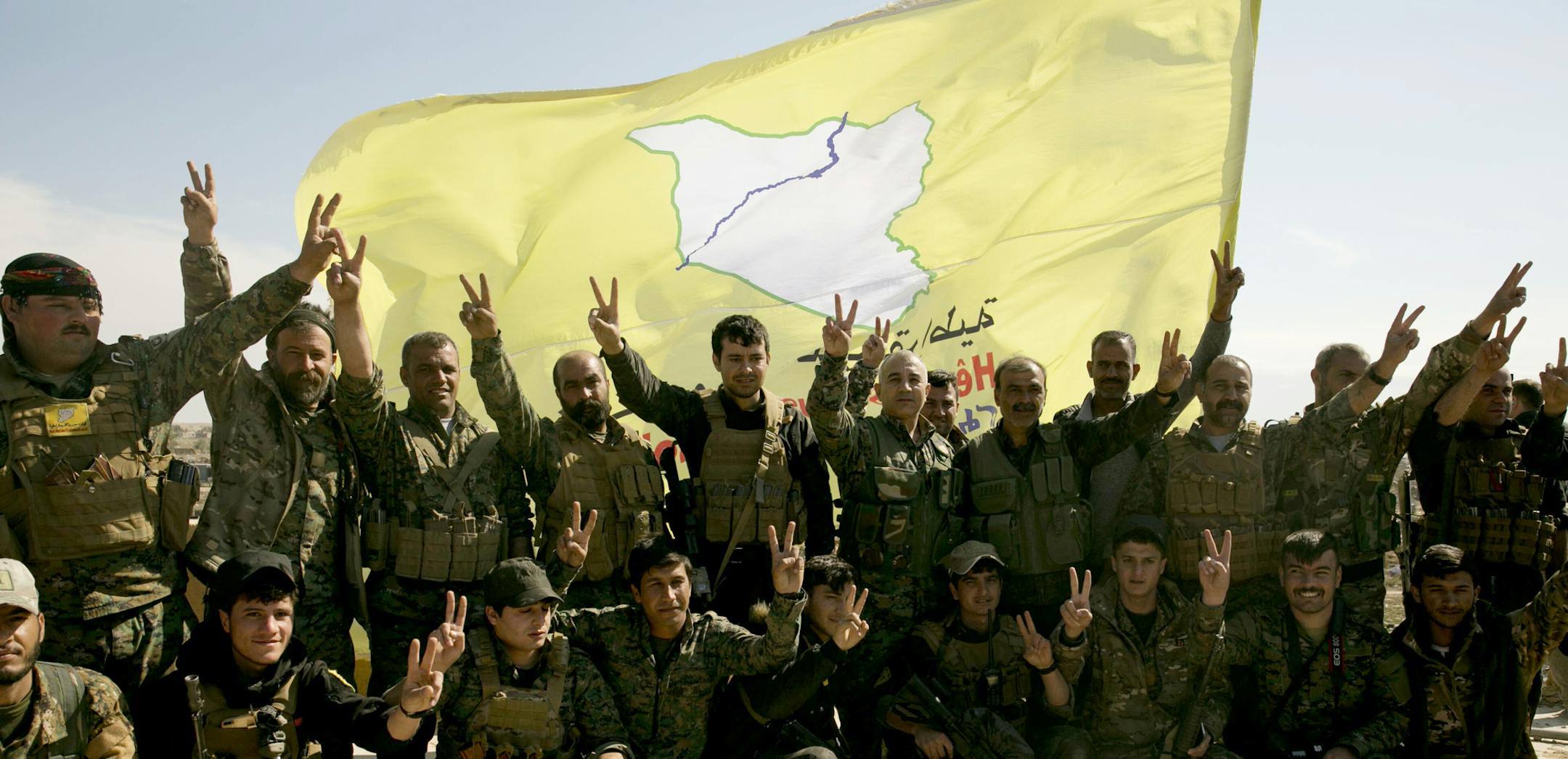
The "caliphate" has fallen.
The Islamic State of Iraq and Syria (ISIS) has not.
So the multinational coalition that conquered the terrorist group's last patch of land in Syria needs to remain vigilant and on the offensive.
The victory is a relief for a region reeling from multiple conflicts, but its significance, given the worldwide threat of terrorism, is global.
Credit can be widespread. In particular, praise is due to indigenous forces in Iraq and Syria, where ISIS once controlled a broad swath of land about the size of the United Kingdom after it blitzed disunited governments in Baghdad and Damascus, whose dysfunction in part created conditions for the group to gain ideological and territorial hold in each country.
In Iraq, after an initially disastrous performance by its armed forces, Iraqi troops (as well as some armed militias) regrouped and took the fight to ISIS, thanks in no small part to crucial help from U.S. forces, whose intrepid leadership helped roll back ISIS gains.
In Syria, U.S. forces also helped advise fighters of the Syrian Democratic Forces, a Kurdish-led entity that was most responsible for the caliphate's fall.
Abandoning these allied fighters would have been morally and militarily wrong, which is one reason why so many responsible Washington leaders from both parties, including former Defense Secretary James Mattis, who resigned over the matter, pushed back so hard against President Donald Trump's sudden withdrawal announcement. Fortunately, the president has mostly backtracked on that strategic mistake.


