

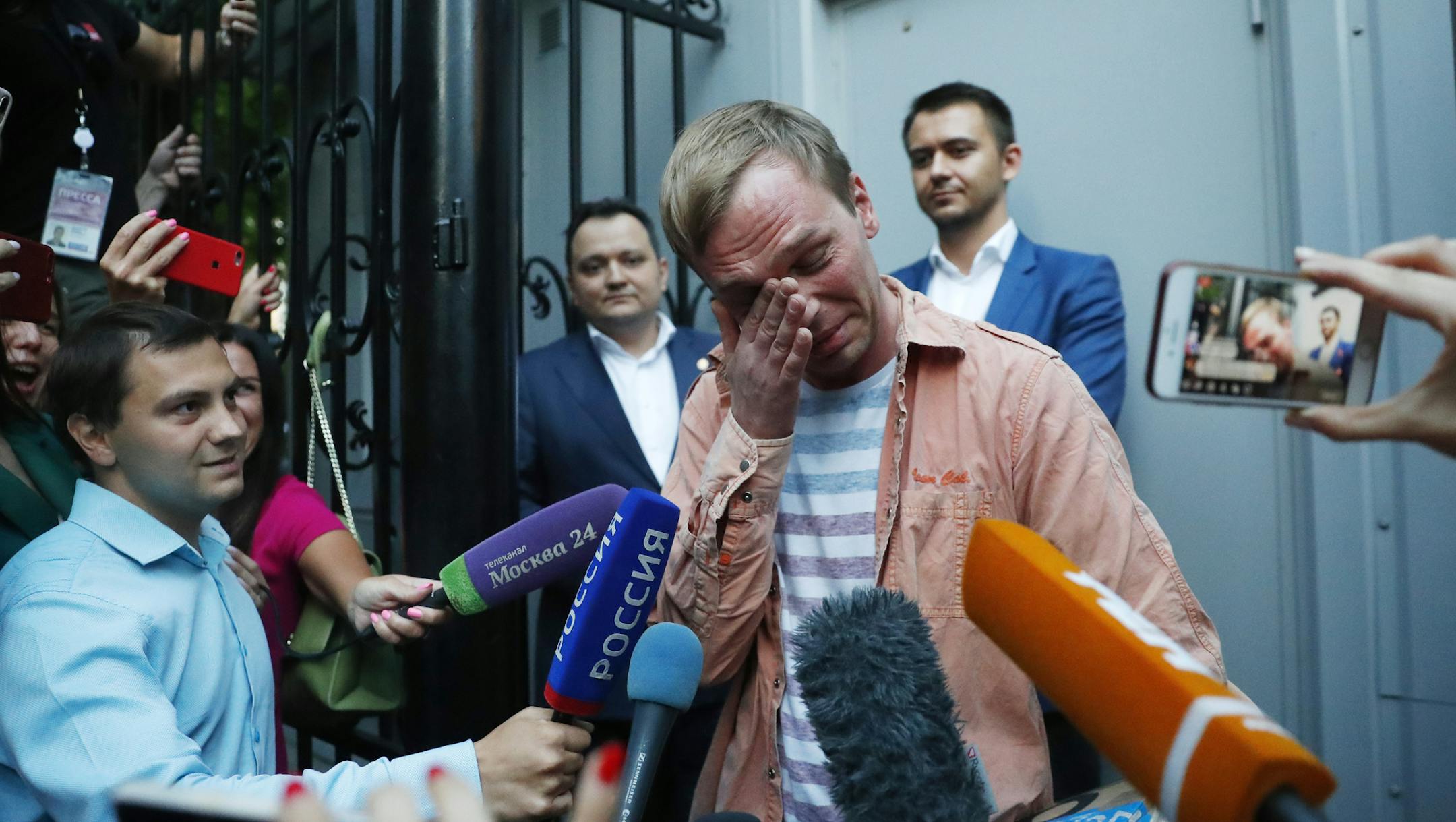
You probably never have heard of Ivan Golunov. But he is a well-known investigative journalist in Russia. His investigations have uncovered apparent corruption in the Moscow mayor's office, in the funeral business and elsewhere.
And when he was detained under fake charges last week, my fellow journalists in Russia starting texting me about the amazing public response.
I am a journalist from Moscow, working at the Star Tribune for two weeks on a journalism fellowship. As I write this, thousands of protesters are marching on Moscow streets in support of Ivan Golunov and the freedom of speech. The city government didn't give their permission for this march. More than 400 people have already been detained. The police have used force. I can't keep silent. I need you to know about this because I believe information is our most potent weapon in this fight for freedom of speech.
The more people who know about the struggle, the greater our chances of winning.
This is the first event I can remember that has joined together so many Russians with different values. Media there — not only independent media — gave Golunov's arrest nonstop coverage online. On June 10, three of the largest Russian business newspapers — Kommersant, RBC and Vedomosti — carried almost identical front pages with the words: "I am/We are Ivan Golunov." They also issued a joint statement demanding transparency and accountability for narcotics police officers who arrested Golunov and framed him with drug charges.
It's the first time anyone can recall when print media in Russia carried the same front pages.
Reading about this and about all the protests outside the courthouse, I wished I had been there. All day, updates from friends arrive saying the country has rallied around Golunov in a far bigger way than anyone expected. His supporters are sure, and so am I, that the case against him is fabricated. Golunov was detained June 6 on his way to meeting with a source. Police say they found drugs in his backpack and later in his apartment. Golunov apparently was beaten in custody. The police were confused about their evidence, first publishing photos of drugs they said were taken from Golunov's apartment, then later saying they had not been discovered there.
It's also unimaginable that an investigative journalist who knows well the ways of police in Russia would go to a sensitive meeting with drugs in his backpack.


