

Before the moon and Mars and the vastness of outer space, there was the South Pole, the North Pole and the Northwest Passage.
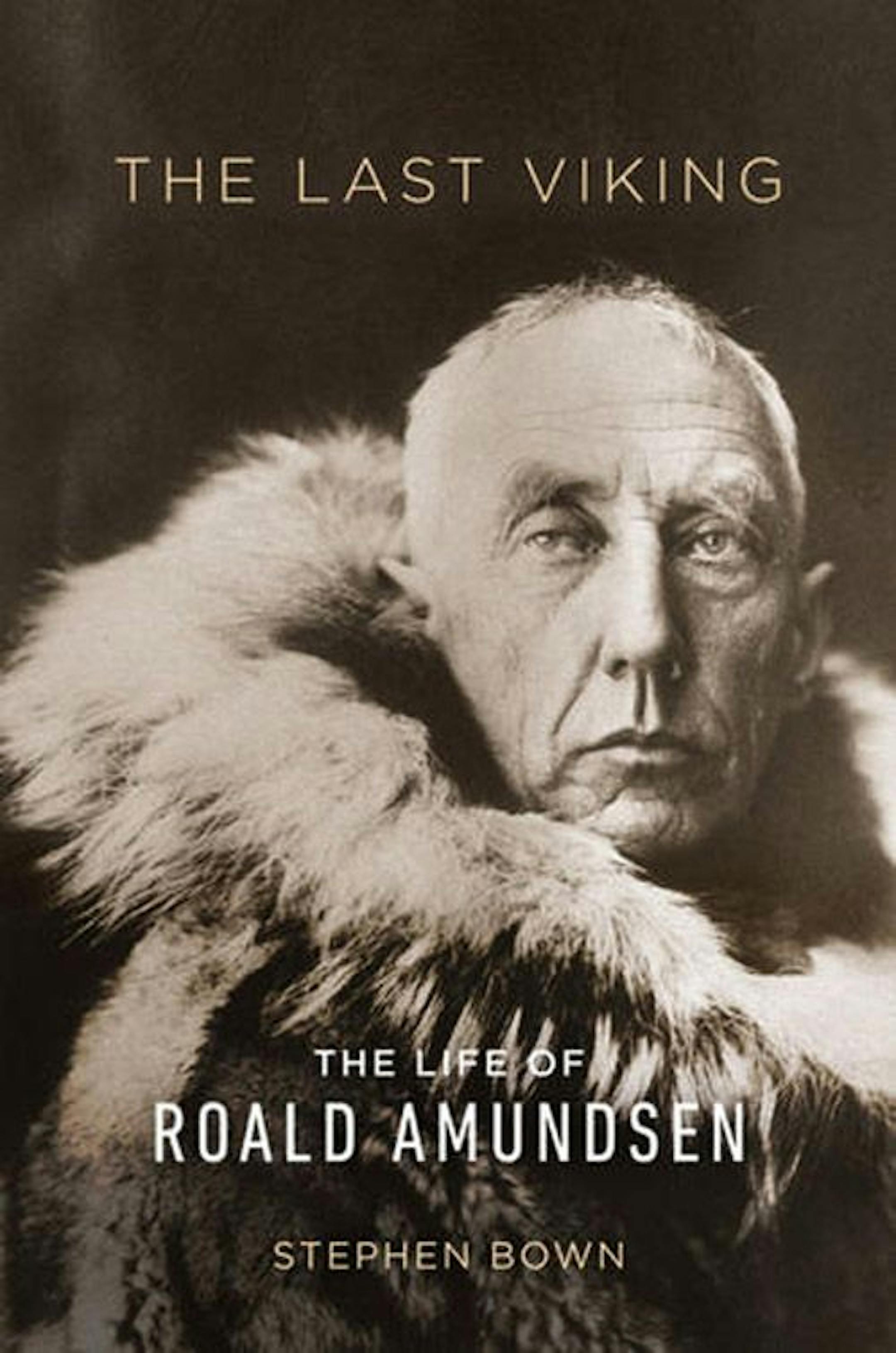
In "The Last Viking: The Life of Roald Amundsen" (Da Capo Press, 356 pages, $27.50), Canadian author Stephen R. Bown uses recently translated letters, diaries and other sources to counter some of the negative treatment the great Norwegian explorer has received, much of it deriving from criticism of his 1911-12 "race" with English explorer Robert Scott to the South Pole.
Amundsen and his team reached the pole in December 1911, more than a month ahead of the Englishman.
Amundsen faded from public memory after his death at the age of 56 in 1928 -- he was lost on a rescue mission, trying to save a rival explorer -- and his name usually was invoked only in connection with Scott "without much subsequent discussion of Amundsen's substantial accomplishments following his exploits in Antarctica," Bown writes. "This book is intended to address the dearth."
Those accomplishments included his reaching the North Pole in 1926, the first expedition leader to achieve the prize without dispute.
Earlier, in 1903-06, he became the first to traverse Canada's Northwest Passage, from the Atlantic Ocean to the Pacific.
Alf Ole Ask, a U.S. correspondent for the Oslo newspaper Aftenposten, said recently that Amundsen "is not as big as [Fridtjof] Nansen," the Norwegian explorer who in 1889 became the first to traverse Greenland.
But Amundsen was widely celebrated as a national hero last year on the centennial of his South Pole achievement, and "all Norwegians know that he beat Scott."


