The masses arrived early at Hazeltine National and fanned out across the sprawling course. Many rushed to find viewpoints near the first tee, where the singing and chanting began before daybreak.
The Euro contingent specialized in clever adaptations, turning Martin Kaymer's name into a revision of "Karma Chameleon.'' This was "Golf: The Musical,'' until Patrick Reed showed up with a scowl and a visible sense of purpose, and the songs turned into roars.
Reed has no connection to Minnesota, but he was the only player who started a morning match wearing short sleeves. Go ahead, Vikings fans; consider that an homage to Bud Grant and Upper Midwest hardiness.
After three consecutive losses and two years of task force study, the United States chose a guy who has never finished in the top 10 of a major championship to hit the first shot of the Hazeltine Ryder Cup.
Reed is not the most celebrated or accomplished American golfer. The stories about his past golfing life read like A.J. Pierzynski's efforts to alienate half the cities in Major League Baseball. After winning Doral in 2014, Reed declared himself a "top five'' player in the world — one of the many things about American golf that Rory McIlroy has satirized in the past few years.
That kind of braggadocio can hide insecurity, or reveal the kind of self-belief required to perform well in the Ryder Cup.
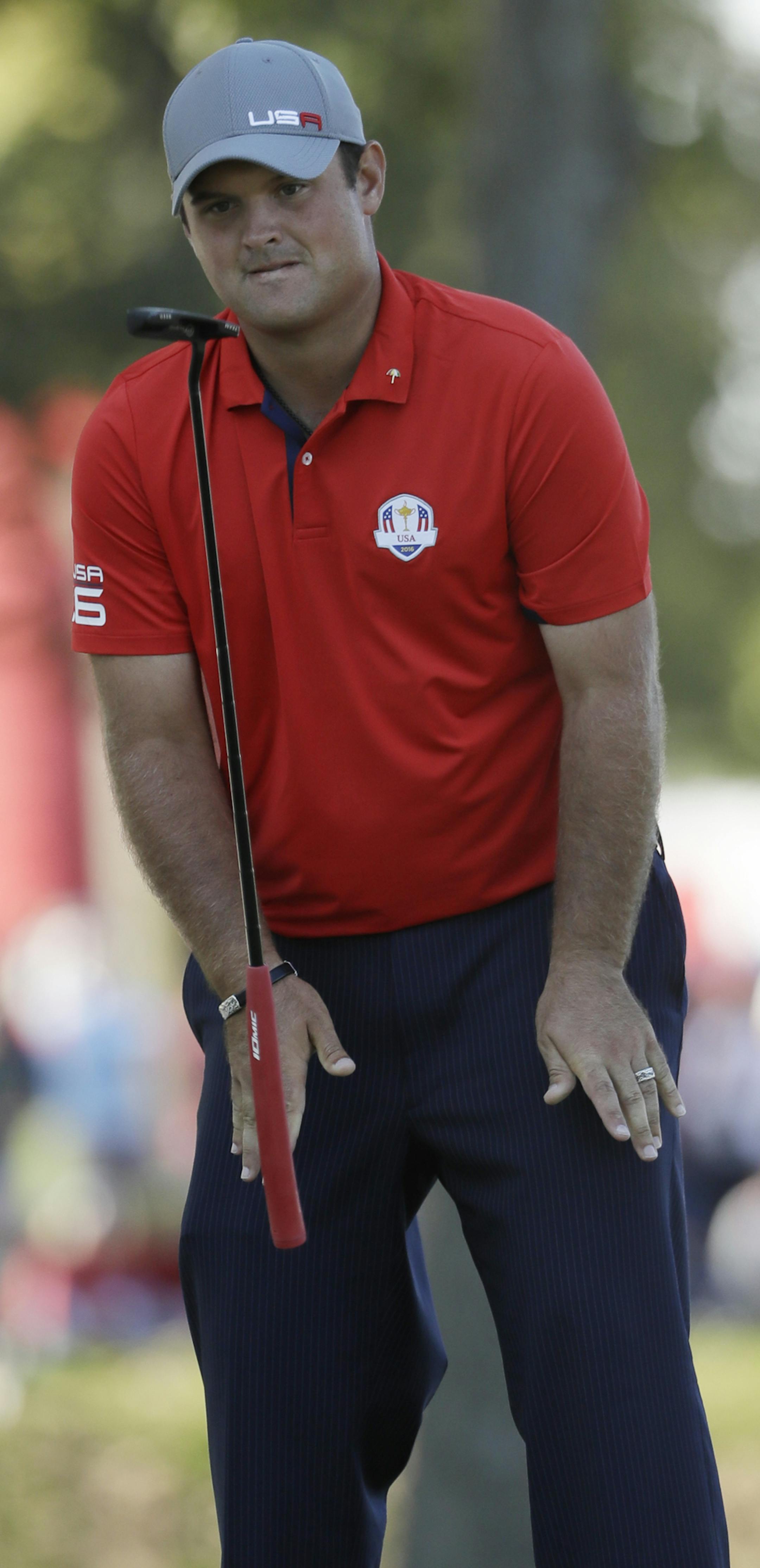
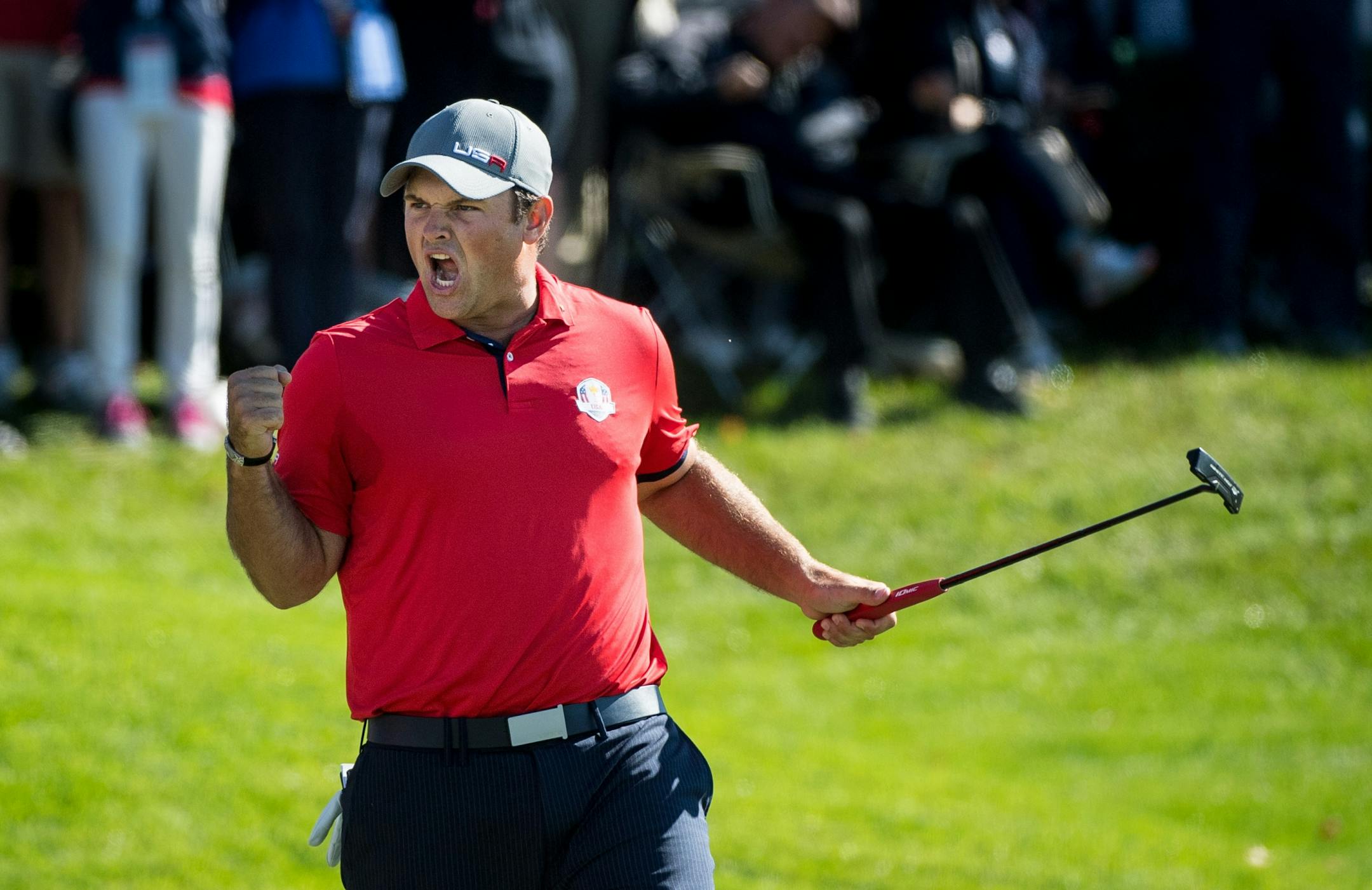
Friday morning, Reed drank in the high-decibel cheers, lashed at the ball, then whipped the club back in a recoil that bespoke confidence, if not arrogance. His shot bisected the fairway, his team won the first match, and Reed became the latest example of a golfer who thinks of Ryder Cup pressure as a performance enhancer.
Reed went 3-0-1 at Gleneagles in 2014 while his team produced just 11½ points. He and Jordan Spieth waxed the estimable pairing of Justin Rose and Henrik Stenson in the first match on Friday, leading the U.S. team to its first sweep of a morning session since 1975.
![USA's Patrick Reed drives the ball from the 14th tee during Ryder Cup foursome lay Friday morning. ] (AARON LAVINSKY/STAR TRIBUNE) aaron.lavinsky@startribune.com The Ryder Cup was held on Friday, Sept. 30, 2016 at Hazeltine National Golf Club in Chaska, Minn.](https://arc.stimg.co/startribunemedia/PE2KKWNSFF3IMXLDVTT3LK3L2Q.jpg?&w=1080)