

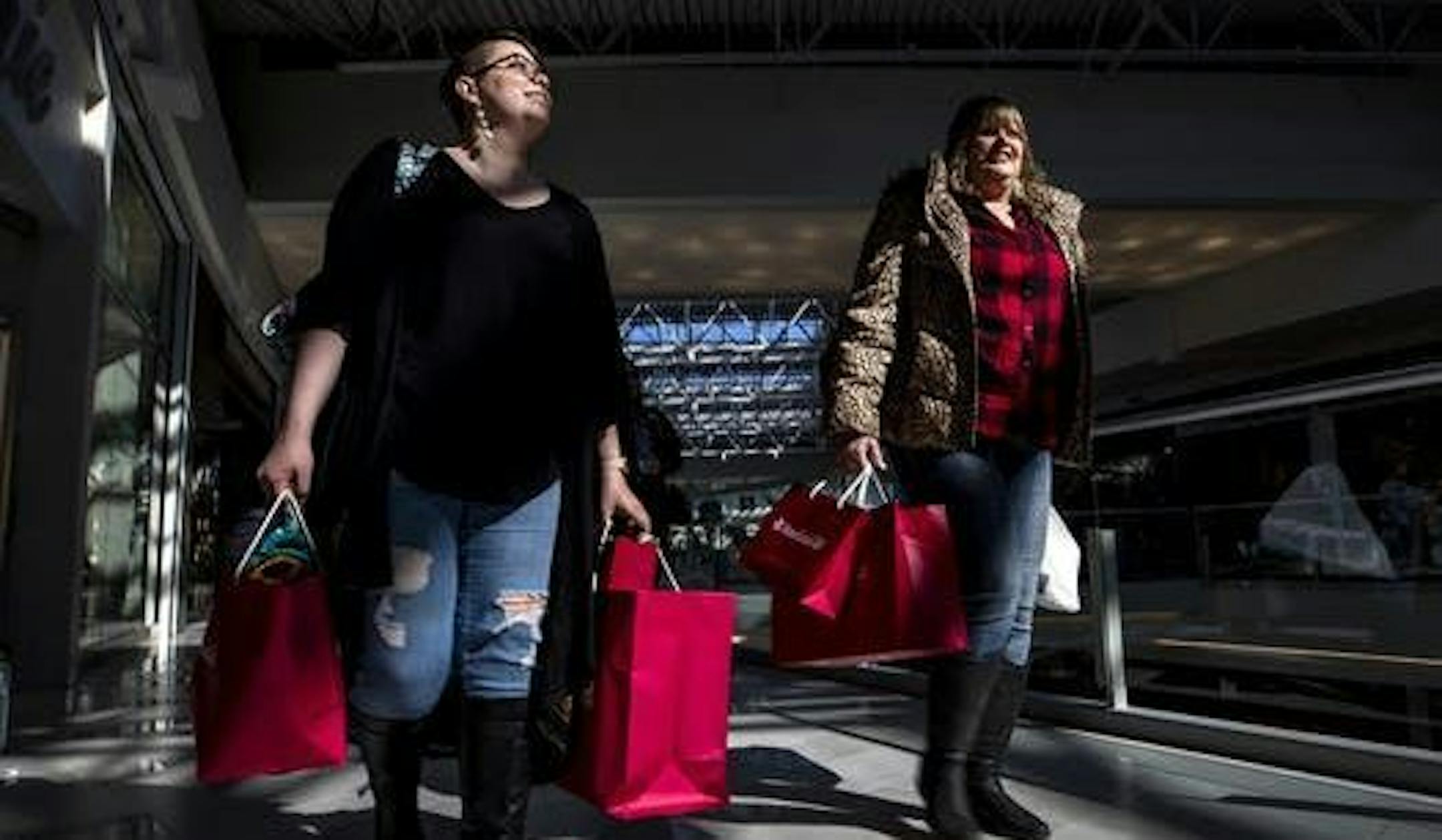
Wages are ticking up. The labor market is robust. But consumers are giving the kind of mixed messages that drive economists and retail executives batty. Will they or won't they spend in 2019?
The latest figures from the U.S. Department of Commerce offered a sliver of insight. After a rocky ride through a government shutdown and stock market turmoil, retail sales rose a slight 0.2 percent in January, a measurable improvement following a deep 1.6 percent drop in December, when holiday spending should have been in full throttle.
"Although some hesitancy is still lingering," economist Jack Kleinhenz of the National Retail Federation said in a statement, "it is good to see consumer spending showing traction, given the concerns on the minds of American families last month."
Consumer spending still fuels the nation's economic engine, and retail sales are a window into our willingness to shop and eat out at restaurants. It's a key gauge of how people feel about their personal finances in the moment.
Minnesota's marquee retailers, Target Corp. and Best Buy Co. Inc. rode out of 2018 with strong sales online and in stores. Both companies have spent years investing in store operations to hold down online delivery costs, keep their merchandise fresh and provide improved training and pay for their workers.
Convinced that the foundation of a strong jobs market will buttress household spending, leaders at both companies forecast modest comparable sales growth in the coming year. Best Buy's high-end estimate is 2.5 percent, while Target's peak outlook is in the midsingle digits.
Target Corp. CEO Brian Cornell said in a recent interview that the uptick in store traffic during the fourth quarter convinced him that consumers aren't tapping too hard on the brakes despite recent uncertainties.
"While changed," Cornell said, "consumer confidence is still pretty high."


