

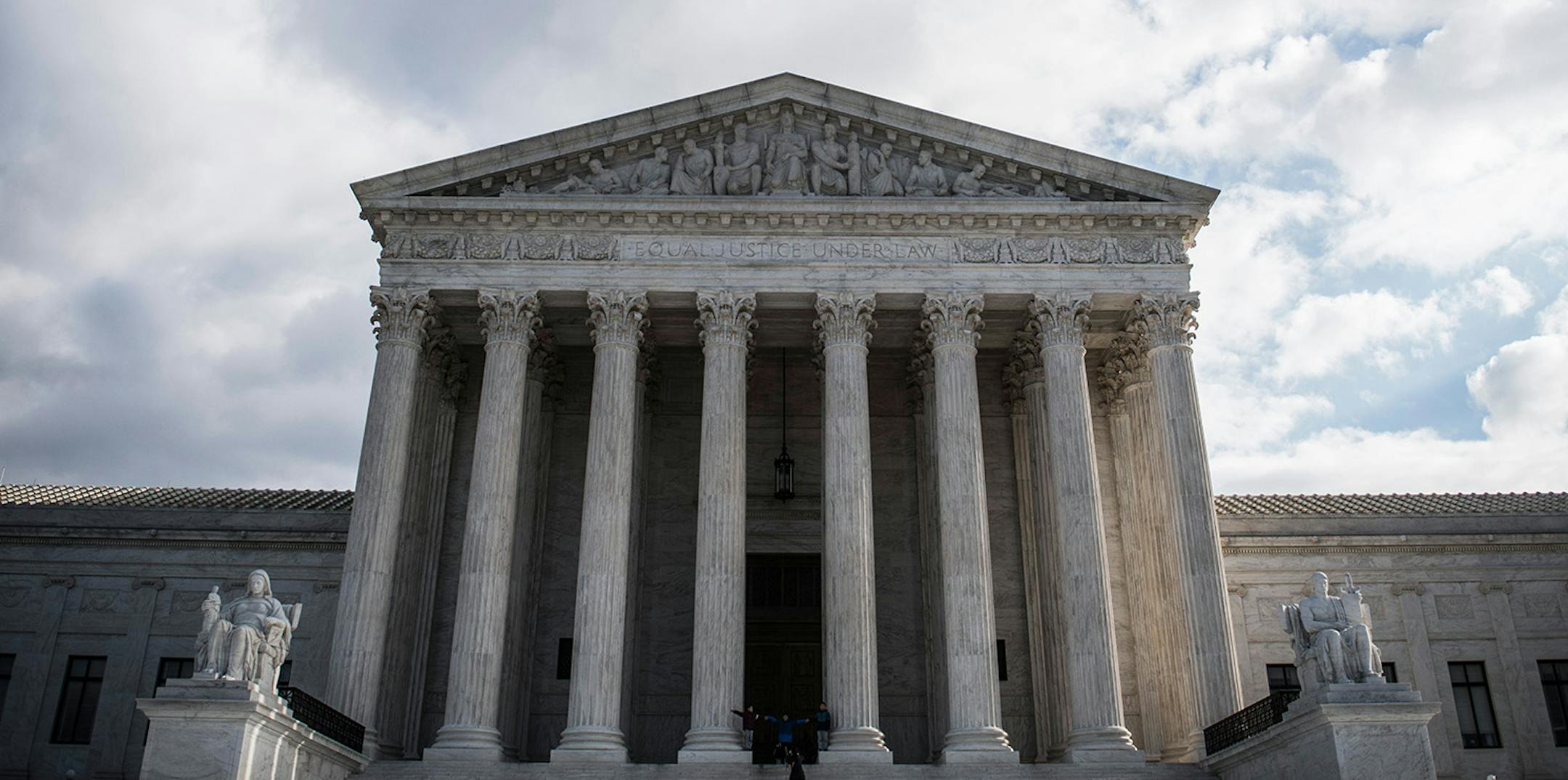
In two separate but similar cases, the Supreme Court has handed President Donald Trump a setback on immigration and a victory on transgender troops. In particular, the court's actions show that its newest member, Justice Brett Kavanaugh, may not be prepared to give the president what he wants.
Before reading the tea leaves, however, it's important to understand what the court actually did. It chose to leave the Deferred Action for Childhood Arrivals (DACA) program in place for now, meaning that it won't hear a case about it before October 2019, and probably a good deal later.
This decision — or really, this non-decision — is a setback for Trump, who tried to rescind DACA, which protects hundreds of thousands of undocumented immigrants from being deported. His plan was blocked by a federal district court.
Meanwhile, the court ruled 5-4 that Trump's ban on transgender people serving in the military can go into effect while that issue is being litigated.
To make sense of the arcane complexity of the court's actions, understand that both Trump's DACA rollback and his transgender ban came in the form of executive orders. In both cases, a federal district court blocked the order from going into effect.
Such rulings — injunctions — are based on a legal standard that considers both the presence of irreparable harm and the likelihood of ultimate legal success by the party seeking the injunction.
Naturally, the Trump administration didn't take either ruling lying down. It appealed both to the appellate courts to reverse the temporary stays — and lost both times. So it appealed directly to the Supreme Court.
In both cases, the administration had two requests: that the court take the case (which requires four votes) and that the court reverse the stay issued by the district court and let the executive order take effect in the meantime (which takes five votes).


