

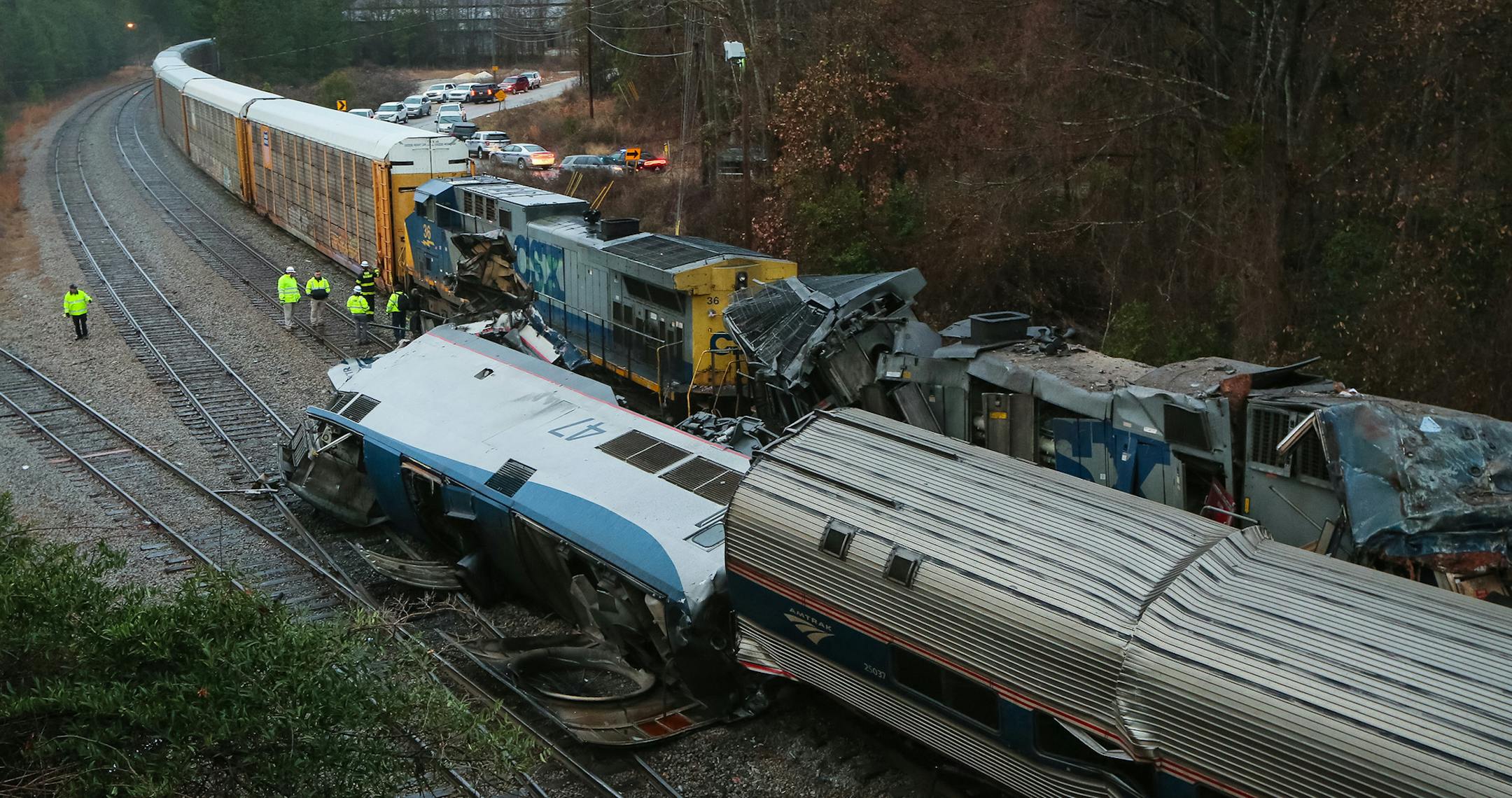
The foot dragging by American railroads to install positive train control (PTC) is inexcusable ("Deadline for rail safety gear slips" Feb. 8). Three fatal Amtrak crashes in two months is totally unacceptable. Congressional Republicans were on the train that crashed in Virginia, and Minnesota U.S. Rep. Jason Lewis was injured as they headed to a Republican retreat in West Virginia.
My wife and I have ridden Amtrak trains often. In the past when business required traveling between Washington, D.C., and New York City, Amtrak Metroliners were my preferred transportation. That heavily traveled Amtrak northeast corridor is probably the best-maintained and most heavily traveled route in the system. Famously, former Vice President Joe Biden rode Amtrak regularly to commute between home and work.
Now we learn that Amtrak is among the railroads expecting to have the vital PTC safety feature fully implemented by the latest Dec. 31, 2018, deadline. Unfortunately, that means only 730 miles of track actually owned by Amtrak will be protected. Fully 97 percent of Amtrak routes are traveled on tracks owned and maintained by other railroads, so it's difficult to know how many actual Amtrak route miles will have PTC in the near-term.
The fact is that America is like a Third World country when it comes to long-distance passenger trains. Along with many other travelers, we've experienced the comfort, convenience and dependability of railroads in France, Germany and England. It's sad that our government has let our once-great American passenger rail system deteriorate so badly. Passenger trains that should be running on dedicated, safe, high-speed tracks between major cities are forced to share tracks with slow, heavy freight trains.
On a personal note, this summer we'll have two European relatives visit America for the first time. Part of their itinerary lends itself to riding Amtrak's Lake Shore Limited from Minneapolis to New York City with a stop to see Niagara Falls. Given Amtrak's recent fatal accidents, we're having second thoughts about our recommendation. If they do ride Amtrak, a trip we've enjoyed, they'll understand why rebuilding America's infrastructure, including railroads, is so important!
Bill Steinbicker, Minnetonka
U.S. HEALTH CARE
Why the insurance companies aren't necessarily boogeymen
In the commentary "Plan by 3 corporate giants is cause for encouragement," David Feinwachs places insurers in their familiar role as boogeymen in the health care value chain (Opinion Exchange, Feb. 6). Before I get my torches and pitchforks, I would like him to fill in some of the gaps in his argument. His dismissal of the industry as greedy, useless middlemen focuses on two areas: risk pooling and plan administration. He first dismisses the value of risk pooling as redundant, but that is only true for large organizations with enough employees to form their own pools. He does not address how many employees a company would have to have to form a viable risk pool. But it stands to reason that self-insurance is not feasible for individuals or small- to moderate-sized businesses.
He goes on to claim that companies that do self-insure somehow miss the boat by hiring insurers to handle the administrative side. He claims there are great potential cost savings achievable through contracting directly with providers, whose true costs are hidden by insurers. Maybe so, but imagining the redundant efforts of each company having to contract with each provider in every location they have employees to insure, achieving cost savings net of the administrative cost seems dubious. It seems likely that the only way that insurers themselves can make the administrative side pay is that they can reuse their provider cost information for multiple customers.

