

Was John C. Chalberg's March 24 commentary, "Donald Trump, James Polk and presidential parallels," an effort to burnish Trump's reputation? There are major flaws in his comparison.
Somehow Chalberg suggests that fighting a war to secure territory that included about 80,000 Mexicans is the equivalent of building a wall that keeps immigrants out. He also believes that a "beneficent empire" was at least partly the result of our annexation of half of Mexico, despite denying citizenship and property rights to the Mexicans, suddenly "foreigners" in the United States. He then poses a number of questions suggesting that Trump's wall could preserve the power of the U.S., presumably by preventing a second civil war (citing hints of secession in California and Texas). Or that secession could result in a loss of American power and its ability to do good.
Under Trump, the U.S. has already sacrificed its ability to do good. While Polk was anti-monarchy as a Jacksonian Democrat, Trump embraces authoritarians and belittles our democratic allies. The international community no longer views us as a beacon of democracy; our influence is waning. Trump's foreign-policy efforts are erratic at best.
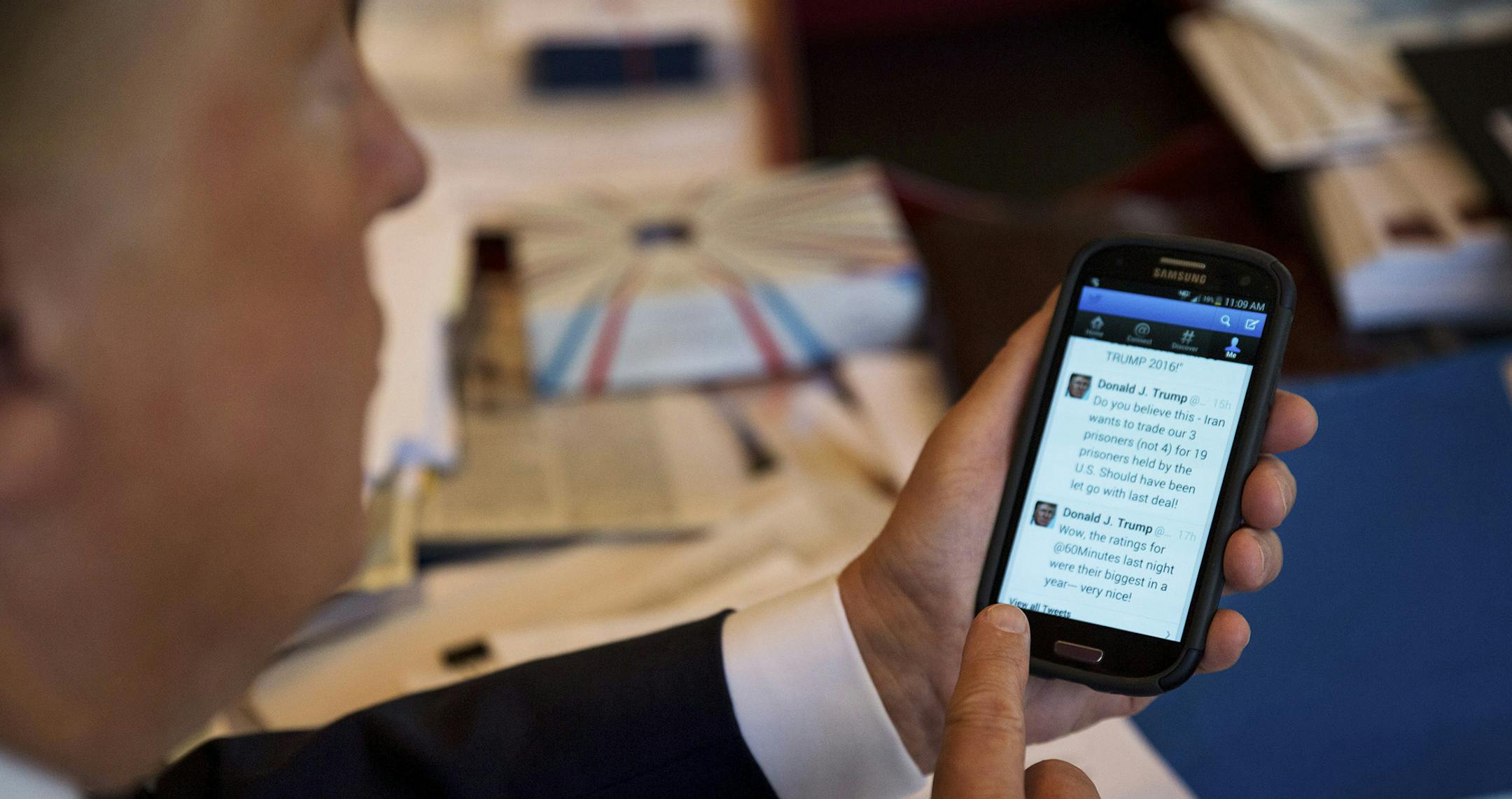
While Polk spent 12 hours a day working, Trump indulges in vacation time spending hours tweeting. He has a notoriously short attention span, reluctant to read lengthy explanations of complex issues. Polk's political appointees were experienced, while Trump's have frequently been unqualified and/or ousted. Polk was a state legislator, governor of Tennessee, and a member of the U.S. House for 14 years (speaker for four years); Trump is a self-promoting businessman with little knowledge of the Constitution and U.S. history, and with several bankruptcies to his name. He is also a skilled demagogue, with thousands of documented lies. Trump's pursuit of self-interest is not integrity.
Chalberg's notion that Trump might blunder into a border policy that strengthens U.S. power and influence for good seems highly unlikely. He is far more likely to preside over the decline of American democracy.
Diane M. Ring, Minneapolis
• • •
Chalberg states that while the war Polk launched against Mexico in 1846 brought us Texas, an enormous new slave state, and pushed the nation closer to Civil War, Polk himself "was not terribly interested in slavery one way or another." This statement is profoundly in error.
The plain fact is that Polk was deeply invested in the 25 to 30 enslaved laborers who worked his Mississippi plantation and that his methods of exploiting them bordered on the criminal. His plantations' annual cash profits averaged almost 8 percent. More than half of the children among Polk's slaves died before reaching age 15, and the overall death rate on his plantation was higher than elsewhere in the South. The majority of his married slaves experienced a disruption of their unions because of sale or movement of a spouse. While a congressman, he repeatedly expressed his belief that whipping promoted obedience, yet records of Polk's plantation showed that he would not hesitate to sell slaves who defied him.
These facts are all too familiar to scholars who have consulted William Dusinberre's book "Slave Master President: The Double Career of James K. Polk." Mr. Chalberg's obliviousness to them raises serious doubts about his competence as a historian and undermines his credibility as an apologist for our current president.


