

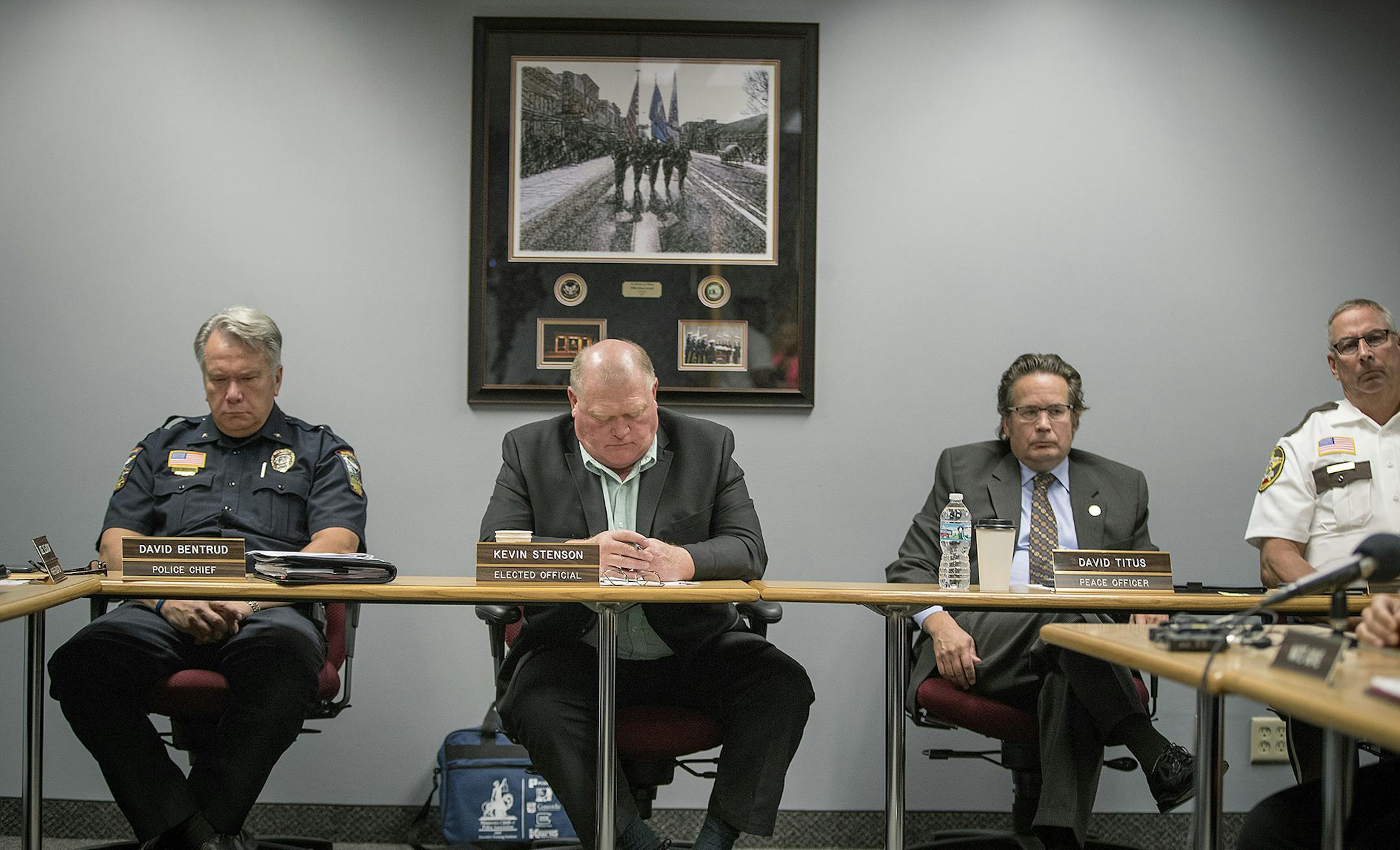
The Star Tribune's four-part series (Oct. 1-4) on the lack of consequences for Minnesota police who break the law reveals some devastating truths about our Minneapolis police force and the utter inadequacy of our statewide accountability standards. I was horrified to read the story of Laura Bloomberg, whose ex-husband repeatedly assaulted her but continues to patrol northeast Minneapolis in the Second Precinct.
Domestic violence is one of the most reliable predictors of future violence. Police officers with domestic violence convictions should not be tasked with protecting and serving our communities, period.
State Rep. Tony Cornish fought in 2013 to make sure domestic violence is not a crime that triggers automatic revocation of a police license, saying the decision should be up to local departments. However, the Minneapolis department has not consistently enforced discipline for unacceptable behavior. Without consistent enforcement, individual cases of discipline rarely survive arbitration.
When the police union contract comes up for renewal again in 2019, the mayor and City Council must work together to make the contract crystal-clear that a domestic assault conviction is unacceptable from a city officer. Where the state has refused to act, the city must step up.
As we mark October as Domestic Violence Awareness Month, we must remember that domestic violence permeates all spheres of public and private life. As we honor survivors, we must fight for the policy changes we need. Thank you to Laura Bloomberg for breaking the silence and sharing her story.
Jillia Pessenda, Minneapolis
The writer is a candidate for the Minneapolis City Council in the First Ward.
RANKED-CHOICE VOTING
Voters at ease, but candidates aren't using this to their benefit
Lori Sturdevant's Oct. 6 column ("The third time around may be the charm for ranked-choice voting") suggests that while Minneapolis voters are comfortable with — and grateful for — RCV, mayoral candidates this year aren't fully capitalizing on its benefits. I concur.
In this race, most voters with whom I've spoken have multiple favorites. Yet we're not regularly hearing candidates ask to be a second-choice vote — which will likely be essential to win. Writing off voters who have identified a top choice isn't just unnecessary, it's foolish. By intention or by accident, the next mayor will win only with a combination of first-, second- and third-choice votes.


