

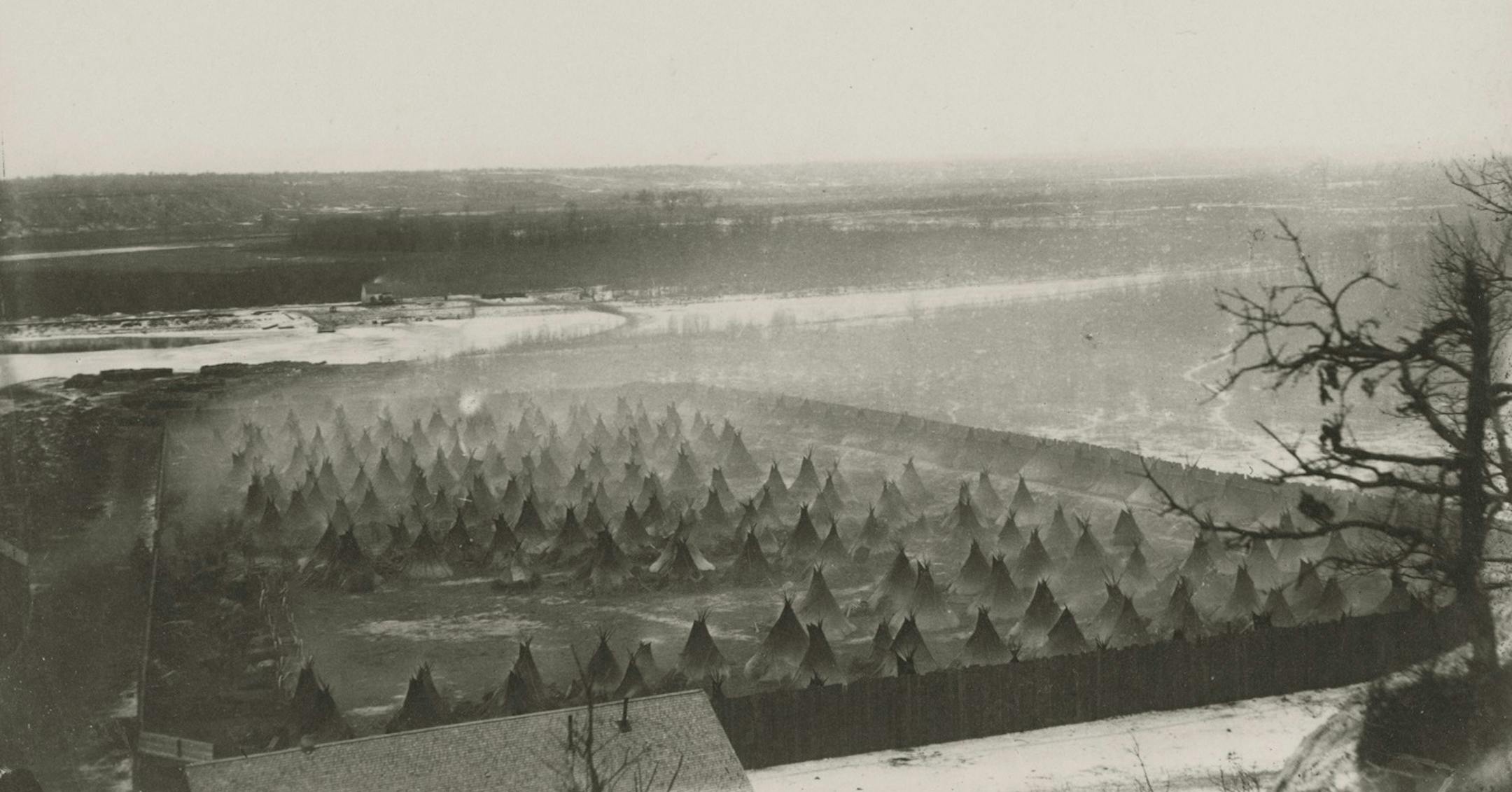
A recent counterpoint writer ("Fort Snelling history offers name insight," May 17) set out to give "a fair and factual review" of the founding of Fort Snelling. Instead, he portrays white intrusion into the lands of the Dakota, Ojibwe and Sac and Fox nations as some sort of benevolent national endeavor. He reiterates history-book tropes that have long been debunked. We didn't seek "perpetual peace and friendship," we sought ever more land for expansion. We didn't bring "the blessings of civilization," we sought to eliminate the civilization already here and replace it with our own. Our "benevolence" was to give guns, tools and food to people who had been supporting themselves on their own for hundreds of years before we arrived. The only reason "many Dakota would have starved without the food" was that we'd made it impossible for them to grow and procure their own.
Arguments against changing place names should not be based on incomplete and inaccurate versions of history. That does a serious disservice to those of us who are descendants of the white settlers and to those who are descendants of the people who were already here — and remain here today.
Tom Ehlinger, Bloomington
• • •
It is time to stop the name-change advocates now. Two commentaries ("Fort Snelling history offers name insight" and "Cherry-picking history can't hide nightmare of Calhoun," May 17), whose themes gave opposing arguments for and against changing names of lakes, streets and buildings, show that halting the practice might be a good idea. James Brewer Stewart presented good arguments for changing names and Gary Brueggemann presented good arguments for retaining them.
It seems like a feudal game-playing tactic to continue to pursue this. Perhaps those who expend time and energy working to effect name change could spend their time solving serious issues like homelessness, lack of affordable housing, poverty, lack of health care and time-wasting, game-playing state legislators.
Jo Brinda, Crystal
PUBLIC CIVILITY
Reject Trump-style discourse and heal Minnesota's urban/rural divide
A recent letter writer ("Try actually asking rural Minnesota how it feels about Trump's economy," May 16) proposes that most rural Minnesotans voted for Donald Trump in 2016 and continue to support him because of the current robust economy. While the economy is indeed looking strong at the moment, the ongoing and worsening trade impasse with China should make everyone, and farmers especially, somewhat nervous. It also should be said that economists of various stripes would debate quite vigorously as to how much credit Trump should get for the current state of the economy.
My real concern with this letter was the tone of moral superiority and an almost sneering attitude toward "liberal Minneapolis." While I no longer live in southern Minnesota, I grew up on a farm in Yellow Medicine County, and while most people in our community were social and economic conservatives, the idea of publicly putting someone down or mocking their beliefs was unheard of. Yes, some comments about "the Cities" likened them to a den of iniquity, but this was accompanied by the knowledge that Minneapolis and St. Paul were the economic drivers for the entire area, and that their success boded well for all Minnesotans.
It saddens me that the tone of civil and social discourse has been coarsened by President Trump, and people who felt the constraints of civility and social norms now feel they can lash out with vitriol and suffer no consequences. It also saddens me that the incivility appears to be worsening the urban/rural divide that has always existed to some extent but has now become an "us vs. them" battle. Minnesota and other states will grow and do better when both rural and urban folks realize they need each other going forward. To continue stoking division, disrespect and hostility to others will only lead to a stunted future for all Minnesotans.
Paul Bode, Hudson, Wis.
ABORTION
Democrats, don't take the bait here
Dear Democrats,


