

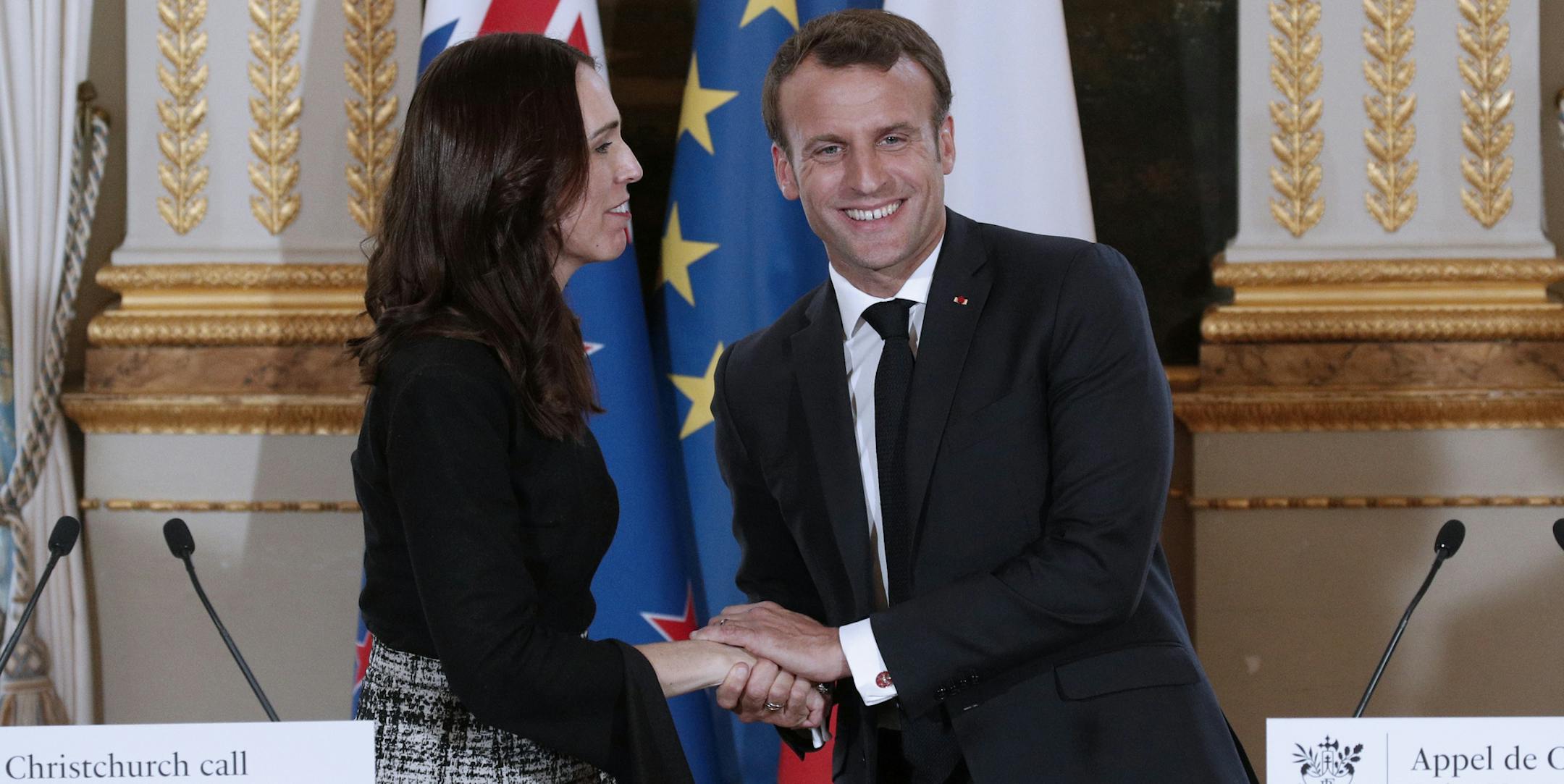
On May 15, Facebook, Microsoft, Twitter, Google and Amazon signed onto the "Christchurch Call" ("U.S. won't sign global pact on violent online content," May 16), a self-policing protocol among tech leaders and the governments of New Zealand and France that comes in the wake of the livestreaming of a terrorist attack on two mosques that killed 51 people in New Zealand on March 15.
While the Christchurch Call contains much to be lauded, the companies also agreed to a nine-point plan that contains a "hate and bigotry" pledge where the signers committed to "working collaboratively across industry to attack the root causes of extremism and hate online." The broad use of "hate" is important. In France and New Zealand, hate speech laws overrule teachings on homosexuality that are native to the Jewish Tanakh, Christian Bible and Muslim Qur'an. Similarly, user agreements for the online services of Facebook, Microsoft, Twitter, Google and Amazon prioritize sexual identity and sexual orientation over freedom of religious expression.
As we witness increasing boldness of these tech companies in banning and restricting users on the basis of speech alone, we would be wise to consider what comes next. In the U.S., the First Amendment protects speech and religious exercise from government interference, but no protections are offered for the millions of citizens who must rely upon the corporate marketplaces and communications technologies that enable day-to-day commerce.
Today, we face two choices. We can demand that our elected leaders regulate big tech firms as a utility and force adherence to our existing Constitutional protections, or we can watch the American Experiment end as the unelected leaders of a trillion-dollar tech industry effectively abrogate the Constitution by creating and dictating their own speech standards.
Jack Wheeler, Hudson, Wis.
LEGISLATURE
We had the chance to show divided government can work, and blew it
I chuckled when I read that Minnesota is the only state in the U.S. to have a divided government. We have a Democratic House of Representatives and a Republican Senate. My hope was that this government would show the rest of the country that we could communicate with each other, find common ground and govern.
This is where my hopes were dashed, for Minnesotans and our elected leaders do not seem to rise above the bickering and lack of compromising that is sweeping this country.
We are Democrats and Republicans, not parties of "no." Do our leaders really reflect their constituents?
We share common goals. With communication and compromise, we can all be "winners"!


