

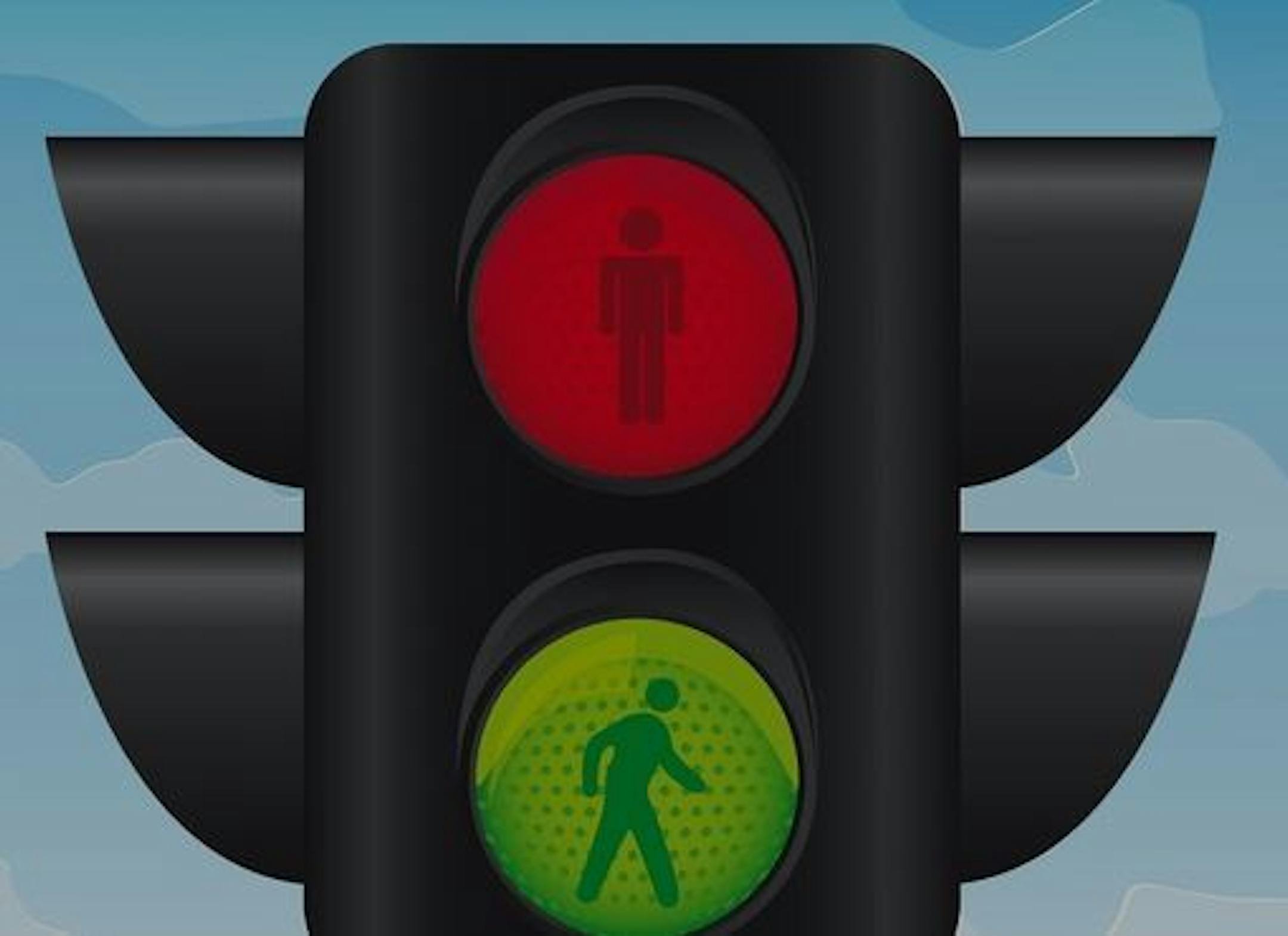
It always starts with a phone call. Mine came when I was camping in the Everglades. It was 2009, and at age 17 I was ignoring my mother's phone call. After relentless ringing, the phone was held up to my ear. "Your sister was hit by a car … and … she's not going to make it." My mom's voice was robotic, like she was acting as a puppet for a doctor who had told her the same thing. Spewing the information without really understanding the meaning. Her voice had no emotion — sterile is the best word I could come up with.
The death of Kunlek Wangmo on Oct. 1 threw me back in time to where my sister was killed, just a few feet away ("Woman hit by car, killed at St. Paul intersection," Oct. 2). West 7th Street/Ford Road is the idyllic St. Paul passageway, but the only thing I'm able to see while passing through are blind spots and close calls. As an urban planning student, I've devoted my time to the beauty of place-making, land use and futuristic zoning laws. But the biggest issue that continues to be neglected by the engineers and planners I surround myself with is the danger of outdated and improper intersections.
The Oct. 1 incident seemed like something out of a safety video. Wangmo was on her daily route, she knew the road, she knew it was dangerous. It was daylight, the weather was clear. There was no traffic nor construction. Conditions were seemingly ideal. Except that the intersection of St. Clair Avenue and West 7th Street carries five blind spots; a driver going the speed limit of 45 miles per hour did not have time to stop when she saw Wangmo fall into the street.
For my sister, things were different: It was nighttime, and she wasn't paying attention. She was leaving a meeting and waving goodbye to friends. She wasn't in a crosswalk. The 31-mph collision provided the perfect strike between my sister's head and the windshield. She was pronounced dead on impact.
The two stories are strikingly preventable. Even if both pedestrians were still hit, but at a lesser speed — even at 20 mph instead of 30, they both may still be alive. My call to action is clear: If we want to stop preventable pedestrian and cyclist deaths in unsafe intersections in St. Paul, we need to lobby for them. Attend open houses, report issues to traffic safety and utilize your rights.
Six years ago, my sister was killed as a pedestrian at St. Clair and West 7th Street in St. Paul. Is it time to act? Or do we need another death?
Nicole Mardell, Minneapolis
CHARTER SCHOOLS
Minnesota and Washington state laws are like apples vs. oranges
In his Sept. 30 commentary ("Are charter schools unconstitutional?"), Marshall Tanick asserts that the Washington state Supreme Court decision that ruled that state's charter school law unconstitutional could shake education in Minnesota, too.
The problem with that assertion is that Washington's and Minnesota's constitutions are significantly different in terms of their specificity regarding education.


