

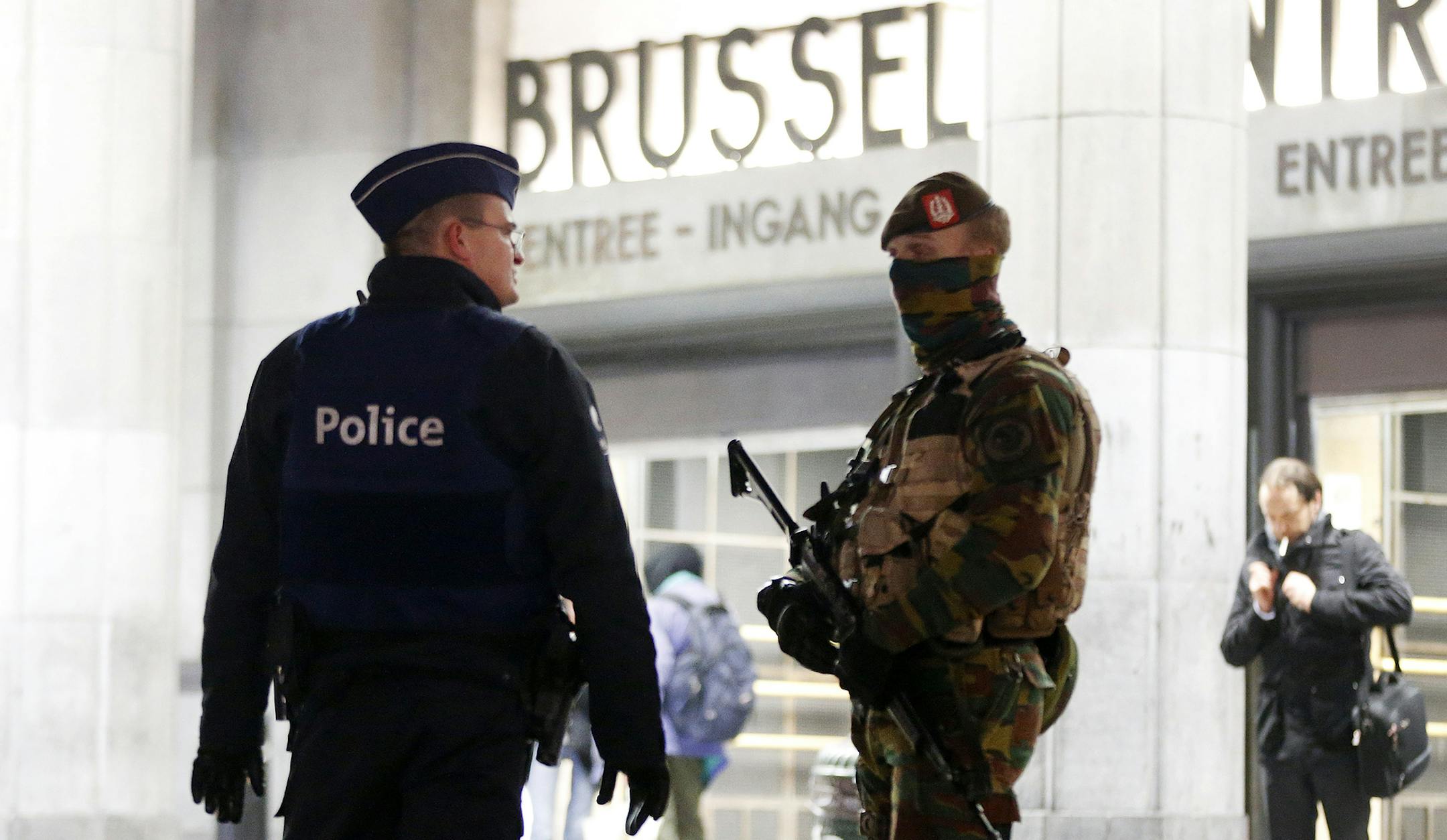
Belgium's lesson on terrorism must be ours, too.
As I read about and watch the situation developing in Belgium, it comes as no surprise to my wife and me. We lived in Brussels from 1988 to 1992. Back then it was well-known that the Belgian government allowed suspected terrorists and extremists to move in and through the country as long as they posed no threat to it and its citizens. Belgium is paying a price for that political negligence today. A good Belgian friend of ours e-mailed my wife Monday and said:
"Life in Brussels is strange. Schools, undergrounds, shopping centers … are closed. It can't last for long. But it won't change before this Jihadist Salah Abdeslam, is arrested in Belgium or abroad! I remember the time I was living in London (in the end of the seventies) with the IRA problems. Nothing was closed but everybody was controlled before entering department stores, cinemas, pubs, theatres, undergrounds. … I hope our governments will understand and review their ideas concerning being politically correct. …"
Brussels and Paris are hotbeds for homegrown terrorism because years ago their governments did little to strongly prevent its growth and existence. This must be a lesson to Americans. We cannot sit back and wait for the next attack to occur in our country. Islamic extremists have declared war. Their strategy is to destroy our way of life and dictate how people are to believe in a God. Our leaders must treat them as enemies. Sadly, our country will need to take a more aggressive leadership position in the world or more innocent people will be killed. To paraphrase Gen. Willian Tecumseh Sherman:
"We are not fighting armies, but a hostile people, and must make [them] feel the hard hand of war."
Ray Meifert, Edina
• • •
OK, time for everyone to calm down and take a deep breath — but first some numbers: 38 million, 60 million/3 percent, 25 percent/50 percent, 2 million, 1.3 million, 162,000.
Last one first: That's the number of people killed by terrorist attacks between 2006 and 2014. Ugly, no? Then how about 38 million? That's the number of military and civilian killed or wounded during World War I. In World War II, more than 60 million were killed, which was 3 percent of the world's population. During the Great Depression, we reached an unemployment rate of 25 percent, and 50 percent of all banks in the U.S. failed. Two million people were killed in the Korean War and 1.3 million (including more than 58,000 American servicemen and women) in Vietnam. True horrors, yet in every case, the U.S. and the world survived.


