

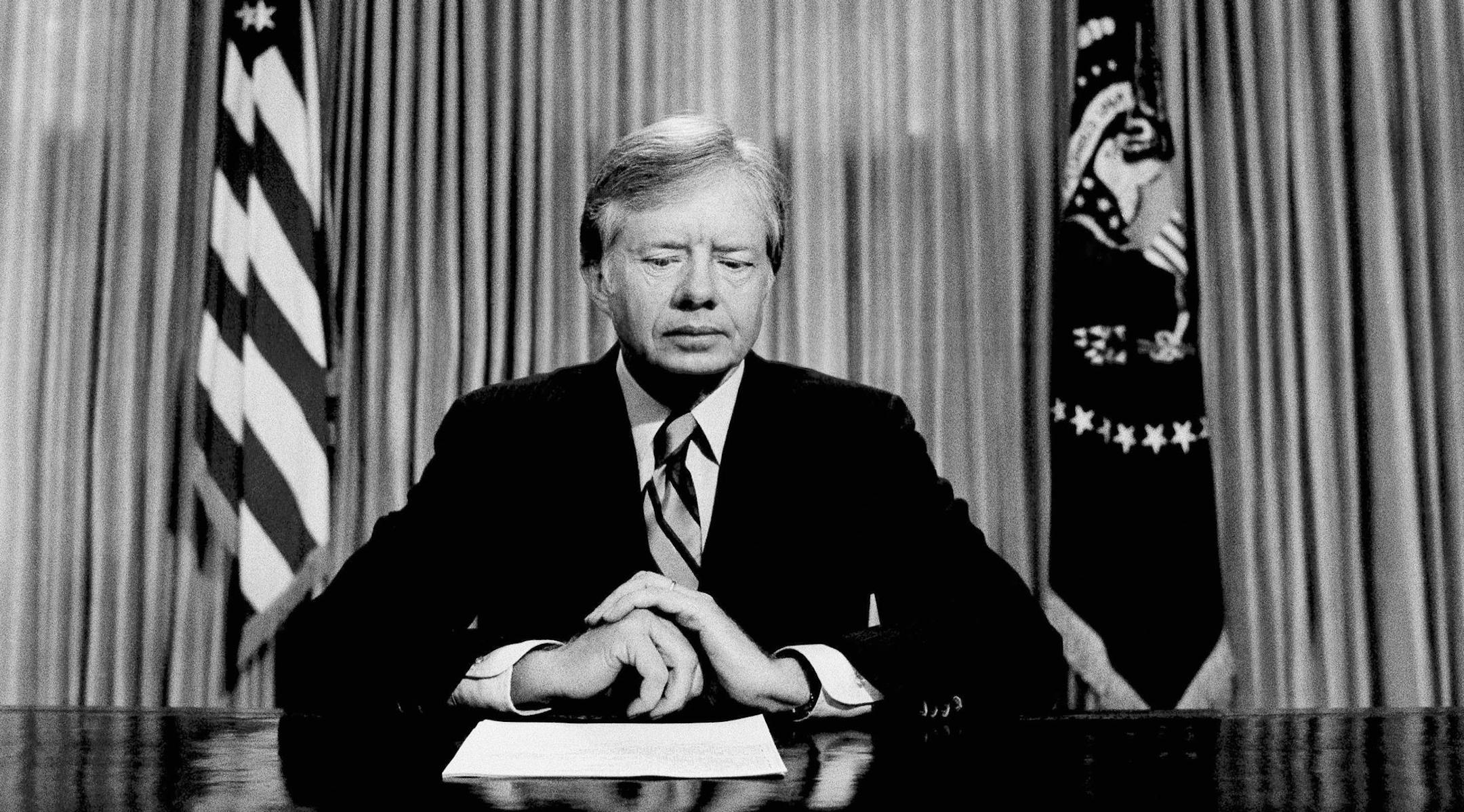
In November 1979, during the last 14 months of the Carter administration, 52 Americans were taken hostage by the Ayatollah Ruhollah Khomeini of Iran. Immediately, President Jimmy Carter went on national television and confronted Khomeini directly, issuing an unusually strong condemnation with uncharacteristic belligerence. What followed was 444 days of captivity for the hostages.
It was clear where Carter failed. By directly confronting the ayatollah, Carter gave him exactly what the Iranian leader wanted: a worldwide audience to witness the impotence of the U.S. being held hostage by a far weaker, less-influential nation. Rather than giving credence and empowering such despots, it was widely agreed that the far better way to handle such a crisis would have been to begin a diplomatic process at a far lower level; for example, with an undersecretary of state.
Thirty-eight years later, we have a president who has failed to learn the important lessons of history. Instead of once again giving a brutal dictator exactly what he wants — an audience of billions watching a direct confrontation between Donald Trump and Kim Jong Un. It would have been the far better choice to allow diplomacy to defuse this situation.
It's worth noting that in the case of the Iranian hostage crisis, resolution occurred quickly and quietly on Jan. 20, 1981 — minutes following the inauguration of President Ronald Reagan. And Reagan never had to say a word leading up to the release.
Ned Kantar, Minneapolis
MINING
Give the proposed PolyMet land swap its day in court
When our elected officials try to undermine due process, we all need to sound alarm bells.
The Superior National Forest land swap that PolyMet needs to put a massive open-pit copper-nickel sulfide mine on 22,000 acres in Hoyt Lakes, Minn., is facing several lawsuits. The HR3115 bill sponsored by U.S. Rep. Rick Nolan, a Democrat representing Minnesota's Eighth District, would require the land swap to move forward in 90 days and prevent taxpayers and environmental groups from their day in court. (Nolan's commentary "Indeed, the green economy needs our mining" appeared on the Opinion Exchange page Aug. 10.)
While Minnesota has a long history of mining iron ore for taconite, the proposed copper-nickel sulfide mine in Hoyt Lakes would be the first of its kind in the state. This type of mining has never been done in a water-rich environment without disastrous consequences. The 6,500 acres PolyMet seeks include areas of critical wildlife habitat and valuable wetlands in the St. Louis River Watershed that cannot be replaced.
If Nolan truly believes that PolyMet will not damage the watersheds we have spent millions of federal tax dollars to remediate from past pollution, and that Switzerland-based parent company Glencore will be around for the 500-plus years to treat the acid mine drainage the 20 years of copper-nickel mining will generate, or that the land swap is not cheating taxpayers or destroying valuable habitat, he should still allow us all the due process we deserve. Let the courts decide!


