

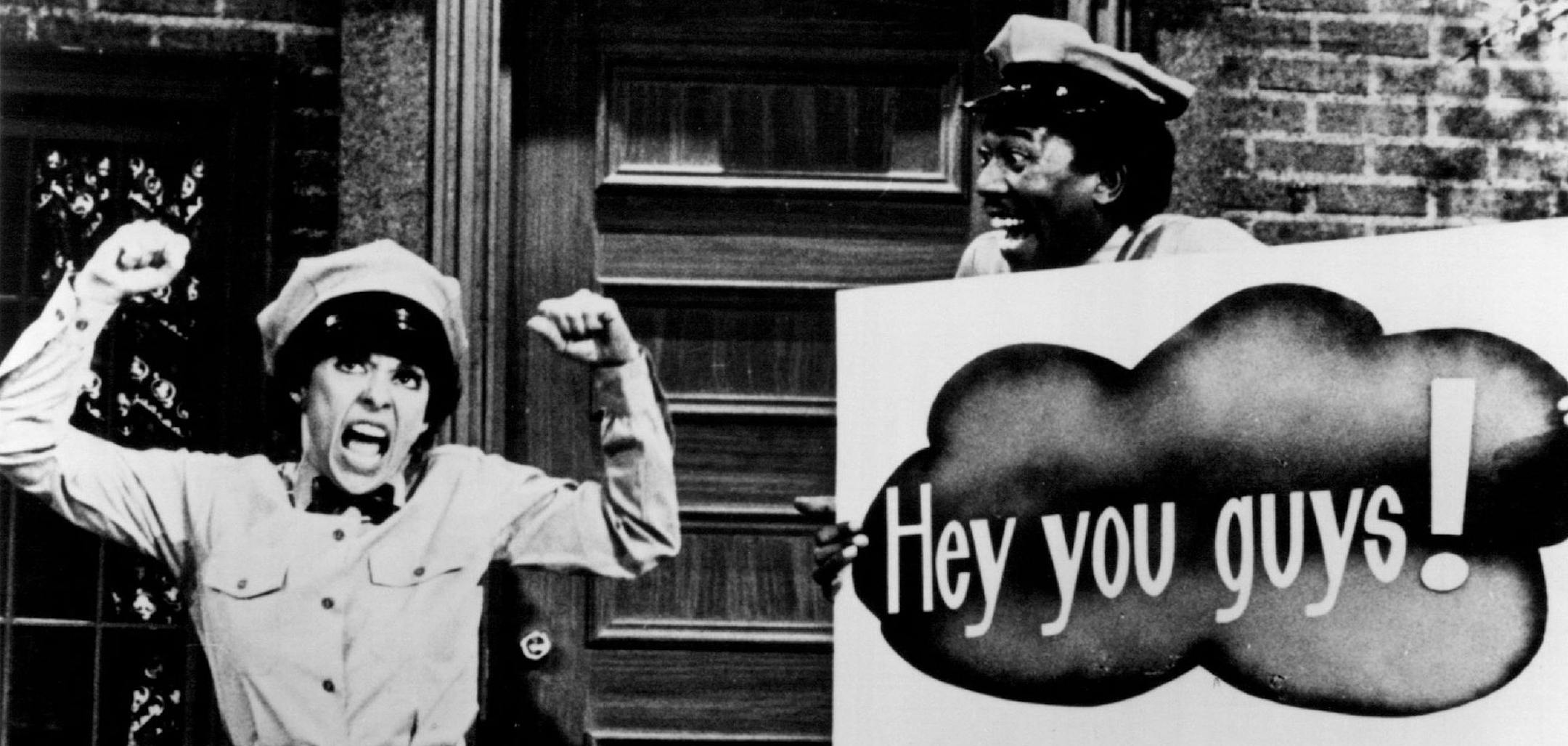
I've about had it with today's chummy restaurant servers who insist on calling me and my wife "guys." "Can I get you guys something to drink?" "Are you guys ready to order?" "How is everything, guys?" "Thanks, guys." Strike out the word "guys" in the preceding, and … nothing changes. So why do servers insist on using such a gender-specific expression for everyone?
Real "guys" wear purple jerseys and tailgate before Vikings games. "Guys" put caps on backward and wear them indoors. "Guys" talk sports and toss Frisbees and belch without embarrassment. My wife is clearly not a "guy." Traditionally, the term "guys" used to be coupled with "gals" — in the name of gender equality, shouldn't servers sometimes ask me and my wife, "how're you gals doing?"As an all-inclusive pronoun, "you" is quite sufficient for addressing male and female patrons, singular and plural and gender-free. "Ladies and gents" is OK, if a bit stuffy. "Folks" would be acceptable and, well, folksier. Even "y'all" will do, for the geographically impaired. But if a server skipped the breezy salutation entirely, I wouldn't miss it. Nor would I miss the presumptuous "we," as in "what are we having?" and "how are we doing?" and "are we ready for the check?" "We" implies that the server has somehow become part of our dinner party. Although I wouldn't mind so much if the server would pick up part of the check as well.
I appreciate good servers, because I've been in their shoes. Waiting tables and tending bar helped me pay my way through school, and taught me the importance of getting — and giving — good tips. But I also learned that a server's job is to facilitate the diners' experience, not intrude on it with chatty nonsense. Please, folks, when you come to our table, leave out the "guys."
Jack Maloney, St. Paul
EQUAL RIGHTS AMENDMENT
The role of abortion; the concept of constitutional protections
David P. Bryden made some good points in his March 15 commentary, "The case against the Equal Rights Amendment," but he never addressed the overriding fundamental issue that supports passing the ERA. The ERA failed in 1985 precisely because anti-abortion opponents such as Phyllis Schlafly hammered away relentlessly that it would reinforce Roe vs. Wade by giving women autonomy and therefore the absolute right to abortion.
The Roe vs. Wade ruling did not go that far. It simply made women wards of the state where an unwanted or disastrous pregnancy was concerned. It regulated the timing and circumstances under which abortion was permitted. It thus assumed what societies have always and everywhere assumed — that women, as society's child bearers, are an essential community resource, a public utility to be controlled and regulated.
Granted, Roe vs. Wade did end the criminalization of abortion, and its three-trimester regulatory system was only what women had always sensibly worked out on their own, but it invited the plethora of unnecessary harassing and punitive regulation enhancements that have made legal abortion services increasingly inaccessible in most states, especially for poor women. Passage of the ERA would give women a legal autonomy that would require abortion to be treated like any other medical procedure and none of the government's business. If the ERA wording is "vague," it's out of a vain hope that the "A" word won't come up and sabotage it. But it will, because the primal societal urge for reproductive control of women runs deep, part of a culture that seems unable to control sexual violence against women.
Marie Alena Castle, Minneapolis
• • •
Bryden argues that ratification of the Equal Rights Amendment would encourage the Supreme Court to "create new constitutional rights" for women more rapidly or aggressively than it has done thus far under the equal protection clause of the 14th Amendment. His preference seems to be for Congress to address "social problems" through legislation because its members are elected and therefore accountable to a majority of citizens.


