

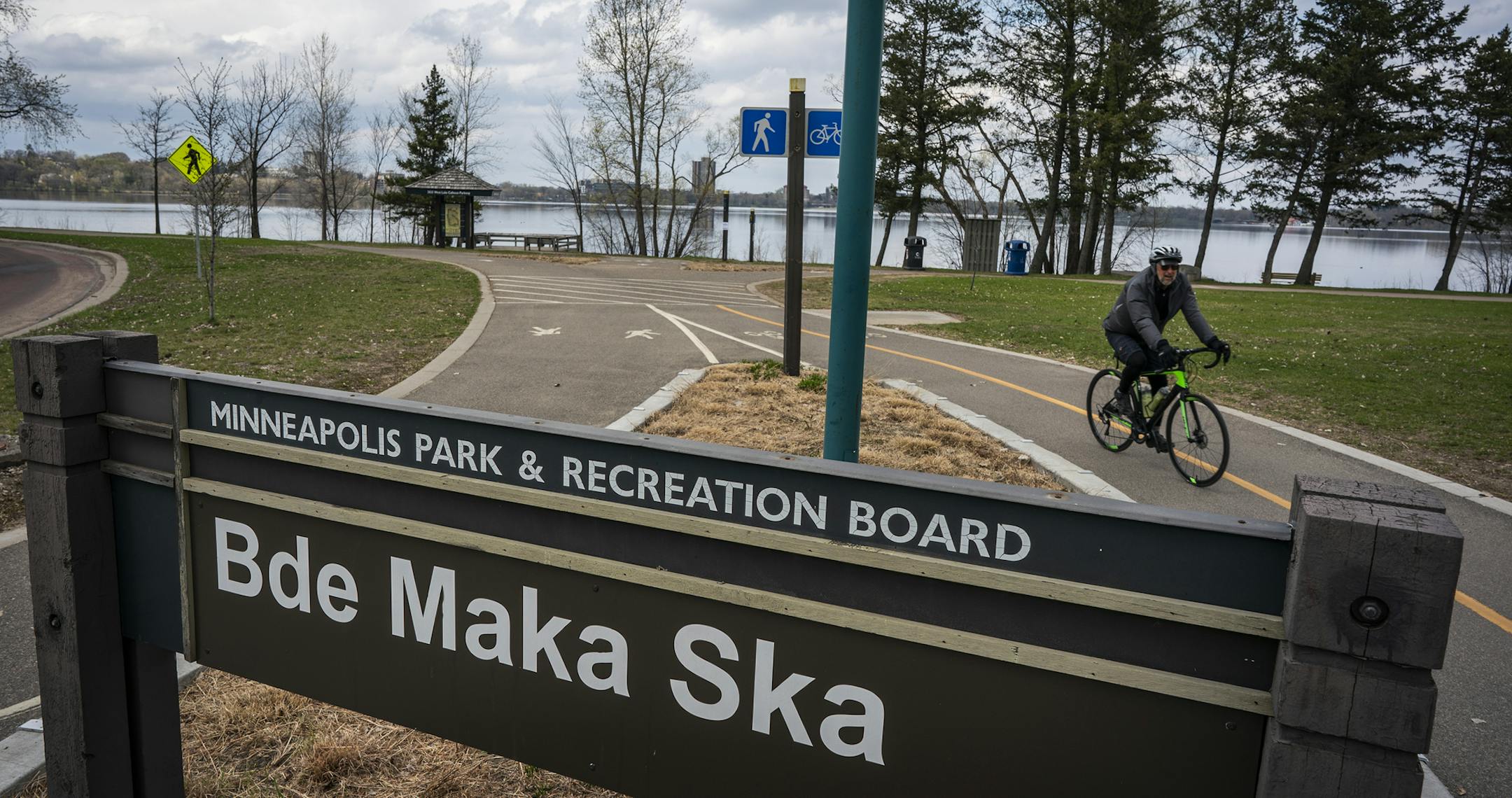
If the immediate fallout from the recent Minnesota Court of Appeals ruling regarding changing the name of Lake Calhoun has taught us anything (front page, April 30), it's that there is a crisis of leadership at the Minneapolis Park and Recreation Board. The Park Board's own attorneys publicly stated in 2015 that they believed only the Legislature had the legal authority to change Lake Calhoun's name. Knowing the chances for passing such a bill were slim to none, the Park Board and the Hennepin County Board (most of whose members are "elected" in races that are far from competitive) attempted to bypass the Legislature, and 3½ years and millions of taxpayer dollars later, they were dealt an embarrassing defeat in the courts.
Instead of rationally accepting this defeat and agreeing to abide by the rule of law, Park Board President Brad Bourn stubbornly and loudly dug his heels in, disingenuously suggesting that opposition to the name change amounts to supporting the legacy of slavery and voicing an outright lie that the name change was supported "by all of our democratically elected bodies" in an attempt to gaslight his opponents. One can very much deplore John C. Calhoun's legacy while at the same time supporting the rule of law that in this case requires that the Legislature either pass a law changing the name of Lake Calhoun or change the authority of the Department of Natural Resources to unilaterally make such changes. Bourn and his Park Board colleagues represent the worst version of self-interested, activist-motivated virtue signaling in local and regional politics that results in waste of taxpayer resources and heavy resentment among many they are intended to represent.
John Grimes, Minneapolis
• • •
The DNR certainly learned a lesson from the recent court decision on Bde Maka Ska: No good deed goes unpunished!
James E. Watson, Maplewood
• • •
There is wisdom in the Minnesota statute that prohibits changing the name of a body of water after it has been something for 40 years. The name becomes a reference for people, and streets, businesses, clubs and neighborhoods become named after it. For this reason, a reasonable survey showed that 80% of residents around Lake Calhoun opposed changing the name, especially to a non-English name difficult to pronounce. Sure, the sentiment for the change was good, but that doesn't mean this is a reasonable way to show support for the Native Americans, and the change works a hardship on many who don't speak up for fear of not being politically correct.
Gary Farland, Minneapolis
• • •
The court ruling opens the possibility of a reasonable compromise: Instead of renaming the water, rename the parkland at the southeast corner of the lake, the general area where the earlier village existed.
Rodgers Adams, Minneapolis
ACCESS TO ABORTION
To write that clinic funding 'divides' overweights opposition
The recent headline "Clinic funding divides Minnesota" in the print version of the Star Tribune (front page, April 29) implies an even split in public opinion over the issue of access to abortion. In fact, over decades of polling the Gallup organization has found that 20% or less of the population takes the extreme stance of blocking access under all circumstances. A well-funded and well-organized minority has managed to gain undue weight in public discourse. Their approach is not one of problem-solving — if they did, they'd be actively supporting contraception — but instead a scorched-earth approach that aims to impose a narrow perspective nationwide. The headline in the online version — "Minnesota clinics fight Trump rule restricting funds for abortion referrals" — is more factual.
Denise Beusen, Eden Prairie
• • •
As a prolife grandfather, I always feel bad when prochoice advocates dismiss all thoughts and opinions of males regarding the abortion choice, as totally belonging to the pregnant woman. Marriage forms a "one flesh" team that should support that decision in my humble opinion; unfortunately, too many pregnancies are out of the marriage bond. I married before abortion was legalized, but I would have required a prolife partner, given the choice.
Abortion referrals should not even be an issue in the abortion debate, as the information age provides adequate information for anyone to easily find the most convenient abortion facility support services for them. Federal tax dollars should be shared proportionally by all facilities that provide family planning health care (absent abortions). Finally, I believe that most everyone wants to minimize unwanted pregnancy and abortion, so more collaboration than division would be the better path to meeting that common goal. We certainly could use one less contentious issue in the ever-growing national political divide.


