

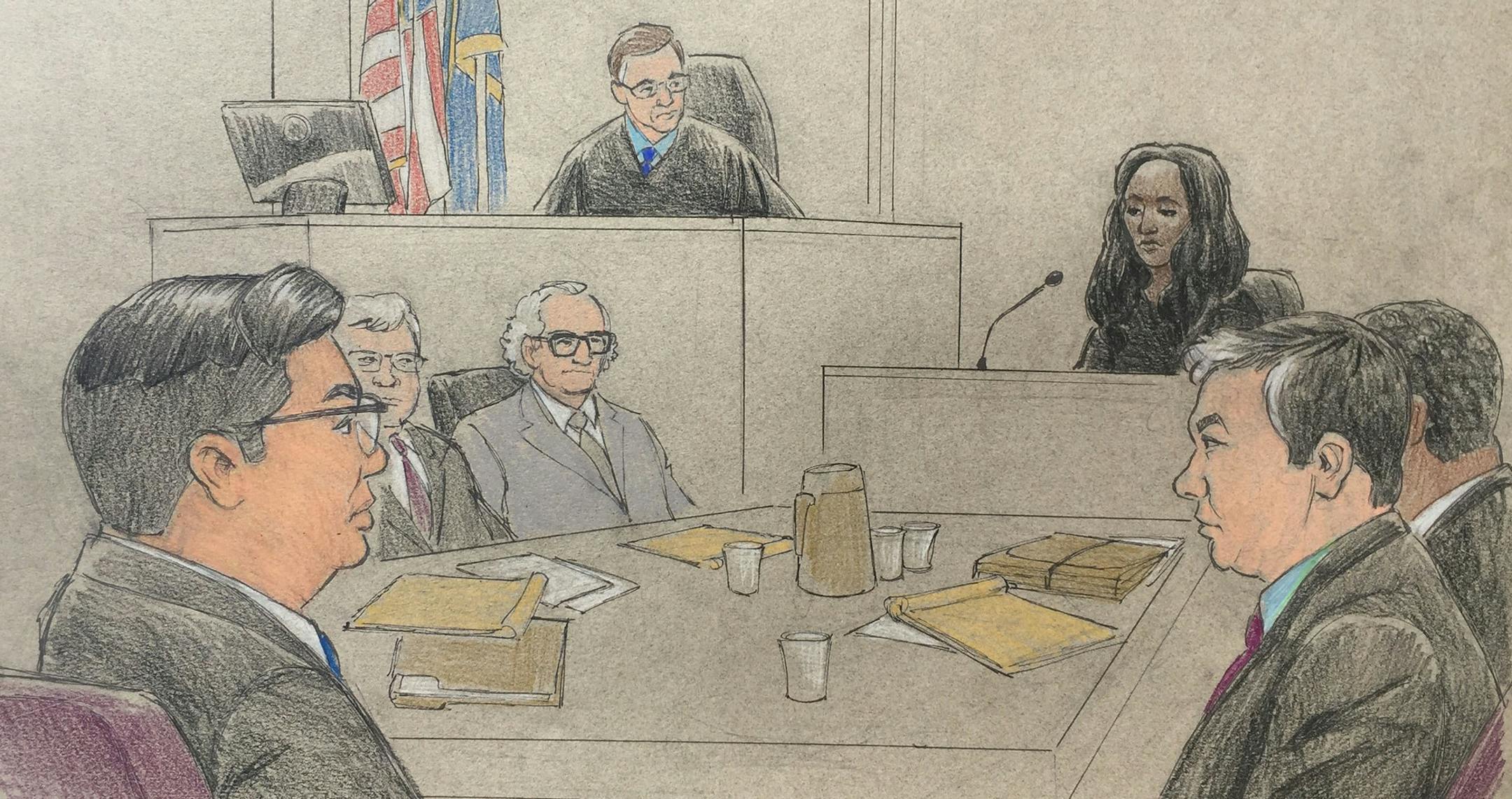
The trial of police officer Jeronimo Yanez for manslaughter in the death of Philando Castile was argued in all-too-familiar terms: Did Yanez follow correct police procedure? Did he feel in any way endangered?
The implicit questions about the dead man that have haunted this and so many trials are also familiar: Was "correct procedure" followed as a civilian was pulled over, out of the blue, on a summer evening because a police officer thought he resembled someone else? Was the civilian cautious enough, slow enough, crisp enough in his movements? Did he speak clearly enough to justify his continued existence, in the eyes of a police officer? Did he do everything in his power to keep a nervous cop from imagining the worst and emptying a clip into his body?
As of Monday, the case was in the hands of the jury. Whatever the verdict, it is sorely evident that we need dramatic changes to the way our communities are policed. Falcon Heights' practice of contracting police patrols from other municipalities, without direct local oversight, presents its own set of issues. For all of us, the values inculcated in police training, as they've been discussed in this and similar trials — protect yourself at all cost; regard any possible threat as an actual threat; shoot to kill — and the judicial standard of giving the police the tremendous benefit of the doubt put a premium on the life of the police officer, not the civilian whom the officer is supposedly sworn to "protect and serve." Under these circumstances, the weight of innocent black lives lost to police shootings will grow ever more staggering, while the narrow question of an individual officer's guilt is accepted as the only question that matters.
Neil Elliott, Falcon Heights
ROADS VS. TRANSIT
Regional competition and light rail: an asset, not a liability
I find it perplexing that light-rail opponents ignore the many Twin Cities business leaders who argue that expanding our existing lines is important for regional competitiveness. In his recent commentary on transportation ("The sad truth behind our congested mess," June 9), John Hinderaker of the Center of the American Experiment provides some insight. While expressing his admiration for its faster "average driving speed," he asserts that the Kansas City metro area is "comparable" to that of the Twin Cities.
Kansas City has many great attributes, but from an economic perspective, it is very different from our region. First, the Twin Cities metro area has about 3.5 million residents, which is more than 60 percent higher than the Kansas City region. Further, while we have 17 Fortune 500 headquarters, they have only one. This might partly explain why (according to Forbes) the total annual economic output of the Twin Cities is $232 billion, a bit more than double the $112 billion produced by the Kansas City metro area. Finally (also per Forbes), our median household income is approximately $70,000 annually vs. $59,000 for the Kansas City metro area.
If Hinderaker were to look at the regions with which our Fortune 500 companies are in daily competition for talent and capital, he likely will find that light rail is viewed as an asset, not a liability.
Jerry Anderson, Eagan
• • •
Hinderaker and study author Randal O'Toole list some of the problems associated with reducing traffic congestion. They failed to mention the impact on traffic that is caused by local administrations. Looking at the map of the Twin Cities, one will notice there is no easy way to go to Interstate 35W north from I-94 west. The highway department actually purchased the property to install a ramp from I-94 to I-35W, but the local community fought it. In St. Paul, taking I-35E south of downtown, one must slow down to 45 miles per hour, and trucks are not allowed to drive on that short section of the freeway, so as not to disturb the wealthy populace of Crocus Hill. When locals are able to interject their opinions and desires into federal and state highway planning, one is not surprised when their personal interests can override the designs of the highway planners, and it can easily cause congestion for many years to come.


