

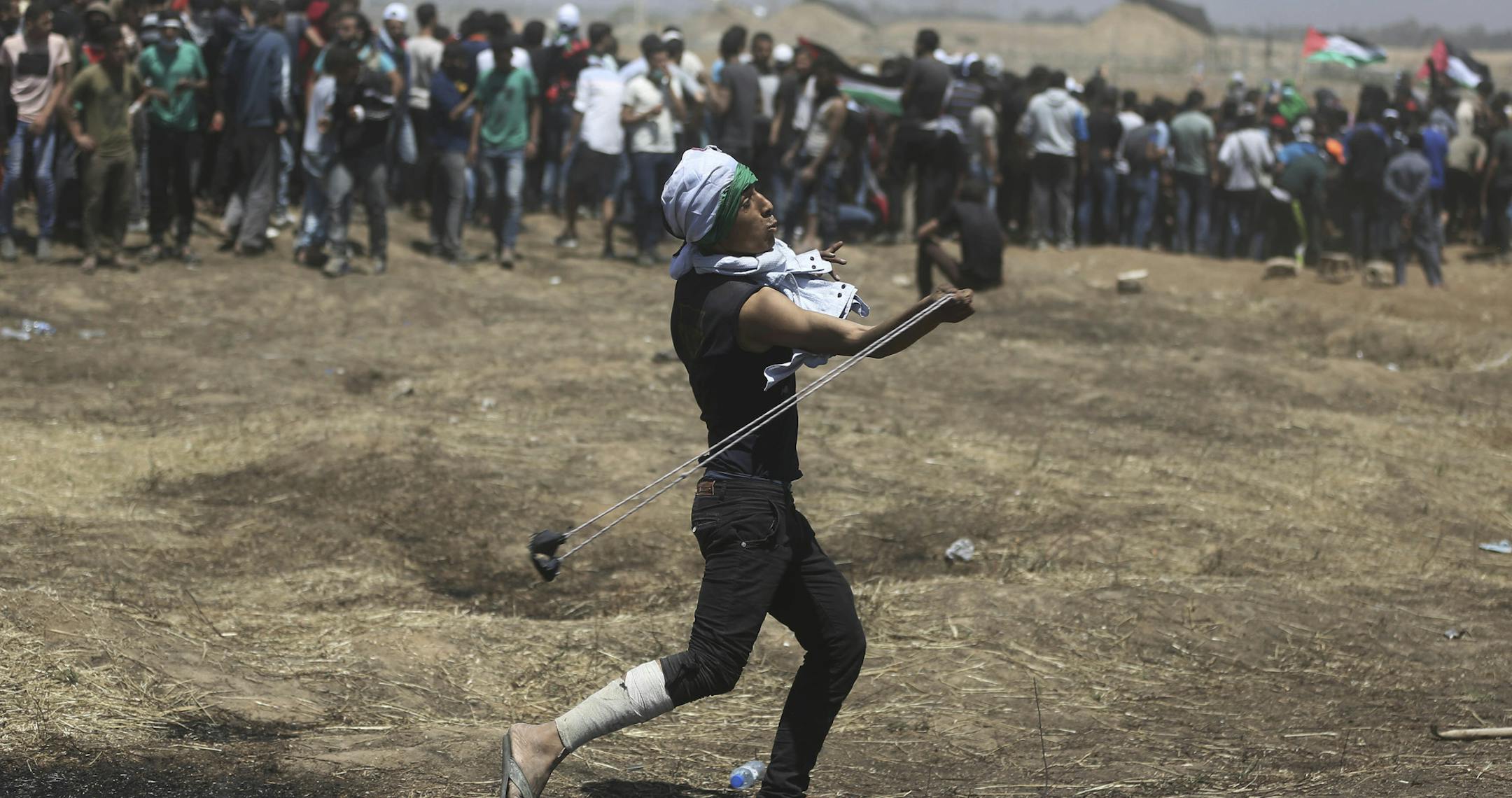
Although the media portrays the Hamas-led demonstrations on the Israel border with Gaza as having been sparked by the U.S. decision to move its embassy from Tel Aviv to Jerusalem, history tells us that this is not the real reason for the violence. Moving the embassy to Jerusalem is nothing more than recognizing the facts on the ground. It changes nothing, as the move merely recognizes long-standing reality. Jerusalem IS the capital of Israel, and virtually every country, including Sunni Arab countries, understand that. This does not mean a Palestinian state, should one eventually come into existence, could not have its capital in Arab-dominated East Jerusalem. What prevents this from happening is the refusal of present Palestinian leadership to sign a final peace agreement that divides the land with a Jewish state. That much is clear from its rejection of repeated peace overtures made by three Israeli leaders, Yitzhak Rabin in 1992, Ehud Barak in 1999 and Ehud Olmert in 2006, even though those offers included a Palestinian capital in East Jerusalem. And without Palestinian acceptance of a Jewish state sharing the land in peace, no Israeli government will agree to a Palestinian state.
Ronald Haskvitz, St. Louis Park
• • •
The president's decision to upend decades of American foreign policy by relocating the embassy to Jerusalem has caused major damage with increased violence in this already-unsettled area.
I feel he makes snap decisions with no thought of consequences. This is another interference he has made to worsen foreign policy. He has also made decisions for America that are not positive — tariffs and rules on immigration, for example.
I understood that the Constitution has a system of checks and balances. But I do not see any checks on President Donald Trump. Will there ever be?
Rebecca Kosbab, Burnsville
WATERBOARDING
'Humane' training experience is just not the real thing
In the May 14 letter "I've been waterboarded; it's humane," I counted four stated actions that count as torture and several unstated acts that would count as torture. The stated acts: "strapped to a board," "head is covered with a towel," "table is tipped," "water is poured on the forehead then gradually over the nose and mouth" and "it is very scary." The unstated acts: The individual is accused of terrorism outside a court of law and locked up without due process (no court date, no representation, secret evidence). These acts constitute psychological torture.
No, the letter writer's training was not torture, but that is because he was waterboarded by instructors. He was probably told he would not drown and had every expectation the waterboarding would not last long. An individual accused of terrorism is surrounded by adversaries and does not know how long the waterboarding will last and whether or not it will result in his death. The letter writer (and all of us) should heed the words of Friedrich Nietzsche: "Whoever fights monsters should see to it that in the process he does not become a monster."
Gary R. Janckila, Dassel, Minn.
• • •


