

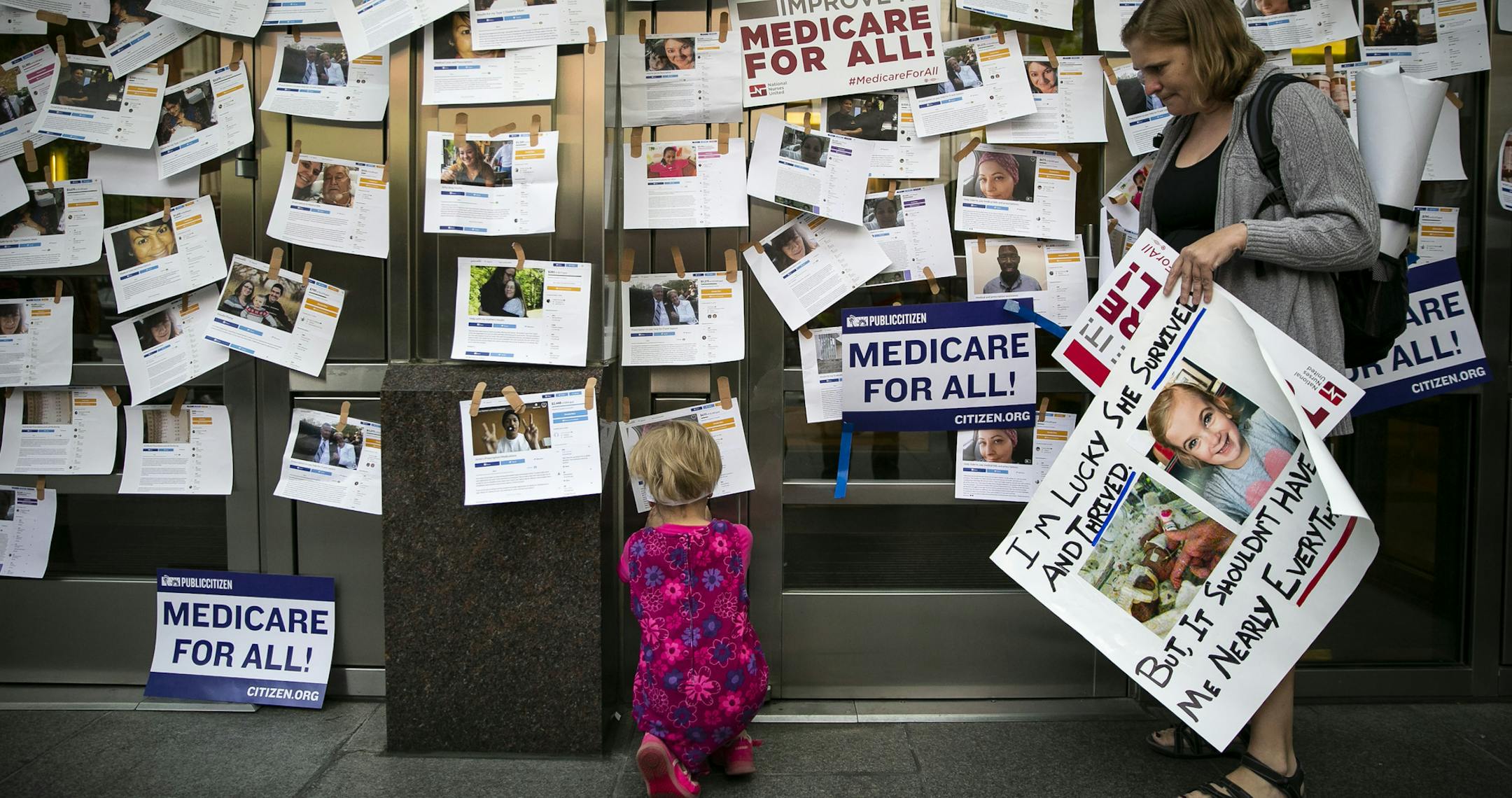
In a recent piece, the Star Tribune Editorial Board highlighted the German health insurance model, which uses private companies to administer public health care benefits ("A cautionary report on 'single-payer,' " May 13). The board noted that while Germany relies on private insurers, it "tightly regulates" them. This model, if adopted here in the U.S., might be less disruptive than a full-blown single-payer system, but it would require a series of federal mandates aimed at revamping the business model of for-profit insurance companies.
These companies would need to expand their bottom-line concerns to take account of the public interest as well as the interests of their stockholders. One way to start would be a requirement that companies like Minnesota-based UnitedHealth Group bring public members onto their boards of directors, with the percentage of public members reflecting the percentage of the revenues that these companies obtain from administering public programs such as Medicare and Medical Assistance.
Iric Nathanson, Minneapolis
• • •
The editorial on single-payer health care trotted out a widely publicized estimate of $32.6 trillion in additional federal costs over 10 years to fund "Medicare for All," and the piece characterized it as an estimate by an "independent analyst."
An online link to the estimate shows it to be prepared by the Mercatus Center, which, according to SourceWatch, "was founded and is funded by the Koch Family Foundation. According to financial records, the Koch family has contributed more than $30 million to George Mason University, much of which has gone to the Mercatus Center."
It's a measure of the distorted news world we live in when one can label the Koch brothers' shrieking, single-minded, anti-government acolytes "independent."
William Beyer, St. Louis Park
THE ECONOMY
Sure, give Trump credit for growth, but give him credit for harm, too
The letter writer who claimed that President Donald Trump deserves credit for economic growth ("Give credit to Trump — it's due," Readers Write, May 13) cited mainly the Dow Jones Industrial Average since 2016 as evidence. Let's keep in mind that the Dow is not the economy — it reflects corporations whose value went up in anticipation of and later as a reaction to a decrease in corporate tax rates.
If you want a more genuine measure of economic health, I wouldn't go to the "business world" or the "Democratic pundits" the writer mentioned — I'd go to small-town Minnesota and talk to a farmer or a shop owner and ask them how things are going. Ask them how that tax bill is helping them, or how the trade war with China will affect their bottom line. Then give President Trump credit for that, too.

