

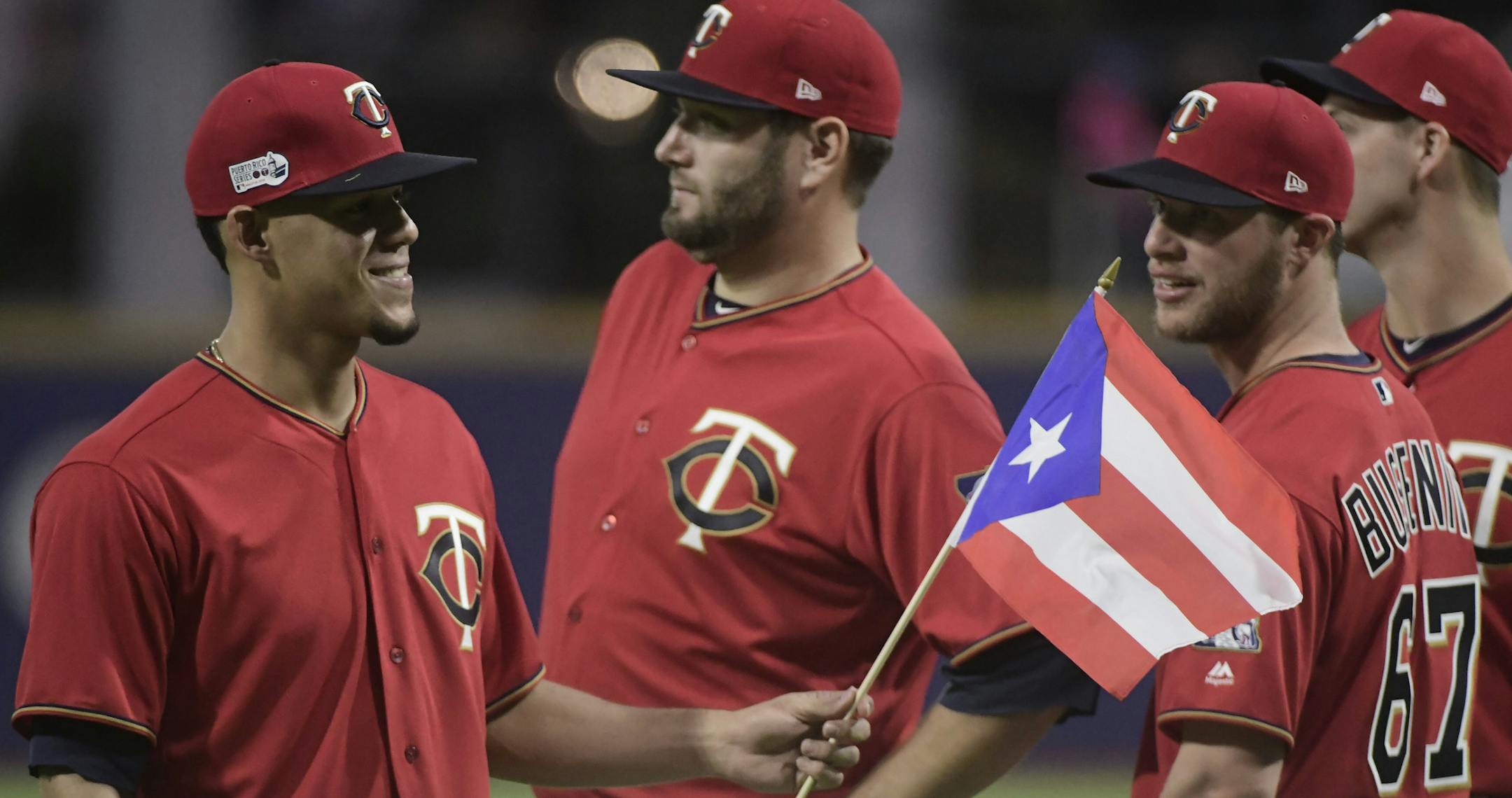
Tuesday night, the Minnesota Twins and Cleveland Indians baseball teams played under the lights in San Juan, Puerto Rico. It was the brightest place on the island. Were it not for generators and batteries, Puerto Rico was dark.
Puerto Rico's electric grid failed Wednesday morning. It will be another day or two before factories and businesses can reopen and people's lives will approximate normal.
Many Puerto Ricans have been dealing with life without power since Hurricane Maria hit the island last September. Some living in communities on this U.S. territory will probably be without power this September.
Why should we concern ourselves with these U.S. citizens? Sure, if they cannot keep their factories running we might pay more for our pharmaceuticals, electronics parts and other stuff. But, I think the tax cuts will get the island up and running some day.
And it cannot be that bad; ESPN was able to broadcast the game. The fans at the game looked real happy, too.
Carl Lee, Minnetonka
EARLY EDUCATION
What research supports
The April 14 commentary by Art Rolnick ("State should double down on early education now") was heavy on advocacy but light on research support, despite his affiliation with a research university. At a time when the state's one-time investment in the voluntary preschool program is scheduled to end without legislative involvement, he advocates for a doubling of spending on early learning scholarships instead. Research doesn't support this.
Elsewhere, Rolnick typically cites only a 2011 SRI evaluation of the Frogtown pilot as research supporting the effectiveness of the scholarships. In that report, which is notable due to the failure of the evaluators to recruit the intended comparison group, the scholarship recipients showed gains in literacy as expected while they were in preschool but fared no better than those receiving the state child care subsidy at kindergarten entry. If there are stronger studies, presumably Rolnick would cite them. We should continue to push for more evidence on effectiveness in linking the scholarships to improvements in school readiness.
Publicly funded preschool has a stronger research base. Just in the last few months, for example, a rigorous study of state-funded preschool programs in eight states by Steven Barnett reports positive effects on school readiness in each state. A Dartmouth economist reports that poor children in states with universal preschool do better in reading than do poor kids in states with programs targeted toward the poor. Upjohn Institute economists find that school readiness for black children is higher in states with publicly funded preschool. Until the scholarship model is supported by stronger research, it makes no sense to eliminate spending on a promising state-funded preschool program, which is backed by rigorous and peer-reviewed studies, for a program with much weaker research support.

