

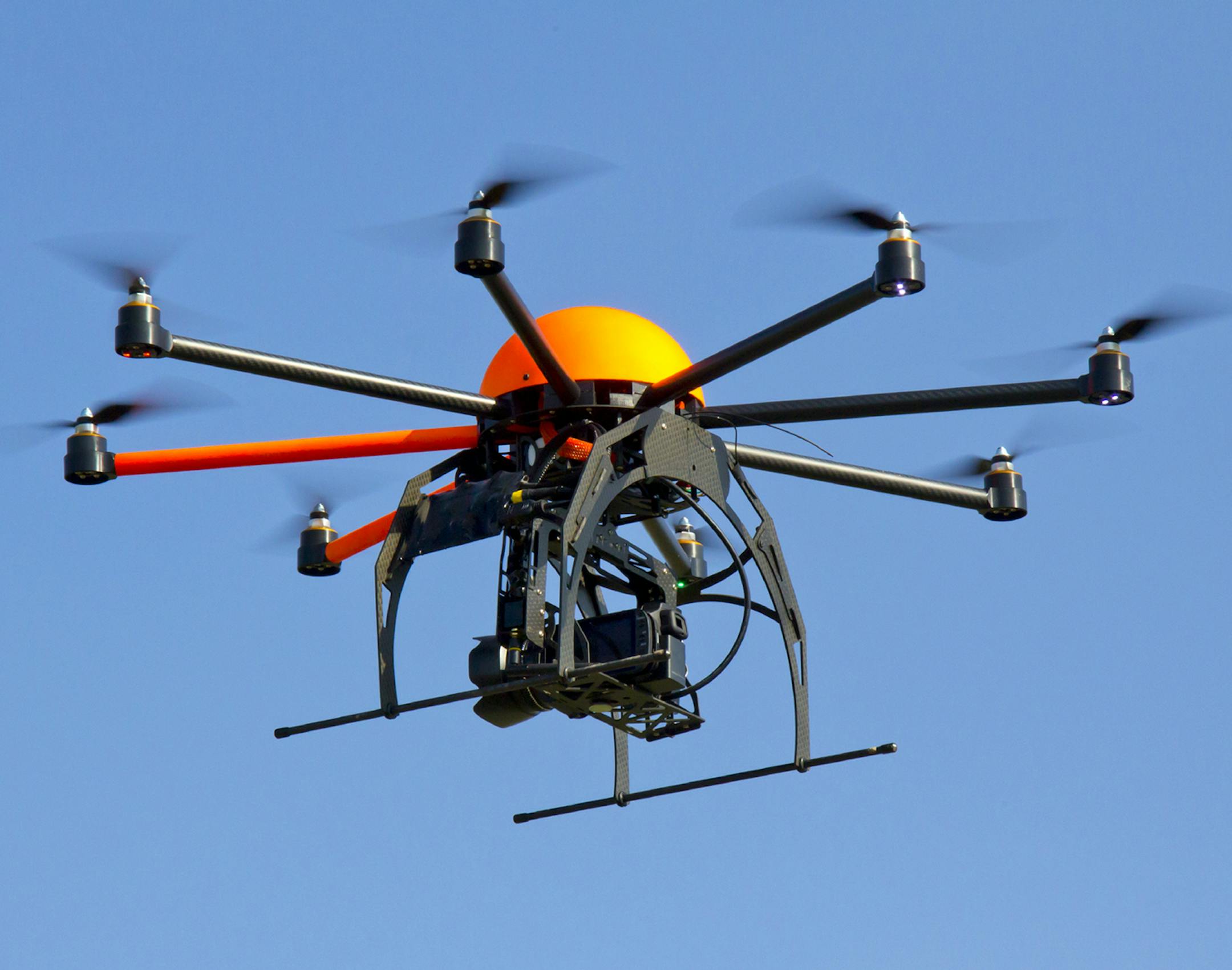
It has been hard not to notice the discussions about drones, also known as unmanned aerial vehicles, or UAVs. I can see many good and bad things that can be achieved by their use. There seem to be two main issues: safety and privacy. The Federal Aviation Administration seems to be charged with coming up with a workable solution.
One thing that would go a long way in resolving most issues would be to license the pilots of these drones. Applicants could test for either a commercial or a private license. Businesses could either have in-house pilots or contact a business that supplies a licensed pilot and a certified drone. They could base their decision on their need and on what would make sense financially.
All drones that leave private property should be certified as airworthy, be flown by a licensed pilot, and carry a transponder that would identify the owner and pilot. This is where the FAA would come in. I am sure that there could be clauses in the license agreement that could go a long way toward ensuring the legal and ethical use of this new and exciting technology.
H.M.Gabriel, Brooklyn Center
WOLVES
Speaking of intrusion by special interests …
It is perplexing that a Dec. 23 letter writer chose to single out "special interest" groups that he implies are the ones who decided there would be wolf hunts. He failed to note that the new ruling that put the wolves back on the endangered-species list was because of a lawsuit from the Humane Society of the United States — a special-interest group that caters to animal care.
As a fish biologist working with endangered species in the Colorado River Basin, I know the difficulties of working with various stakeholders who regard an imperiled species much differently than I do. However, as a Minnesotan, I will always favor supposed "special interests" such as deer hunting, farming and trapping that embody our state heritage much more appropriately than a nationwide special-interest group that sees limited utility in animals besides as pets. Despite the Humane Society's good intentions and work elsewhere, its lawsuit has ruined an opportunity for Minnesota to cultivate its wolf-management plan. Minnesota should move to appeal the ruling.
Nate Cathcart, Manhattan, Kansas
THE POLICE
We all must expand our understanding
As director of a Ramsey County juvenile crime prevention program, I taught and worked with police officers for many years. I remember thinking that if they hadn't decided to become police officers, many would have become chaplains. Most sincerely wanted to help people and protect their communities.
I also worked with children at high risk to become serious, chronic and violent offenders, and with their families. Their neighborhoods had high levels of family violence, extreme poverty, school failure, joblessness, homelessness and street violence. Still, most residents were hardworking, decent people.
No police officer who works in these neighborhoods wants to kill people, especially not children. But when the 13-year-old points a gun, they don't know if it's a toy and they have to make a split-second decision. In these areas, 13-year-olds sometimes have guns and do occasionally shoot people.


