

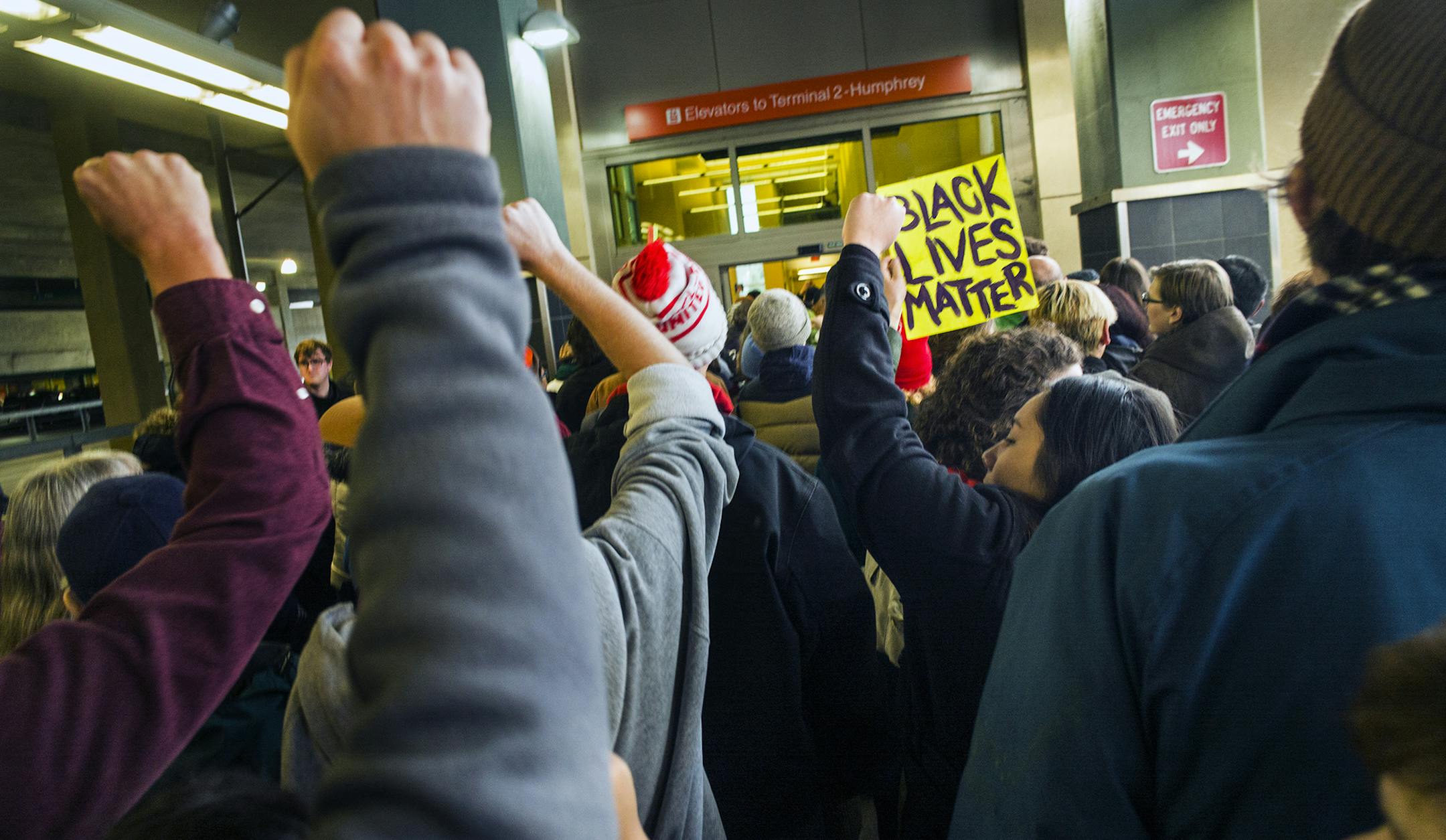
In town from Washington for the holidays, I was surprised by a letter writer's contention that Black Lives Matter should be morally excused for trampling on private property rights because lawful protests have supposedly failed them and raising awareness through an "if it bleeds, it leads" public-relations strategy is therefore necessary ("Civil disobedience is chosen because it gets attention," Dec. 24).
To be sure, the U.S. has a broad problem with excessive force in policing, and more specifically a problem of police gunning down unarmed black men. However, arguing the same "all press is good press" strategy deployed by the likes of the Westboro Baptist Church is a good way to alienate potential supporters and sympathizers. This is not how to build a winning coalition capable of actually accomplishing something noble. Rather, it primarily serves to boost the egos of the tiny number of increasingly marginalized demonstrators.
You cannot convincingly argue that all reasonable avenues for reform are closed when it is in part your actions that continue to close them. The questions the letter writer and others like him should ask are: Whom are you trying to convince and how will your chosen actions convince them?
Marc Scribner, Washington, D.C.
ISLAM IN MINNESOTA
Opinion writer's risk assessment is, yes, discriminatory
Scott Johnson ("Can we hear some straight talk for a change?" Opinion Exchange, Dec. 28) believes it's OK to be Islamophobic — although he is unpersuaded by the term — because 10 Somali-American Muslims have been charged with serious crimes. By his own figures, that's 10 out of 100,000 Somali-Americans in Minnesota, or 0.01 percent. I'm pretty sure that more than 0.01 percent of non-Islamic Minnesotans have been charged with serious crimes. So by his logic, we should hate everyone.
David Weisberg, Minneapolis
HEALTH CARE
Are health savings accounts, free market a durable strategy?
I have two questions for the Dec. 19 letter writer who stated that the U.S. doesn't need single-payer health care — that we should have health savings accounts and trust the free market instead ("Universal coverage is not the answer to rising prices," Readers Write).
The first question is this: How are Americans who are living paycheck to paycheck supposed to have money to put into those HSAs? And what happens if they suddenly need a $100,000 surgery when they have less than that in the HSA?
My second question is this: Why should we trust the free market? Republicans said back in the 1990s that the free market would improve health care in this country and make it cheaper. However, that isn't what happened. The free market has made health care worse and more expensive because health care companies want to make as much profit for as little expense as possible.
Perhaps it's time to recognize the fact that the free market can do many things well, but that it doesn't do everything well — in fact, it does some things very poorly.


