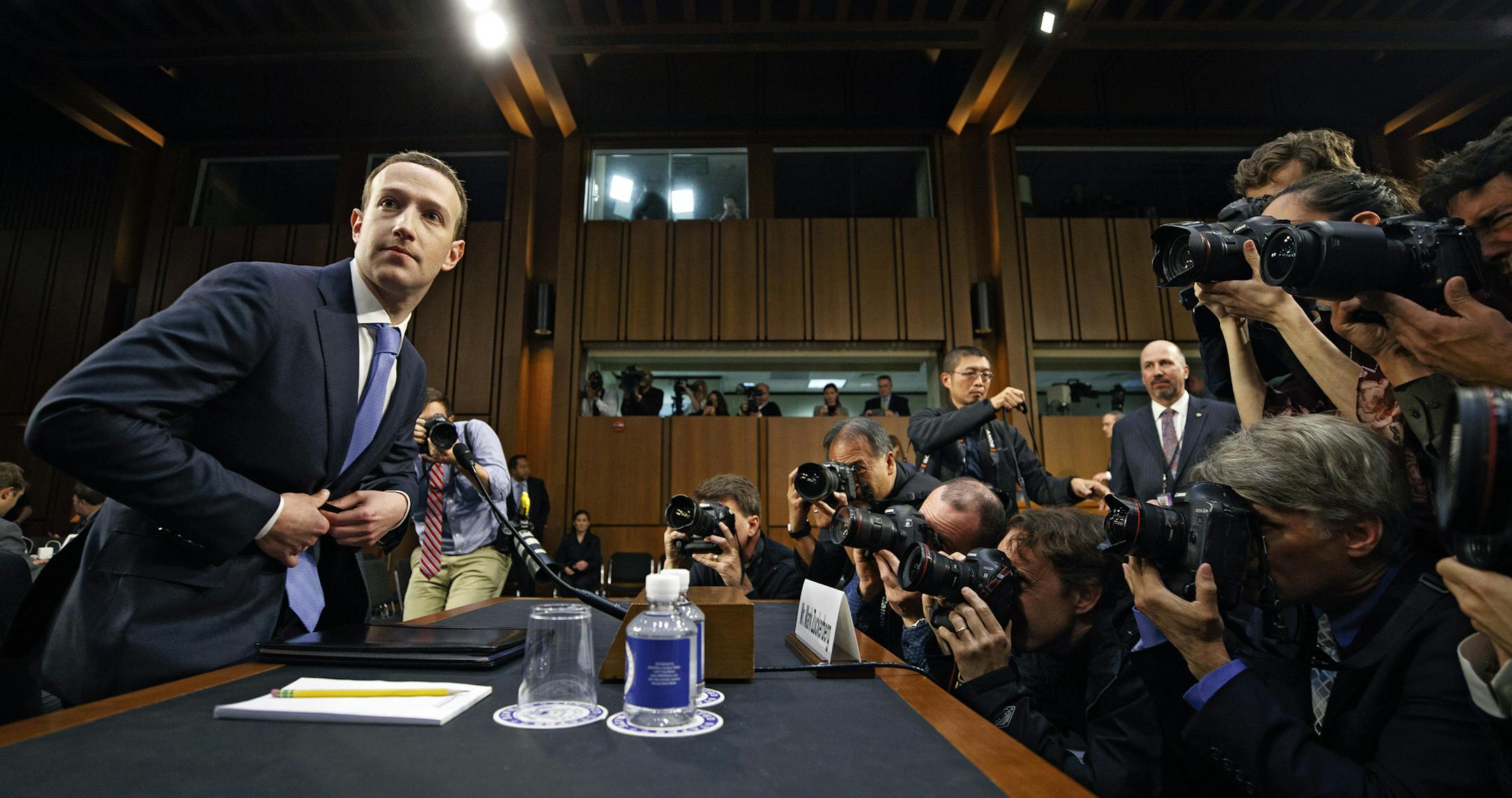
The letter writer who dismissed U.S. Sen. Amy Klobuchar's analogy of Facebook's breach of information totally missed the point behind it, and indeed the whole reason behind Facebook chairman Mark Zuckerberg's testimony. Klobuchar's analogy ("If someone breaks into my apartment with a crowbar and they take my stuff, it's just like if the manager gave them the keys or if they didn't have any locks in the door — it's still a breach. It's still a break-in.") is solid. Why? Because Facebook users believed the information they were posting to friends and family was going to friends and family — only. They did not think it would be harvested by Cambridge Analytica for political purposes. The fact that users were not, as the writer described, essentially setting "stuff on the curb outside" for people from the neighborhood to take was neatly driven home when U.S. Sen. Dick Durbin asked Mark Zuckerberg: "Would you be comfortable sharing with us the name of the hotel you stayed in last night?" Of course a visibly rattled Zuckerberg responded with a clear "no" — he essentially did not want to share that information with the general neighborhood; it was more for just family.
Having seen the new movie about Ted Kennedy and Chappaquiddick and having met the man himself on several occasions while serving a Joseph P. Kennedy Jr. Foundation Fellowship in Washington, D.C., in 2004, I have a somewhat different take on the incident and the man than the April 12 commentary on political mythology ("'Chappaquiddick': Overdue and worthy of a slow, long clap"). The writer lays the fault in our political system at the feet of the spinmasters who fashion and sell the mythology surrounding political figures and create the "Camelots" of families like the Kennedys. I suspect that the fault lies not in the spinmasters but in ourselves. Mythology only sells to audiences willing to buy into the narrative.
Without doubt, Ted Kennedy committed a felony or two back in 1969. There is also no doubt that the power of his family minimized the damage. But it is also true that the people of Massachusetts elected him and re-elected him to the U.S. Senate eight times despite Chappaquiddick and despite a lifetime of alcohol-fueled scandals that were well-known to all. Voters overlooked his personal flaws and kept him in office not because of spin but apparently because they approved of his performance in office and valued the powerful position he held in the U.S. Senate. And, indeed, he accomplished a lot.
It is hardly unique or even unusual for flawed people to accomplish a lot in life. Kennedy is but one example. One need look no further than the current occupant of the White House to find a more recent example of a deeply flawed man being elected despite well-known and multiple flaws and misdeeds. The jury is out on whether his administration will be celebrated or cursed, though I'm betting on the latter. Donald Trump was his own spinmaster, and the electorate bought his line. The flaw, as it happens, resides in us.
Let's remember that the current Minnesota Licensing and Registration System (MNLARS) debacle and the $30 million in unbilled and unpaid MinnesotaCare insurance premiums are also the result of a complete failure of oversight by our elected representatives (" 'Guardrails' proposed for state IT agency," April 12). Both our Democrat governor and our Republican-led Legislature ignored the long and clear history of very costly warning signs of trouble in Minnesota IT. Better late than never to make badly needed changes at Minnesota IT, but way too late and after allowing Minnesota IT to squander huge amounts of our tax dollars. Firing people at Minnesota IT is a good move, but shame on our elected officials from both political parties. I say cut all their state salaries by 10 percent to help pay for this outrageous collapse of their oversight responsibilities. They have all been asleep at the switch.
In any strong difference of opinion, a strong emotion underlies the debate. When it comes to guns, both sides stand on their rights: to bear arms, to the pursuit of happiness. Beneath the assertion of these rights lies fear. Those who want no restrictions fear the loss of a sport, a way of life. They fear for the safety of their families and believe guns will protect them. Those who favor restrictions fear for their lives and the lives of their children in any public space. Do those who are pro-gun really want little kids to go through regular lockdown drills, being trained to run and hide? To run from someone who can spray hundreds of bullets, killing dozens in minutes? I think no. Do those who favor restrictions really want to go and take away Uncle Fred's hunting rifle? Again, no.