

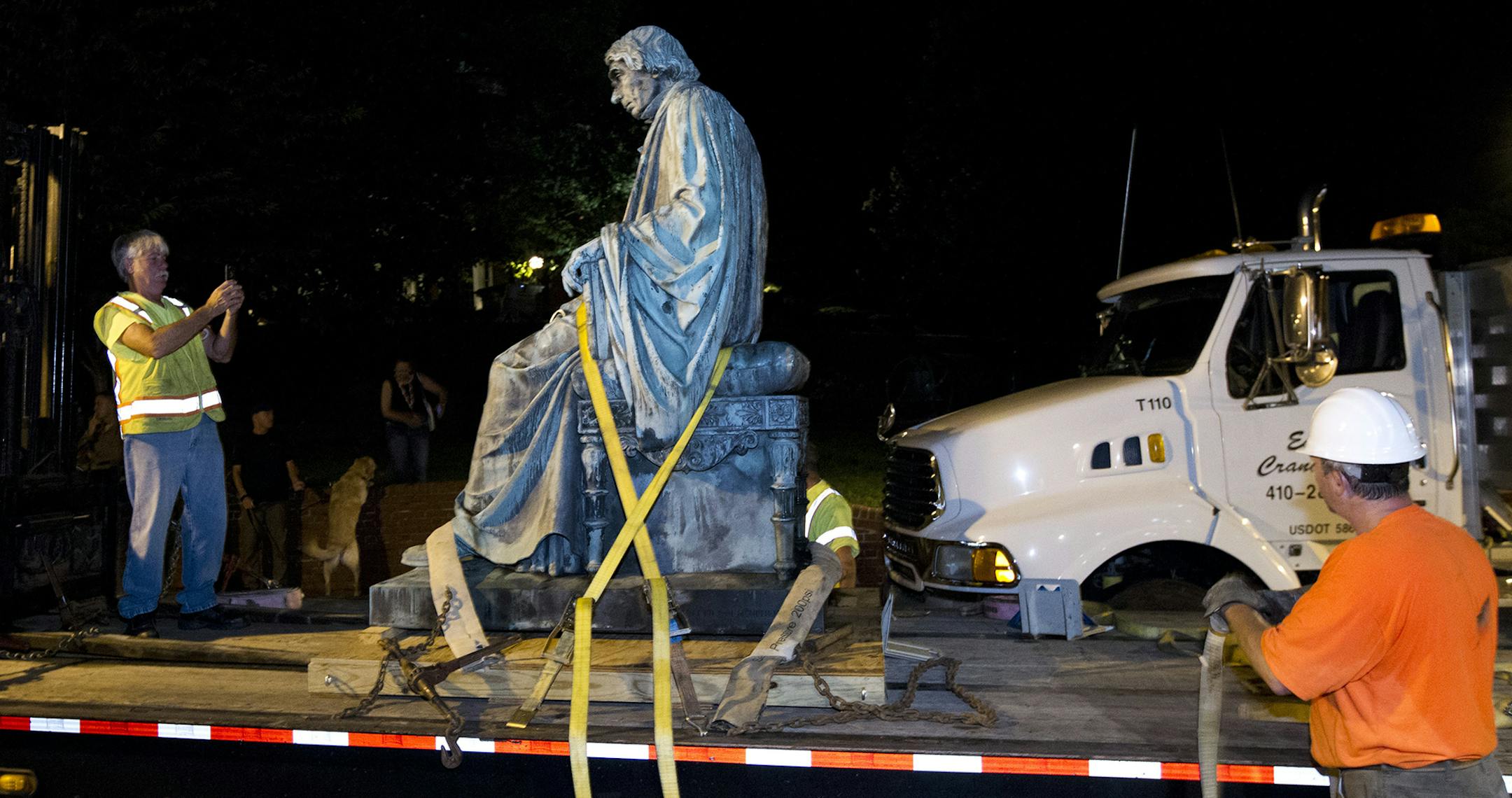
The turmoil generated over removal of Civil War memorabilia has evolved into a tsunami of self-flagellation. "It's in our DNA." "It's part of our history." "We are a violent people." This may be true in text, but it is false in context.
Yes, in text, Robert E. Lee, Jefferson Davis and Judge Roger Taney were — in today's terms — bigots and racists, but when context is added, we have, in the last 50 years, made more progress in human rights, diversity tolerance and social mobility than any people on Earth.
More minorities have been elected or appointed to public and private positions than at any time or in any place in history. We are the first nation to elect a minority president. We are the first to establish a national holiday honoring a minority citizen. And we are the first nation ever to witness the great-great granddaughter of a slave peacefully rise to the status of First Lady.
Juxtaposing then/now statues would serve as a powerful antidote to volatile emotions. Consider placing Jefferson Davis' statue next to Barack Obama's, mount the Rev. Martin Luther King Jr.'s next to Robert E. Lee's, or set Roger B. Taney's next to Thurgood Marshall's.
Serious diversity challenges are still palpable. But if we see them in context, not just in text, they take on a different hue and encourage a tension-reducing awareness, and a less contentious citizenship.
Mark Welter, Ramsey
• • •
We could use more heroes, and fewer statues of heroes.
Almost all statues are a form of propaganda — an oversimplified, romantic version of the past. Rather than being built to scale, they are typically larger than life, in order to convince us that the subject was the same. Which wasn't true, of course, as evidenced by the subject's death and subsequent memorial.

