

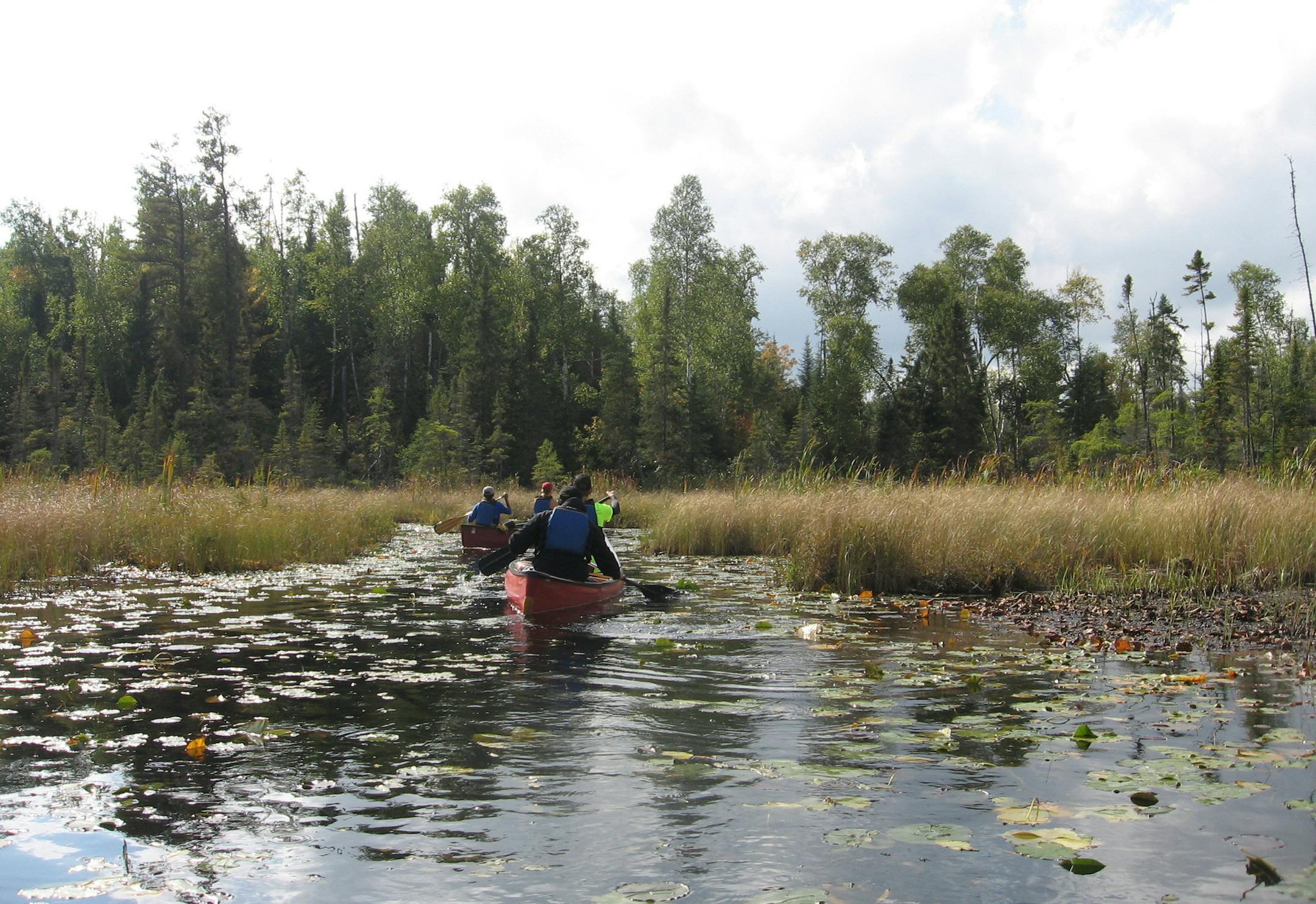
It might be too late to save the Boundary Waters. During our recent canoe trip off the Gunflint Trail, we found green water in Little Caribou Lake. It was so thick, something like pea soup, that we couldn't see the blades of our paddles below the canoe. I called the Forest Service office in Grand Marais just to make sure, and was told that, yes, it was algae bloom. Fire and wind and flood aren't enough, I guess. Mother Nature seems determined to use every weapon at her command to change the landscape in northern Minnesota. One of these days in the not-so-distant future, the Forest Service will be forced to close the Boundary Waters altogether because it won't be safe for any of us to go there.
Jim Ganahl, Cook, Minn.
'MEDICARE FOR ALL'
Why the middle-ground proposals won't do the job
The main problem with finding a middle ground on "Medicare for All" (editorial, Aug. 24) by offering Medicare and/or Medicaid as "public options" is that it will be impossible to achieve the projected cost savings because it leaves the current system in place, with all its inefficiencies and inability to negotiate prices.
For example, in Minnesota, Medicaid has been privately administered for years, with no audit to prove whether or not private insurance companies have been able to save money or be more efficient, as was predicted. Medicare is administered publicly, but Medicare Advantage, which is administered privately, cherry-picks healthier subscribers and has cost significantly more than regular Medicare.
The current administrator of the Centers for Medicare and Medicaid Services proposes further tinkering with our current system by expanded ACO (accountable care organization) projects, none of which has been proven to save money or expand care to more people, but rather cause more administrative waste and expense. Why spend all this energy and money on tinkering when we have plenty of evidence, both in the U.S. and abroad, that a true single-payer system could get us to our goals, affordable high-quality health care for all?
Dr. Carol Krush, Minneapolis
The writer is a retired family physician.
• • •
Sometimes you have to spend more money up front to pay less in the future, like for more efficient autos or appliances. My husband and I look for the "break-even" point: How far out before our expenditure becomes more like savings? We recently bought new phones to replace our nearly obsolete models. Our plan was to buy the least expensive upgrade, going for $100 apiece. But we learned that a much better, newer version was available for just $25 more. Added to that was its ability to make use of "hot spots," which meant we could let go of our cellular service. We figured the phones would pay for themselves within a year and after that our savings (with much better phones and, so far, better service) would be around $65 a month.
The editorial regarding the "single-payer" health system requiring at least $32.6 trillion additional federal spending over the next 10 years, said the existing system's annual expenditure was $3.5 trillion in 2017, and that by 2026 it's predicted to be $5.5 trillion.

