

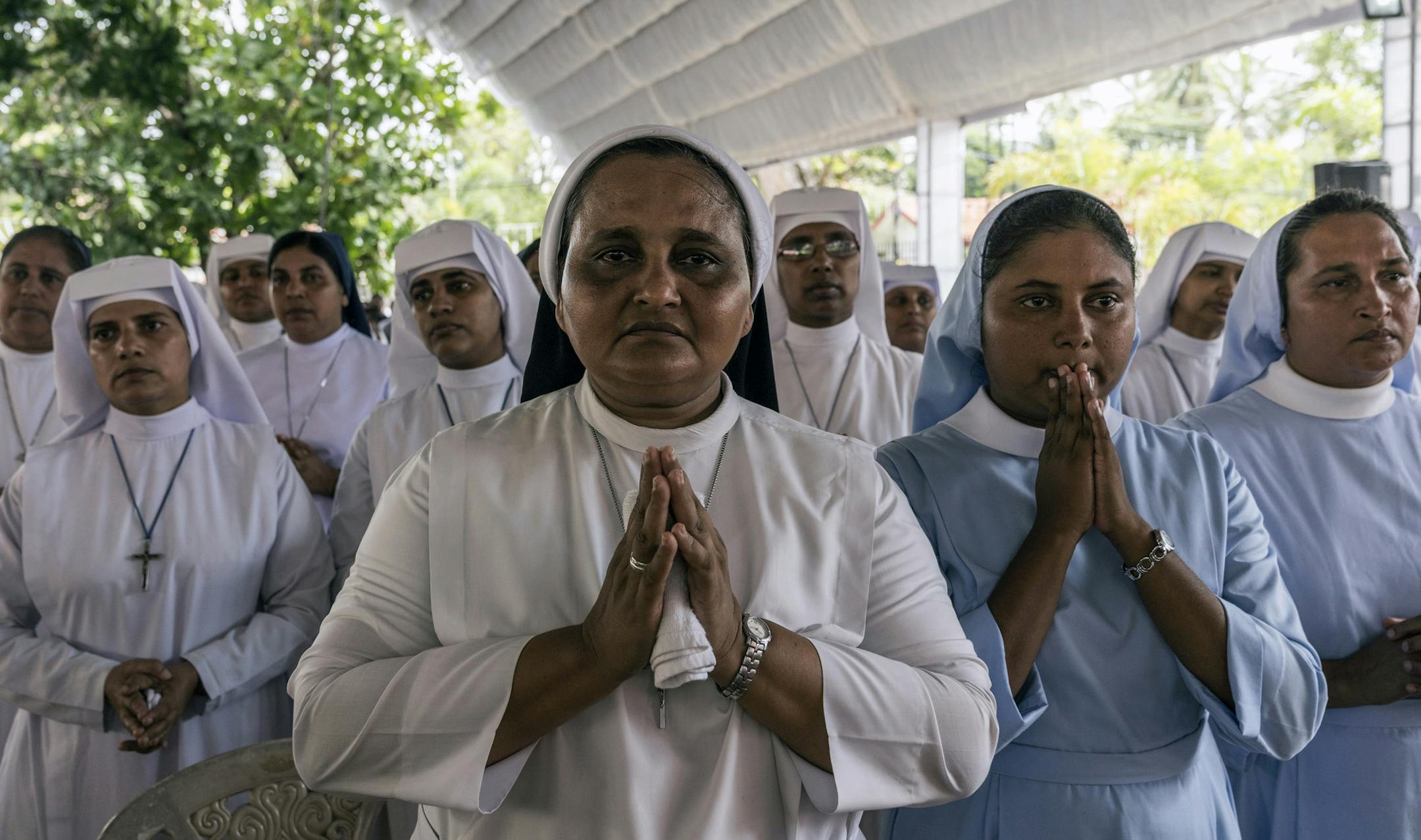
The destruction of churches in Sri Lanka during Easter services is deeply disturbing because not only was life lost, but it was lost during a sacred time, when worshipers were taking the name of God.
Muslims must protect the rights of others to freely practice their religion. It is a fundamental part of faith. The Qur'an speaks unequivocally on the fact that if we do not protect the rights of all people, we will see the destruction of "cloisters, churches, synagogues and mosques wherein the name of God is oft commemorated (22:40)." It places the rights of these houses of worship at par with mosques.
The prophet Mohammed went to great measures to ensure the protection of other faiths. In a covenant made with the Christian monasteries, he clearly outlined: "No monk shall be expelled from his monastery. None of their churches and other places will be desolated, destroyed or demolished. No material of their churches will be used for building mosques or houses of the Muslims. Any Muslim doing so will be regarded as recalcitrant to God and His Prophet."
When the caliph Umar ibn Al-Khattab entered Jerusalem, he was offered to pray inside the Church of the Holy Sepulchre. He refused, citing that he did not wish such an action to be construed to mean that Muslims can assert rights over others' places of worship.
True Islam defends others' places of worship; it doesn't destroy them.
Sofia Qureshi, Appleton, Wis.
SOUTHWEST LIGHT RAIL
Letter writers' assumption of environmental benefits is mistaken
April 23 letter writers reflect two assumptions about Southwest light-rail transit that need to be corrected.
First, the Southwest line will not have significant environmental benefits. In part because relatively few new-to-transit riders will use the train, the line "will increase the [greenhouse gas] emission in the Twin Cities area by approximately 2,000 metric tons per year in 2040, compared to No Build alternative" (final Environmental Impact Statement, page 3-204).
Second, poor planning, not neighborhood concerns, has delayed the project. Freight-rail carriers, which will now have to share the corridor with electrified light rail, have understandably drawn out negotiations. The Southwest project's 29 new bridges, two new tunnels, six pedestrian underpasses and hundreds of feet of retaining walls present complicated engineering challenges. Yet all work has continued despite environmental issues raised by concerned citizens, rising costs, and better, more-equitable routing options.

