

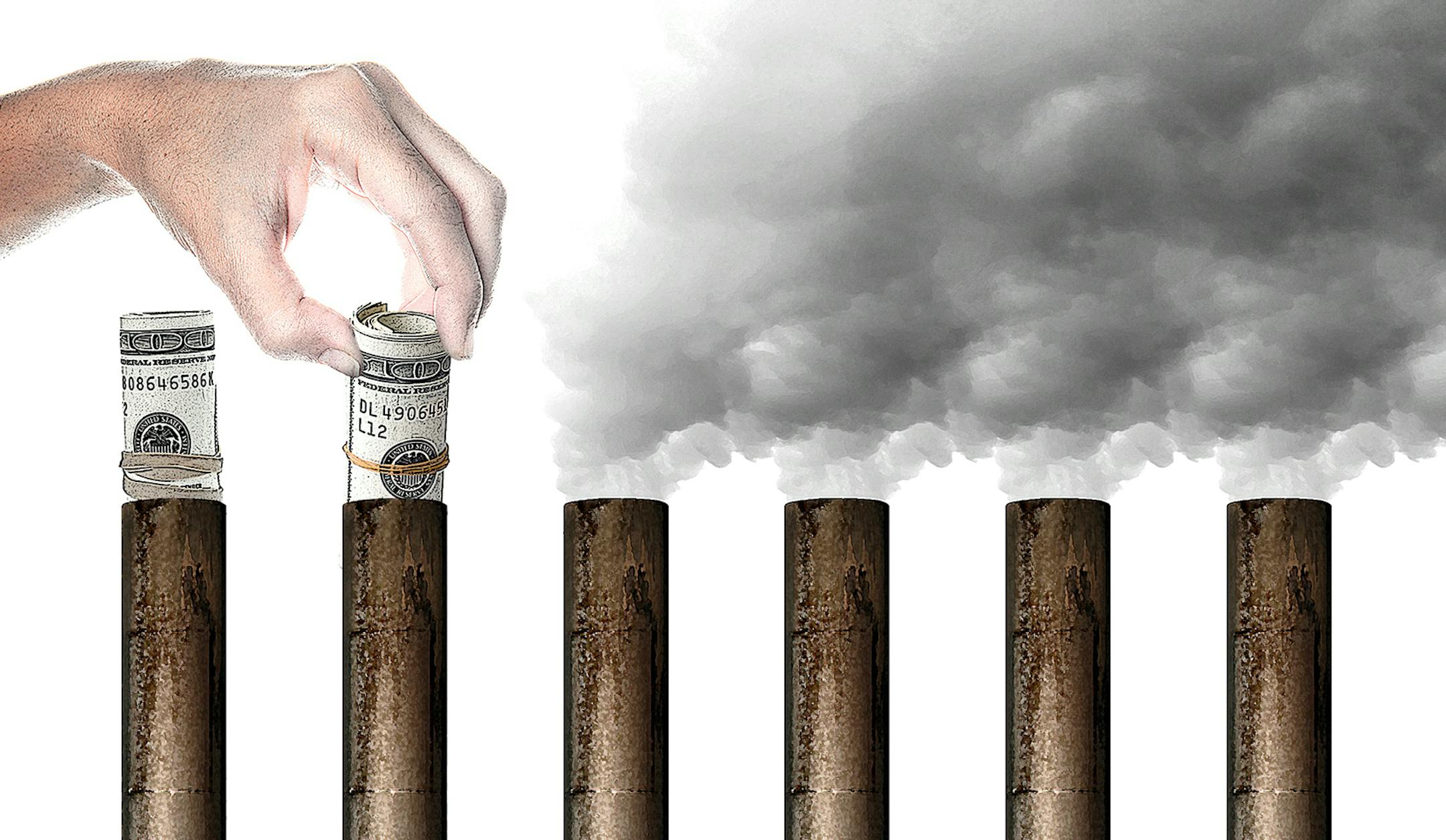
Mike Meyers' commentary "You pollute, you pay" (April 3) started to get personal.
And I liked it. He called me out, the owner of a 1999 F-150 Ford pickup that ironically logs 10,000 fewer miles per year than the average Prius owner. Coincidental to Meyers' article, I also grew up directly across the street from Nobel Prize winner Leonid Hurwicz. Thanks to Meyers, I now know the valuable role of his economics, and the work of the Heller-Hurwicz Economics Institute in convening the 2014 international forum to calculate the cost of climate change.
Climate-change doubters, as Meyers suggests, might be unable to give science a chance, but he writes anyway, hopeful that the money will talk some sense. I predict that Meyers' truckers and Bible-thumpers will read only his headline and remain inattentive to two sciences. That's why the issue of climate change must now get much more personal. It's time to call out — one by one — our elected ones. Those who control the people's money.
Prudent spending and economic efficiencies are the bread and butter of sound fiscal conservatism. The forum calculated economic savings for action now on climate change at roughly 100 times the initial cost, and it calculated an approximate 100-fold loss for inaction. Against all economic sense, inaction is the current fiscally conservative political posture.
I have submitted my membership in the F-150 club for public scrutiny.
Voters should have access to scrutinize the climate allegiances of all 535 of our representatives. In the face of legislative gridlock, and given the economic conclusions, we need the voter list, a personal accounting from each member of Congress: "Are you for or against the economic conclusions of the international forum?"
Steve Watson, Minneapolis
• • •
Meyers is so right. We are already paying the price of climate change. My dad, who lives in California, just wrote a check for $35,000 to replace his dry well and had to go three times deeper than his last well, dug in 1995. But worse, because of this race to the bottom (no pun intended) the aquifers there are drying up and collapsing in on themselves. Soon the water will be gone no matter how deep we dig or how much we pay. It is time to stop the free-for-all and reflect the true cost of carbon by taxing it. We can make it revenue-neutral by rebating the receipts back to citizens such as in the Citizen Climate Lobby's "fee and dividend" plan or reducing income taxes as they do in British Columbia. Whatever we do, if we don't do something soon, just like the aquifers of California, there will be nothing left to do.

