

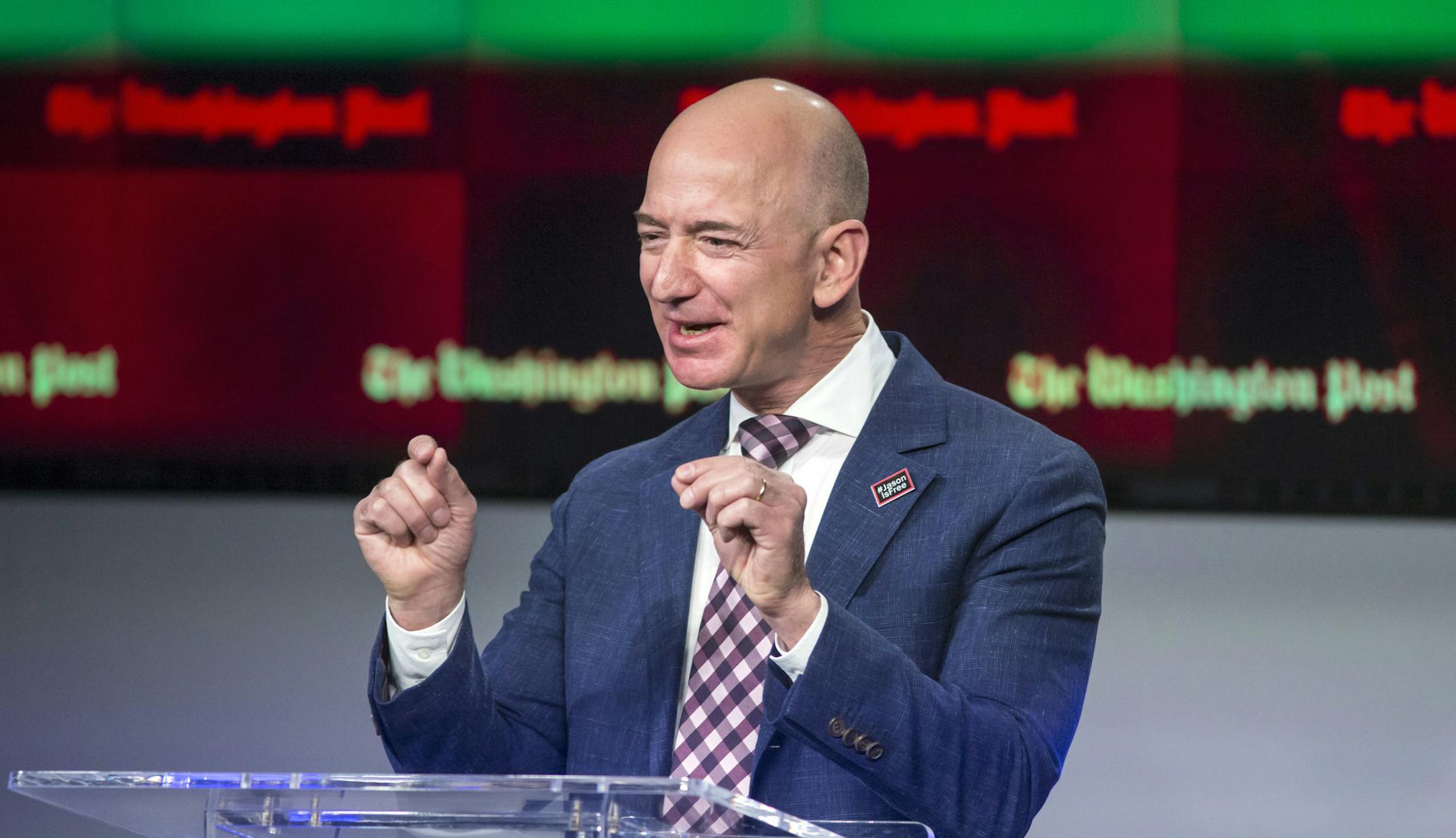
Given that Neal St. Anthony often writes about small business, it strikes me as odd that in his Aug. 5 column "Proven-player Amazon takes heat as Foxconn is cheered," he fails to consider the ways that Amazon is stifling independent businesses and entrepreneurs.
He opens the column by citing the "probing research" of my organization, the Institute for Local Self-Reliance. But he quickly changes course, and while talking about the $1.1 billion that Amazon has received to fund its expansion since 2005, barely questions whether such corporate handouts are the best use of taxpayer money, or what impact they have on the independent businesses whose stories he often tells.
It's not just the subsidies, either. Amazon's increasing dominance as both a retailer and a platform is affecting independent businesses' ability to access the market and curtailing their ability to compete on fair terms. The economy is feeling the impact: The number of new businesses being started is at a 30-year low, a concerning trend that economists are increasingly linking with the rise of giant firms like Amazon.
While St. Anthony praises Amazon and Jeff Bezos as a "business-and-wealth builder," he overlooks the structural ways that Amazon is reshaping the U.S. economy in its own image, to the detriment of access to opportunity, open markets and robust competition, local governments' revenue sources and more. The Star Tribune's readers deserve a more balanced assessment of a company that increasingly affects all of us.
Olivia LaVecchia, Minneapolis
The writer is a research associate for the Institute for Local Self-Reliance.
IMMIGRATION
All our problems, and Editorial Board wants still more people
The Star Tribune Editorial Board claims, in essence, that mass immigration and mass amnesty — i.e., the Obama plan — are necessary for a successful Minnesota and nation ("An ill-timed plan to pinch immigration," Aug. 9).
The editors fail to understand that any economy requiring constant infusions of people is a Ponzi scheme economy and is destined to fail. The larger it becomes, the greater the calamity. The question to answer is when will there be enough people? The editors seem to say never!
What is a resource and environmentally sustainable population level for Minnesota and the U.S., and what is immigration's role in achieving it?


