

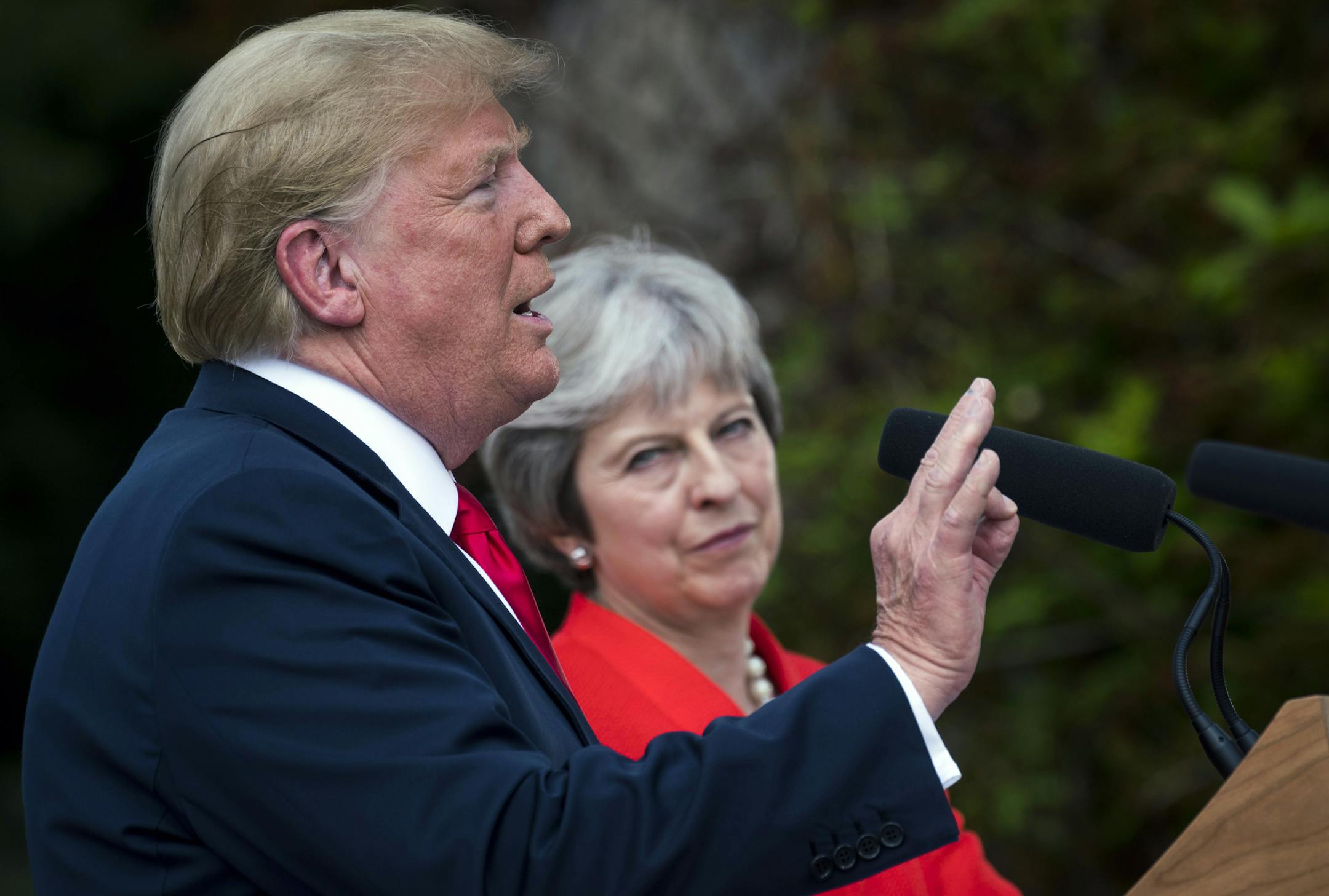
Great Britain's Brexit and America's partial government shutdown show the West as inwardly, not internationally, focused at a time of increasing global threats, whether they come from Mother Russia, Mother Nature or any number of challenges to the global order.
To Brits and Yanks, the parliamentary paralysis in London and the gridlock gripping Washington may play as domestic political crises. But allies and adversaries alike are also watching.
"If you sit in the United States and you look over to Europe, you say, 'Oh my God, what a mess,' " said Daniel S. Hamilton, the Austrian Marshall Plan Foundation professor at Johns Hopkins School of Advanced International Studies.
"Well, I've got to tell you," said Hamilton, a former State Department diplomat, "if you're in Europe looking over at the United States, they're having the same conversation: 'What a mess.' "
As for the view from Moscow, "if you're part of the [Vladimir Putin] regime, you're delighted the West is so crippled. But if you're someone on the street in Moscow, you're worried about the economy and about your future as well, so it's not necessarily good."
The growing global economic impact of the West's stasis means a mixed view in Beijing, too, since the U.S.-China trade war affects the Xi Jinping regime in Beijing as well as the person on the Chinese street.
"They're more concerned about the nature of the trade fight the president is having," Hamilton said.
Overall, Beijing's geopolitical strategy has been more methodical than Moscow's, said Mary Curtin, diplomat-in-residence at the University of Minnesota's Humphrey School of Public Affairs.


