

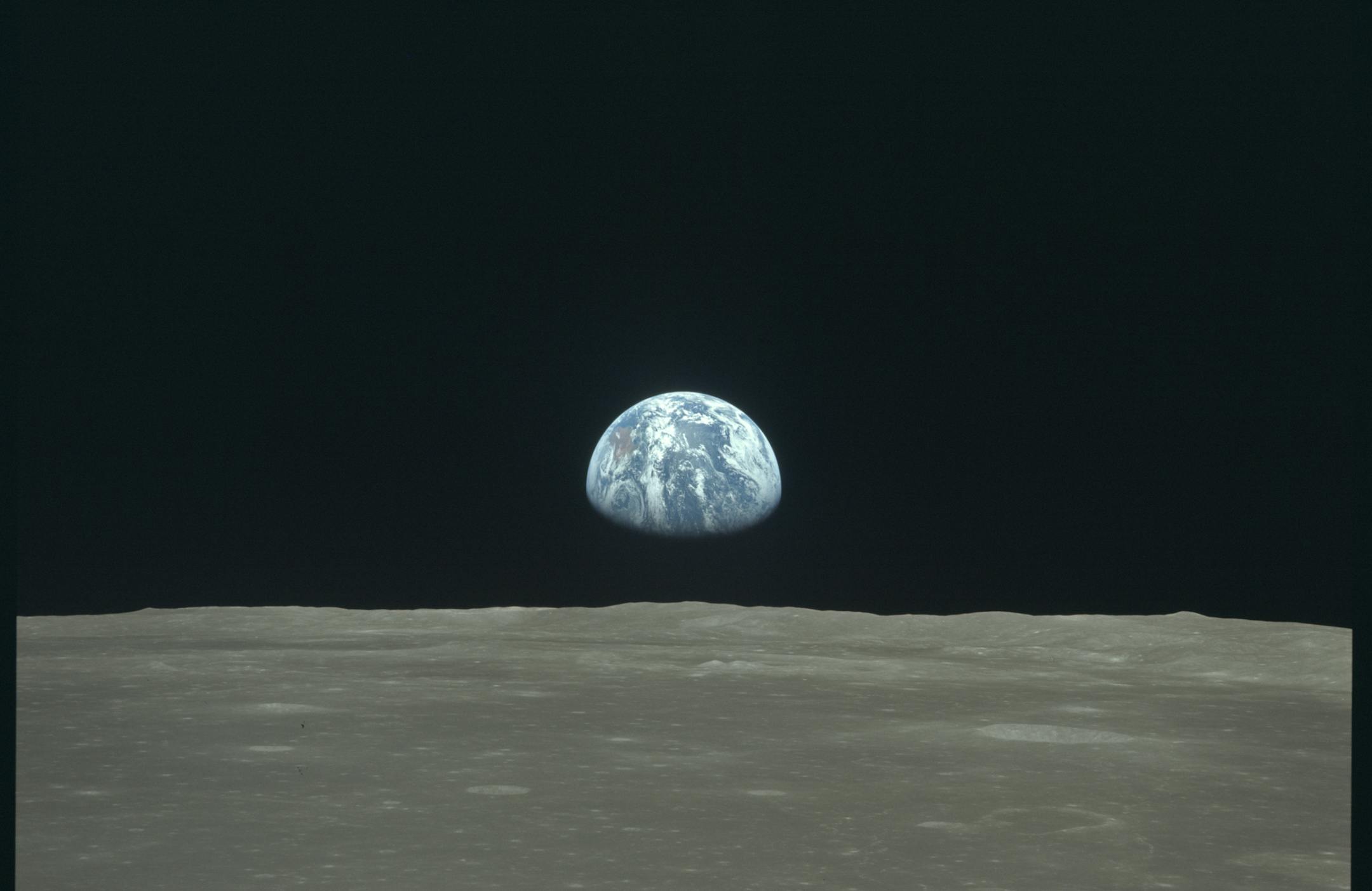
On July 20, 1969, Americans landed on a relatively placid place on the lunar surface called the Sea of Tranquility.
Fifty years hence, a sea of tranquility has not landed on Americans.
Indeed, rather than rallying around the remembrance of a future-focused country sending Apollo 11 astronaut Neil Armstrong to make a "giant leap for mankind," a too-often unkind man and some of his followers took a step back into the nation's nativist past.
The contrast between the two eras is stark. But not because there wasn't strife 50 years ago.
In fact, instead of letting the social and political upheaval of the '60s eclipse its moon mission, America overcame it.
The year that NASA's program culminated in Apollo 11's monumental moment saw the second-highest levels of U.S. troops in Vietnam. A year earlier, the tragic assassinations of Martin Luther King and Robert F. Kennedy and the chaotic Chicago Democratic convention shocked the conscience of a country already reeling from racial tension.
So although unifying a fractured U.S. wasn't its original intent, the Apollo program provided a more positive construct for the country.
And at least when it came to the space program, that era's presidents — from JFK, whose "New Frontier" went beyond a campaign slogan, to LBJ, who continued Kennedy's commitment to the moonshot, to even a newly elected Richard Nixon — were all relatively visionary leaders.


